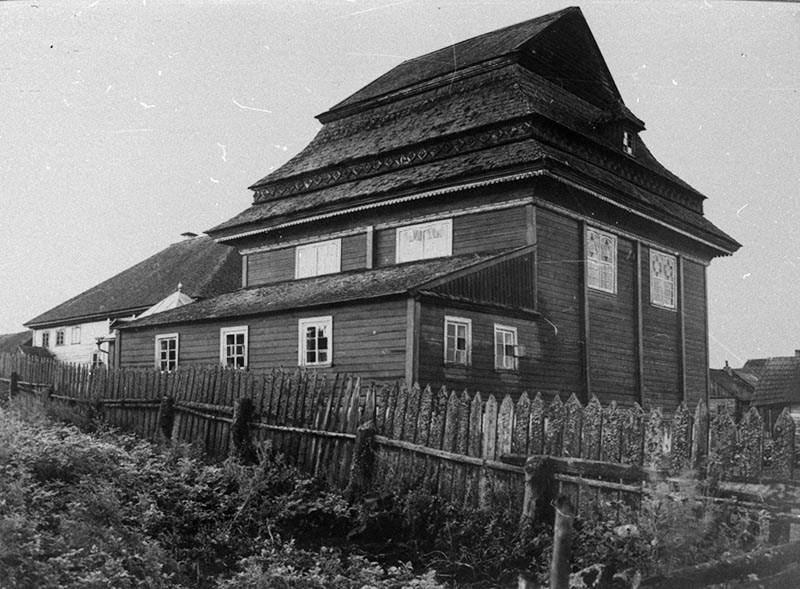
Discovering wooden wonders
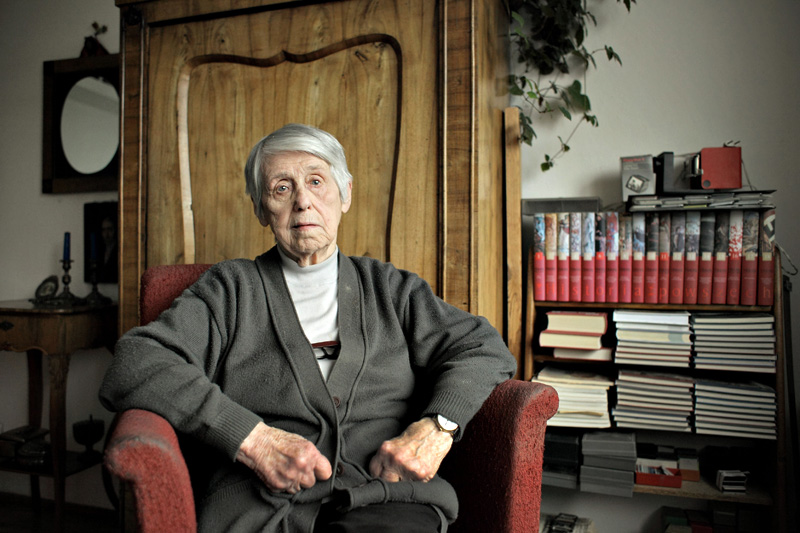
Maria Piechotka, 2012, photo: Krzysztof Żuczkowski / Forum
Maria Piechotka (nee Huber) never got to meet Zajczyk. In 1938, she had enrolled in the Warsaw University of Technology’s architecture department. She completed only her first year during which she managed to attend professor Sosnowski’s class on synagogue architecture. This took place just before the outbreak of World War II and the destruction of the buildings which she was studying.
She returned to the topic after the Holocaust – under very different circumstances. Together with her husband Kazimierz Piechotka, also an architect, whom she had met at an underground architecture course during the war, the two took it upon themselves to continue Zajczyk and Sosnowski’s research, discovering a whole new – and now largely nonextant – world of architecture.
The synagogues which they were researching proved to be not only exceptional but also very different from the stone and brick which synagogue architecture was famous for. The Torah arks, bimahs and polychromed walls and vaultings – these elements which constituted a ‘true home of God and a gateway to Heaven’ – developed in the wooden synagogues in their own unusual and extraordinary ways.
The book
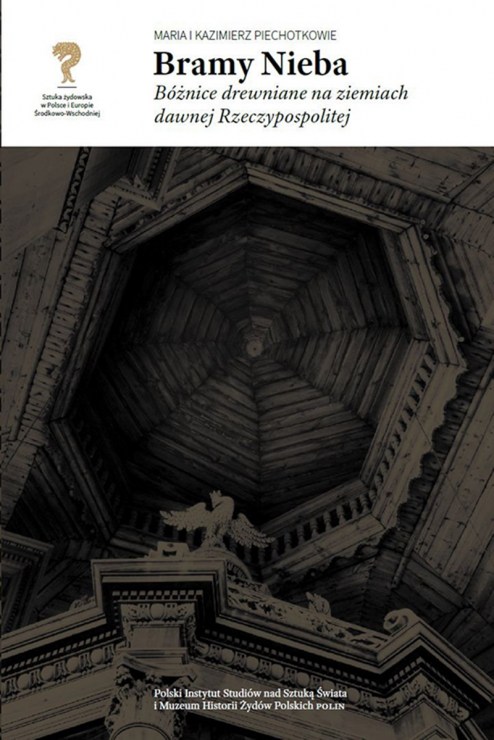
The cover of Maria and Kazimierz Piechotka's
book Heaven’s Gates, 2015, published by
POLIN Museum of the History of Polish Jews
and the Polish Institute of World Art Studies
The book Bramy Nieba (Heaven’s Gates), which they first published in 1957, contained detailed information on the architecture and construction of each synagogue along with architectural drawings and measurements. It established historical links between wooden synagogue architecture and local traditions of wood craftsmanship as well as stylistic parallels with Baroque architecture. They sought to explain the idiosyncratic nature of wooden synagogues, like animal polychromies, unseen in other Jewish architecture – and usually considered a religious taboo.
The Piechotkas showed how the specific shape and construction of the buildings was embedded in – and facilitated by – the character of the building material itself, that is primarily coniferous wood, so typical of the region. The Piechotkas suggested that wooden architecture of this scope and refinement could probably not have been created anywhere else and that its genesis is inextricably linked with its place of birth.
Their research also pointed to the often neglected social aspects of the making of the wooden synagogues. As Maria Piechotka argues, the synagogues were most likely built by local Polish carpenters working under Polish architects who designed the buildings in accordance with the commission which came from the Jewish kehillot (communities). All the while, the inside of the synagogue – with the splendid Torah ark, the bimahs and colourful polychromies – was the work of Jewish craftsmen. This shows wooden synagogues as the result of a real team work which included collaboration between the Polish and Jewish communities.
Heaven’s Gates in America
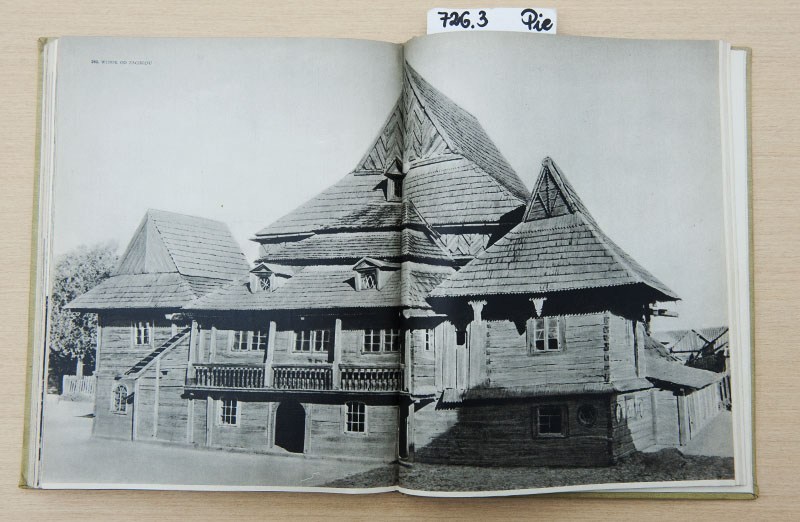
Inlay from the first edition of Piechotka's book, photo: Culture.pl
As it would turn out, the first edition of the book was published just as the window for that sort of publications in Poland under the communist regime was closing. In the following years, writing about the former Eastern territories of Poland was out of the question, Jewish topics – with the not too distant events of March 1968 looming – were becoming increasingly risky. As it turned out, the Piechotkas would return to the topic again only in the 1980s, when the new research possibilities arose. In the meantime, their book changed how Polish-Jewish culture was perceived abroad.
In 1959, with the first copies of the English edition of the book (published only two years after the Polish original) travelling across the Atlantic, the book became a catalyst for the revival of interest in Jewish wooden architecture. As such, it played an important role in bringing back the Ostjuden's pride in their cultural heritage.
The book also influenced the history of synagogue architecture in America. As scholar Samuel Gruber argues, in the 1960s and 70s, the book was reportedly studied by practically every Jewish architect of the time.
Architects especially responded to the Piechotkas’ drawings to which, as architects, they could relate. Over the years there has been a persistent stream of design where elements from these drawings have been incorporated and adapted for use in modern designs.
According to the scholar, what people found in The Wooden Synagogues was a connection to the lost Jewish culture of Eastern Europe 'and could be seen as a scrap of that culture – albeit mostly symbolically – that was salvaged from the wreckage of history.'
Polish synagogues & American art
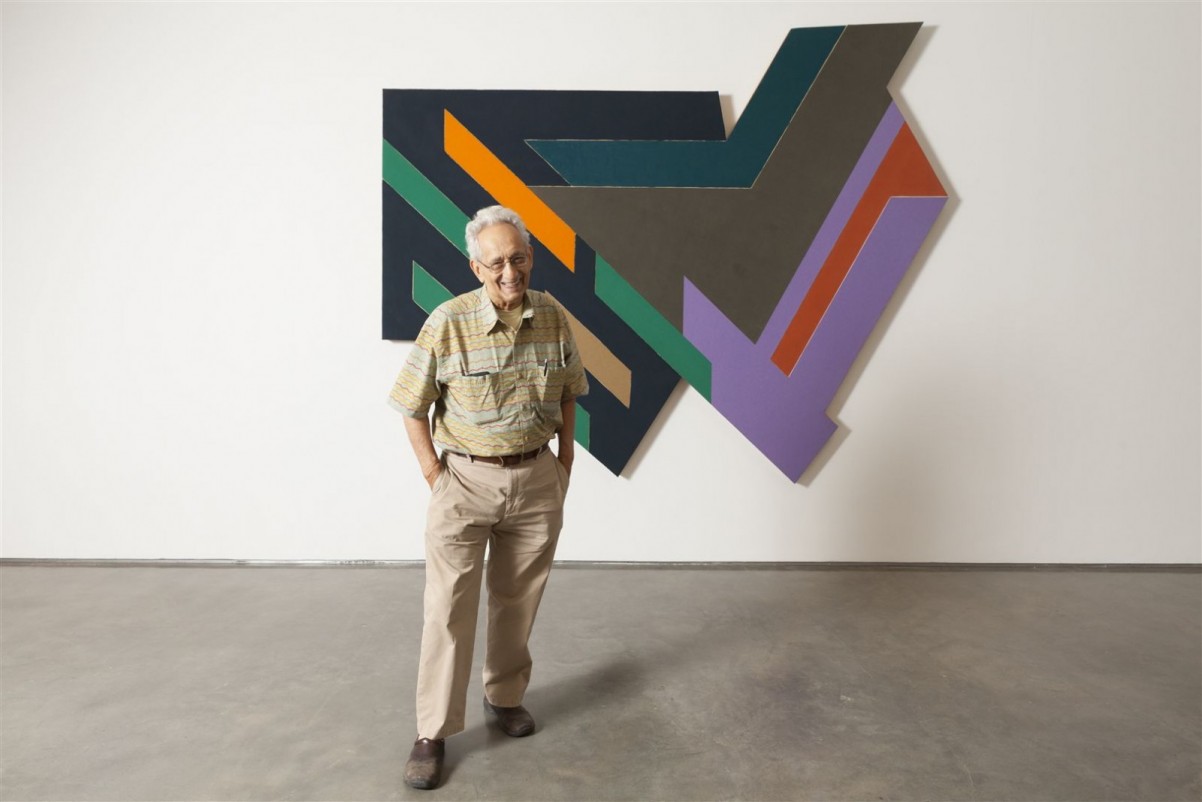
Frank Stella with his work Bogoria IV (from the Polish Village series), 2015 photo: Kristine Larsenimg / courtesy of the POLIN Museum of the History of Polish Jews
In the 1970s – in another, perhaps more surprising, turn of events – the book turned out to be a catalyst in the making of one of the most important series in the history of American contemporary art. A copy of the book given to Frank Stella by architect Richard Meier became a direct inspiration for Stela’s famous Polish Village series.
The monumental iron reliefs from the series bore the names of the towns where wooden synagogues once stood (Bogoria, Odelsk, Lanckorona), names familiar to the readers of The Heaven’s Gates. It was through these names, and the drawings from Piechotka’s book, that these works of abstract expressionism revealed their material relation to a world that was now lost.
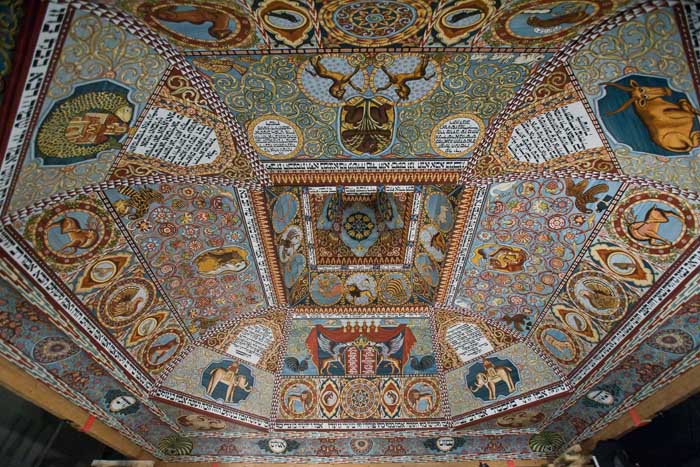
Replica of the roof of the Gwoździec Synagogue, part of the POLIN Museum of the History of Polish Jews exhibition, photo: courtesy of the POLIN Museum
That relationship was explored for the first time during the Frank Stella exhibition at the POLIN Museum of the History of Polish Jews in Warsaw in 2015, where the abstract reliefs were showcased next to the meticulous reconstruction of the roof of the Gwoździec synagogue, a project which has been part of the of the POLIN Museum since its beginnings. None of these would have been possible if not for the efforts of Piechotkas, Zajczyk, Sosnowski and many others. History made a full circle, bringing the book and its contents back to its birthplace and bringing history into the future (see: Frank Stella and Synagogues of Historic Poland virtual exhibition).
Author: Mikołaj Gliński, May 2017