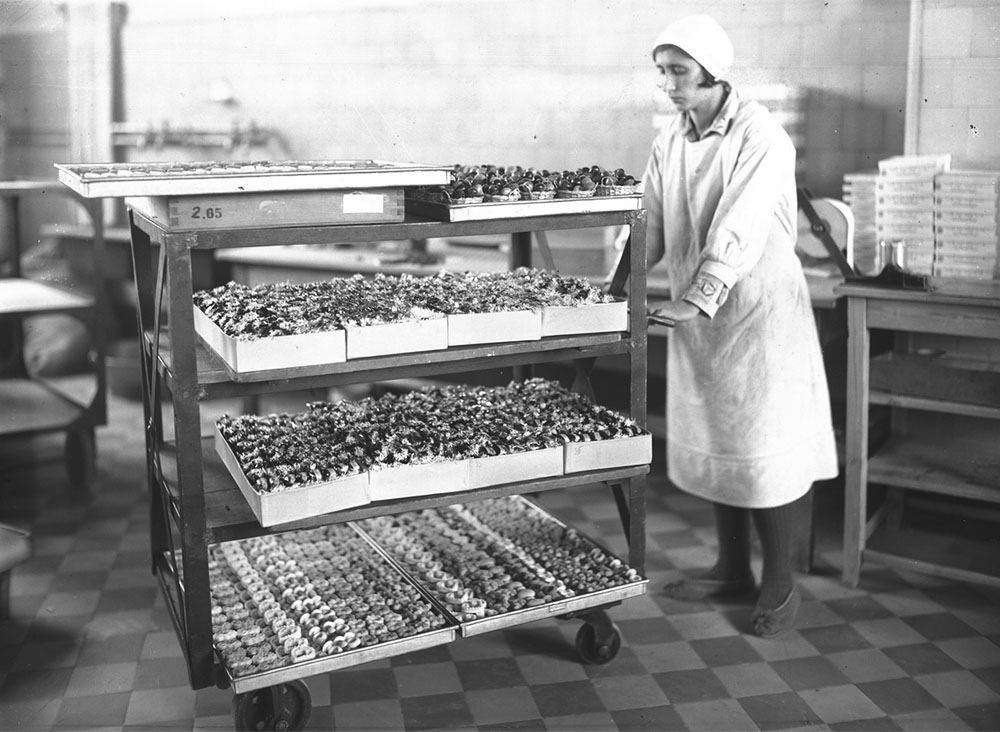
Before the mechanisation of the production process, preparing all this chocolate ambrosia was time consuming. To understand why, let’s look at the recipe for czokulada prosta or easy-made chocolate, given in the second half of the 18th century by Jan Krzysztof Kluk, a priest and natural scientist.
First, one had to roast cocoa beans had to in a pan, stirring and taking care not to over-roast them, keeping in mind that they mustn’t lose moisture and oiliness. Then they had to be peeled and crushed. That was only the beginning of a very complicated procedure. Those wanting to enjoy the taste of chocolate would have to add crushed sugar to the beans and grind the mixture in a mortar or – even better – use a special stone placed on hot coals. The mixture of cocoa beans and sugar had to be creamed until it turned into a butter-like, soft mass. It was important that the heat under the mortar or the stone was kept low, because ‘if it’s too hot, all the moisture and oiliness, vital in chocolate, might evaporate’. Then the mass was put into special moulds in the shape of tin flat boxes, and ‘when it’s cooled down and taken out the mould, it is ready for use’.
Chocolate was enriched with various tasty additions. Chocolate with sweet roasted almonds was considered beneficial for one’s health. If spices, cinnamon or vanilla beans were added, chocolate became aromatic. Chocolate was also cooked in wine or milk. Cocoa paste was used for drinking chocolate. According to an 18th century recipe for ‘chocolate cream’, you had to soak six bars of chocolate in water overnight. The next day you cooked them with milk, adding some wheat flour and some brown home-made caramel for flavour and colour.
Household chocolate