The Polish Fiat – an appeal to national pride
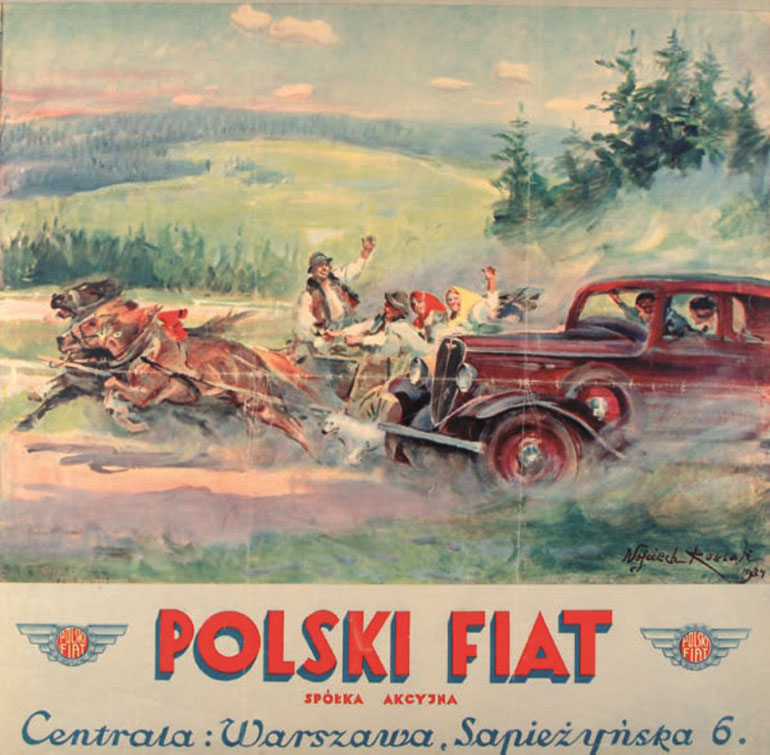
The renowned painter Wojciech Kossak shared his talent with the advertising business. In 1934, he painted a little scene commissioned by the Polski Fiat company. The Polish Fiat 508 overtaking a horse-powered mountaineer’s carriage, with the beautiful Tatra mountains in the background.
The same artist also painted an ad for the Zwierzyniec brewery in two different colour variations. While taking a break to grazing their horses, a cavalryman of General Haller’s Blue Army triumphantly shows off his find to his colleagues – nothing other than a bottle of Zwierzyniec, a Polish-brewed beer.
Advertisement as a form of art – an appeal to the sense of aesthetics
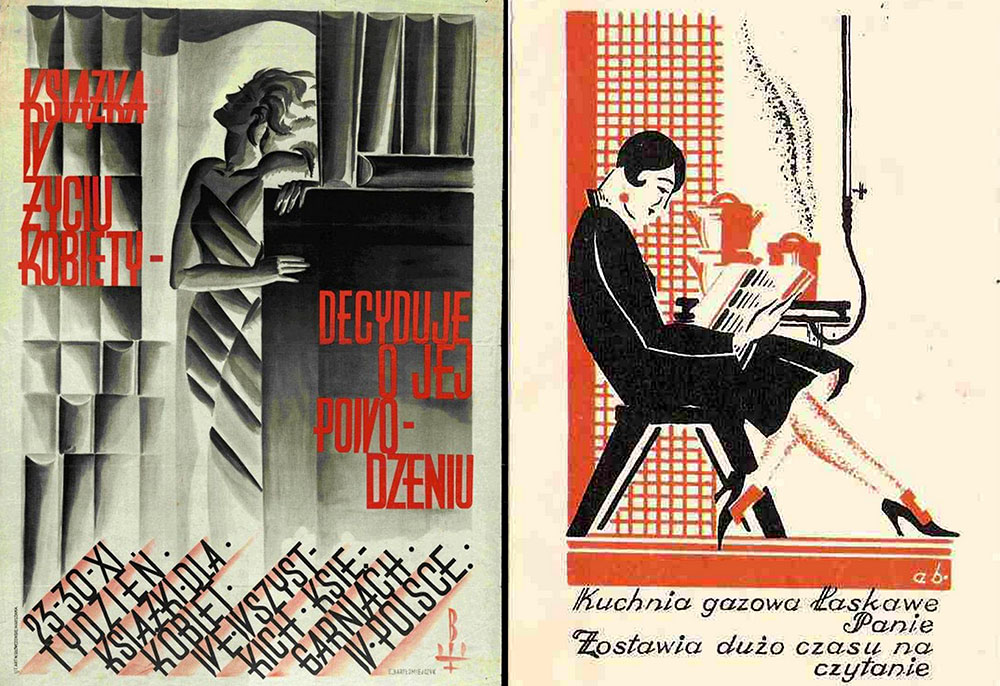
Among the advertisements were a few masterpieces. Tadeusz Gronowski, a printmaking artists, became famous for his cat’s ad for Radion washing powder. Apart from the coloured posters he made, there are also quite a few black and white pieces in the art déco style.
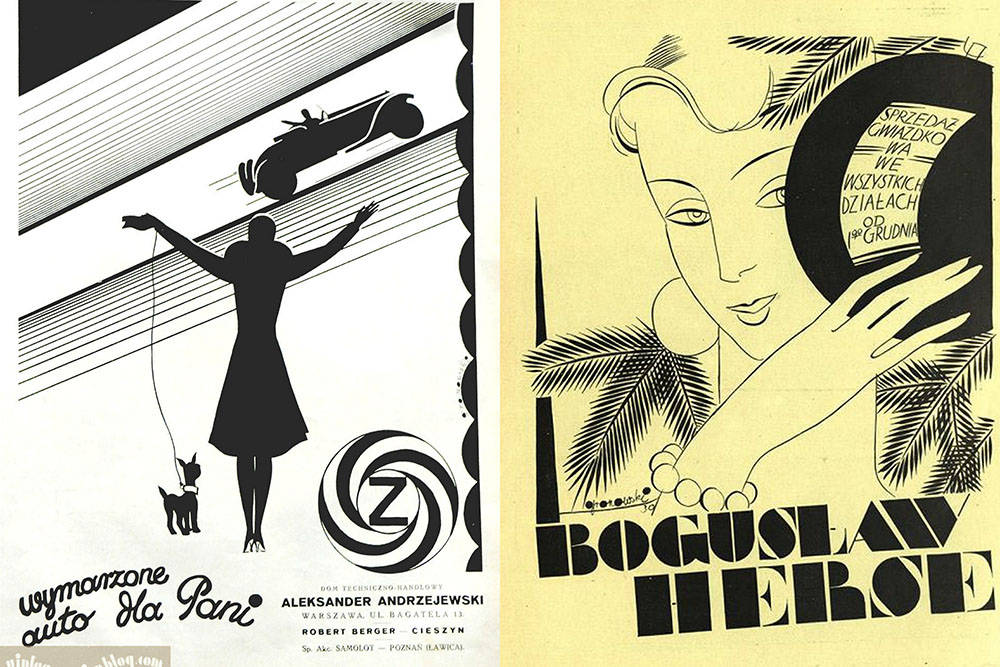
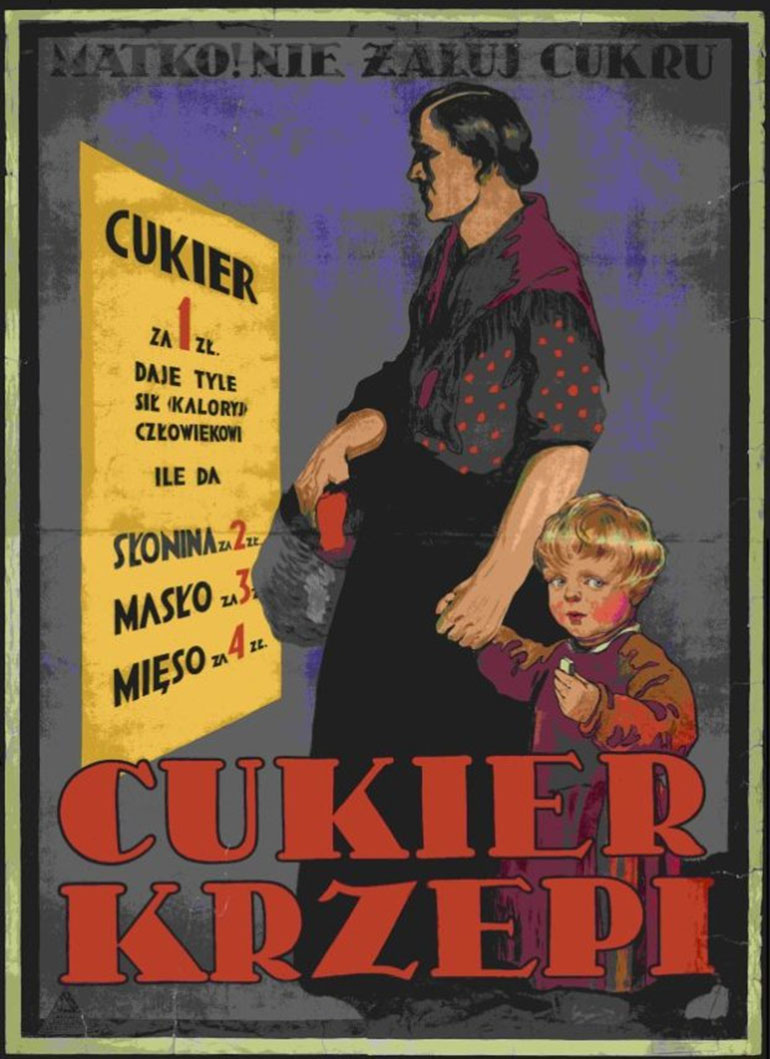
Pre-war advertisments that appealed to the sense of aesthetics, photo: archive materials.
Gronowski was aided by Edmund Bartłomiejczyk, an artist known for his stained-glass windows in the Jabłkowski Bros. House in Warsaw. The works of Jan Lewitt and Jerzy Himmelfarb were also distinctively witty in their metaphors and the visual language that they employed. The works that they authored together were signed with the Levitt-Him abbreviation.
For the good of the customer – an appeal to common sense

An ad "for the client’s good", photo: archive materials
Apart from imagery and posters, there were also small classified ads in the press which would appeal to the customer’s faith in printed taglines. At times, these even rhymed (or, at least, attempted to – though we will not attempt a poetic translation, leaving the English-speaking reader with the meaning, only).
"Przypomnienie.
Święta! Gwiazdka! Choinka! Tradycyjny zwyczaj!
Czeka Cię moc wydatków, więc dobrze obliczaj!
Wszystko wydać – nie sztuka, a potem co będzie?
I po Świętach żyć trzeba – czy masz to na względzie?
Z kredką w ręku, oszczędnie, rozwiąż to zadanie,
do PKO złóż prędzej – wszystko, co zostanie".
"A reminder.
Christmas! Holidays! Christmas Tree! The traditional custom!
You have a number of expenses ahead of you, so you better count well!
You will spend it all – that’s not hard, but what will happen then?
You have to live after Christmas, too – are you taking that into account?
With pencil in hand, economically, solve this task,
submit all that may remain to the PKO."
Christmas is the time for offering your wishes. And the holidays are, of course, supposed to be merry, but that is a bit hard when at the same time one is reminded of a crisis. As we can see, this didn’t put off the bank, which decided to show its more pleasant side while at the same time selling its services, in just one ad. Of course, all of this is only for the good of the client:
"Wesołych Świąt
Kiedy na świecie kryzys się panoszy,
Jedna jest prawda wśród teoryj wielu:
Możesz spokojnie żyć, Obywatelu –
Skoro PKO strzeże Twoich groszy!"
"Merry Christmas
As the crisis spreads across the world
There is one truth among all the theories
You can live peacefully, citizen –
Since it’s PKO guarding your pennies!”
Many banks advertised their services. There were also those who looked to the future rather realistically: “Protect yourself and your family from poverty. Save up and store your hard-earned pennies…” This was just one of their ways of winning over not just the elite who made a good living, but also poorer crowds.
Welcome to tough times – an appeal to caution
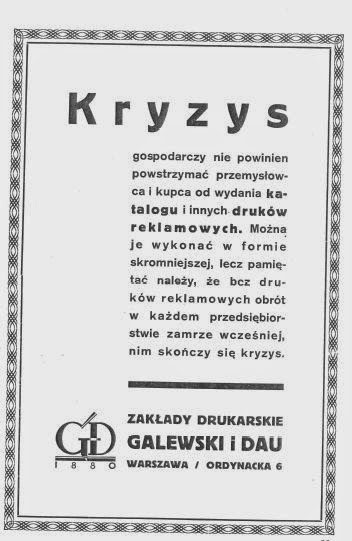
An advertisment warning against the crisis, photo: archive materials
What is on the mind of every advertiser? – of course, nothing else than the good of his client. At least, that is the tone that we get from most of the ads. That is where the growing amount of tips on how to do well – in spite of a difficult situation – must have come from.
"The economic crisis should not stop the enterpreneur [sic!] and buyer from publishing a catalogue and other advertising prints. They can be published in a more modest form, but one must remember that without printed advertisements, trade in every company will come to standstill before the crisis is over.” – thus goes the warning of a printmaker.
"Pouring out ink onto a badly worded ad in the paper doesn’t require any skill. That’s why we ask you to demand advise from our salesman on how to advertise yourself".
"The current economic stagnation is a chain around the neck of trade and industry. Everyone can be freed from it through skilful advertising in the press”
"In today’s reality, everyone who doesn’t advertise will fall”
But if poverty really strikes you, then there is always:
“Soup made from bread and broth from the practical Maggi cubes. It tastes great. For 4-5 persons. 800g of stale bread, 1 tablespoon of butter, 1 tablespoon of flour, 1 litre of water, 4 Maggi stock cubes, 1 egg yolk, chopped green parsley leaves.
Fry the chopped bread with butter until golden, add the flour and dilute with broth made from 1 litre of boiling water and 4 Maggi cubes. Cook for a while, finally, season with the egg yolk and mix with parsley leaves
That is for the poor on social welfare. For those who still have a job, there was a somewhat more extravagant version: “Vegetable soup with croutons with Maggi broth cubes. It tastes great.” With a few more ingredients, the general idea was similar, with the use of 4 of the aforementioned broth cubes. There was also a recipe for those untouched by the crisis -- “asparagus soup can be made quickly with the practical Maggi cubes.” It didn’t say if the soup would taste good – it must be because anyone able to afford asparagus at a time of crisis would already know.
With no taboo or prudence – an appeal to health and beauty
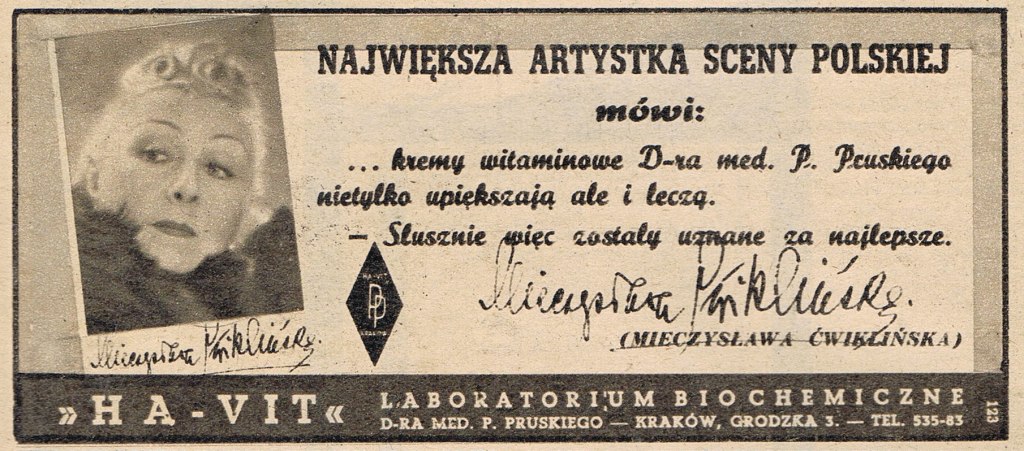
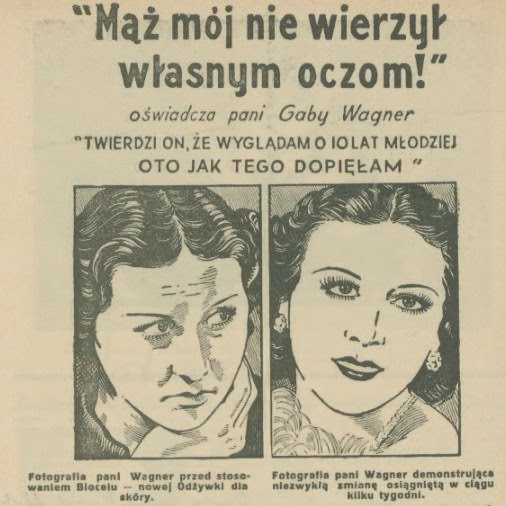
Pre-war press wasn’t concerned with being politically correct, which made it very straightforward when it came to the advertising of all kinds of medication for conditions “Ugly hair on arms and legs, as well as moustache hair in women, can be removed right away and without any pain…”, similarly to “blackhead embryos, and greasy complexion around the nose”.