The dramatic way in which the plot is presented is in this case fully justified by the subject: The Real End of the Great War speaks about trauma that is impossible to process, and the painful marks that war has left in the mind of a former concentration camp prisoner.
Unlike Andrzej Wajda or Andrzej Munk at that time, Kawalerowicz neither explores national myths nor establishes a diagnosis of Polish society. Instead, the director focuses on intimate singular experience. In The Real End, the most tragic result of havoc wreaked by the war is the decay of a relationship between a husband and a wife. Before the war, Juliusz (Roland Głowacki) was an eminent architect and a bon vivant known for his unequalled dancing skills. After he comes back from the camp he becomes withdrawn, unable to articulate his thoughts, and tormented by mental breakdowns. His wife, Róża (Lucyna Winnicka), who still is an attractive woman, becomes more and more exhausted with taking care of her sick spouse and prefers to spend her free time with a colleague, Professor Stęgień (Andrzej Szalawski). She has to choose whether she wants to sacrifice her happiness for the sake of her husband, who lost his ability to communicate almost completely after the war, or start a new life with another man by her side. Meanwhile, Juliusz attempts increasingly desperately to make himself understood to Róża, who is the only person keeping him alive.
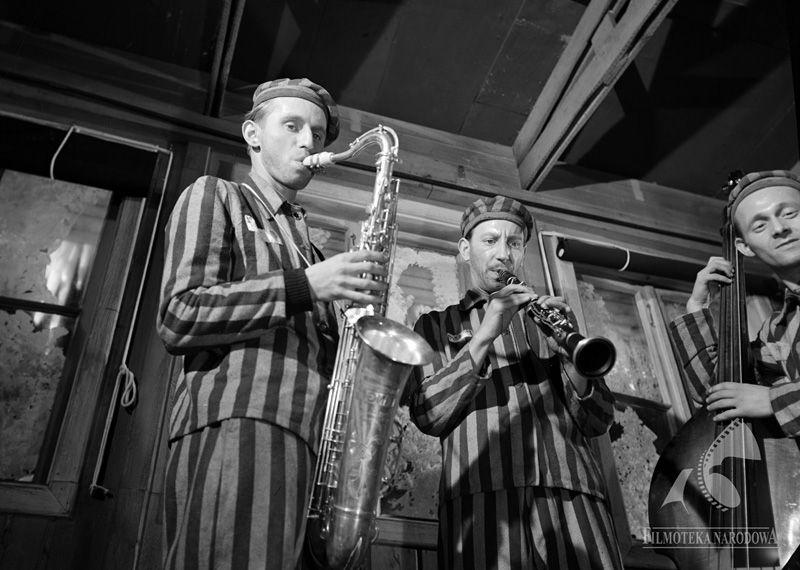
The Real End of the Great War, directed by Jerzy Kawalerowicz, 1957, photo: Andrzej Gronau/Studio Filmowe Kadr/www.fototeka.fn.org.pl
Focusing chiefly on the inner experiences of Juliusz, Kawalerowicz tries to depict the tragedy of the survivors; those who remained alive after the nightmare of the war, but are no longer able to function normally. For the prisoners, the war didn’t end with the liberation of the concentration camps – the traumas and wounds inflicted by the oppression would last much longer. Kawalerowicz’s film talks about Juliusz’s painful clash with everyday reality, and about a miraculously saved life that gradually ceases to have any value to the protagonist. The man is happy about coming back to his loved one, but is unable to express his love for her. His subtle signs and gestures remain unnoticed by Róża. Giving the account of the tragic position of the deeply wounded survivors, Kawalerowicz doesn’t condemn the ‘healthy’ part of society, but depicts the dramatic aspect of the situation. Róża is not a faithless egoist, but a torn woman who, despite true willingness, is unable to overcome the feeling of strangeness and physical repulsion that her sick and blocked husband evokes in her.
To portray the mental state of the protagonist, Kawalerowicz uses a broad spectrum of narrative techniques. The Real End of the Great War begins with a frame showing a grim autumn landscape: bare, interwoven branches against the dark sky. The world depicted in the film is grey, depressive and gruesome, as if filtered through Juliusz’s eyes. The cinematography by Jerzy Limpan relies heavily on working with light and dark. Together with expressive music by Adam Walaciński, these formal solutions perfectly illustrate Juliusz’s anxiety. The shots in which Juliusz suffers an attack, in the moments of greatest tension performing a dramatic ‘dance’ while revolving, are very suggestive. The camerawork by Jerzy Wójcik is subjective, moving together with the protagonist; the present fluently transforms into flashbacks from the past, when the main character was forced to dance till he lost his breath in the concentration camp.
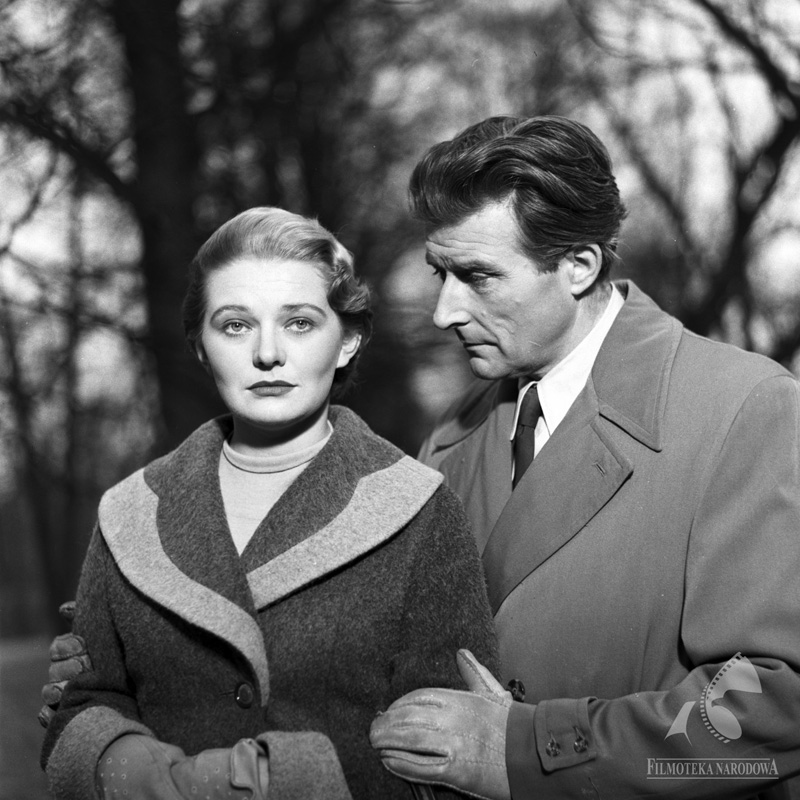
Lucyna Winnicka and Andrzej Szlawski in The Real End of the Great War, directed by Jerzy Kawalerowicz, 1957, photo: Andrzej Gronau/Studio Filmowe Kadr/www.fototeka.fn.org.pl
The critics proclaimed that Kawalerowicz hadn't handled difficult subject well, and the theme of post-war trauma wasn’t properly developed. The expressive style of the film may seem a bit anachronic and less subtle than in Kawalerowicz’s later films. Nevertheless, The Real End of the Great War shouldn’t have been forgotten – it is a moving psychological film and remains one of the most interesting experiments with subjective narration in the history of Polish cinematography.
The Real End of the Great War, Poland, 1957. Director: Jerzy Kawalerowicz. Screenplay: Jerzy Zawieyski, Jerzy Kawalerowicz. Cinematography: Jerzy Lipman. Scenography: Roman Mann. Performed by: Roland Głowacki (Juliusz), Lucyna Winnicka (Róża), Janina Sokołowska (Józia, the maid), Andrzej Szalawski (Professor Stęgień), and others.
Produced by Zespół Filmowy Kadr. Black and white, 85 minutes.
Author: Robert Birkholc, May 2016, translation: Natalia Sajewicz
