Largely abandoned and neglected after the war, it has become a gothic landscape of moss-covered tombstones, art deco mausoleums, shrines, memorials, and mass graves while sharing space with one of the most beautiful and wild urban forests in the city. The trees have grown to impressive heights, and in some sections they have almost completely taken over the cemetery. They are the home and playground of countless birds, especially crows and ravens. On windy days, the sound of the leaves rustling and the branches knocking mixed with birdsong and choruses of crows, is unforgettable. When it rains, the paths often fill with slow-moving parades of multi-coloured snails.
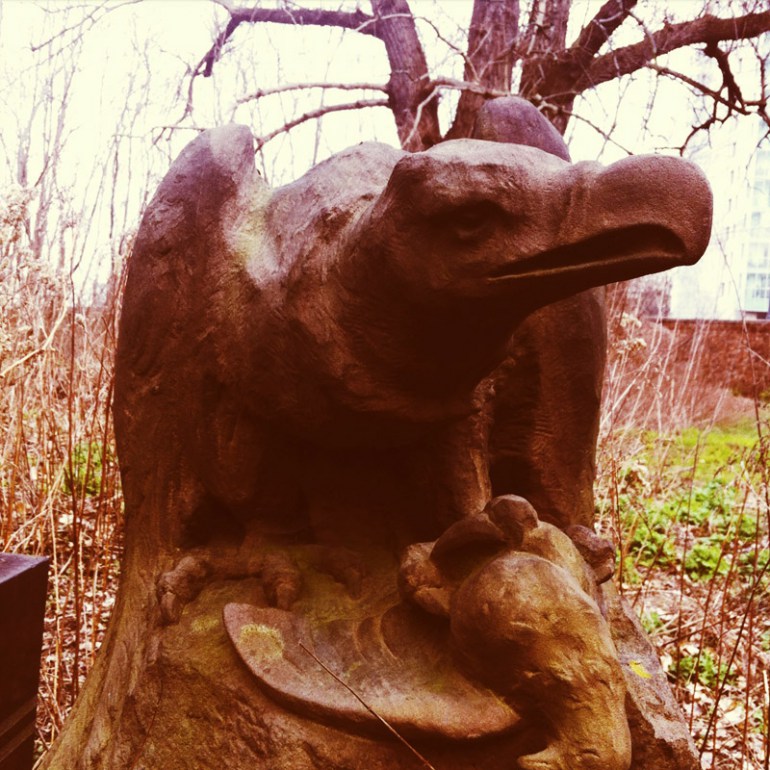
Detail of Matzevah in Jewish Cemetary, Photo: Paul Bargetto
For the non-Jewish visitor, the architecture of the tombs and the symbolic markings on the graves are fascinating and quite unlike those of Christian origin. Many graves are inscribed with lions, deer, books, pitchers of water, falling trees, and the blessing hands of the Kohanim. Some are written in Yiddish, others in Hebrew and Polish. Other tombs and graves reflect the styles and architecture of their age including neoclassical, art nouveau, and Egyptian revival. Here, in this half-wild forest among the weathered stones and impressive monuments, one can see Jewish life and culture in Poland in all its former glory.
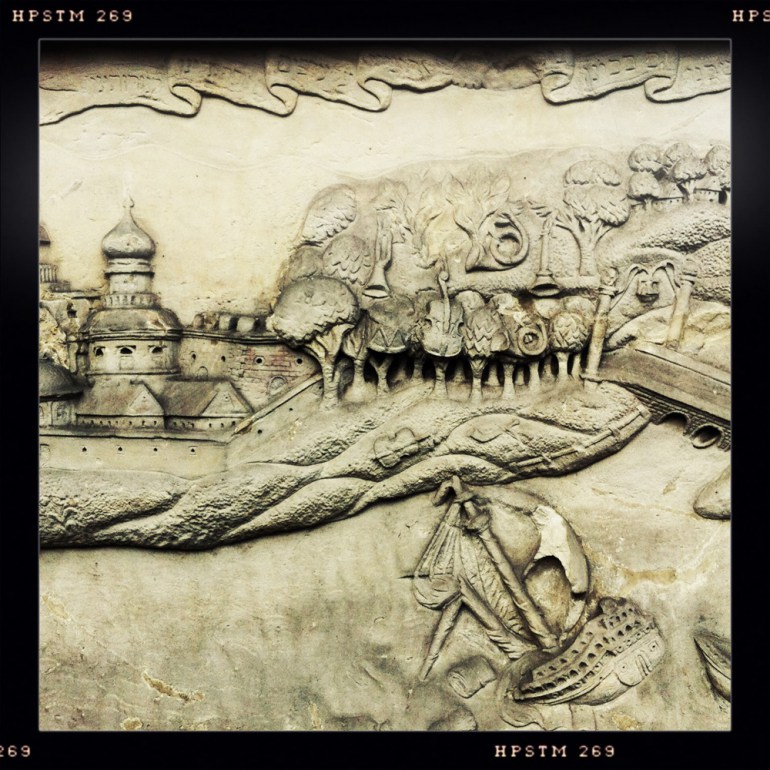
Detail of Matzevah in Jewish Cemetary, Photo: Paul Bargetto
The Jewish Cemetery on Okopowa Street was founded in 1806 to replace several smaller cemeteries in the city that existed earlier. It was open for all Jews regardless of their religious affiliation or status, although it was later divided into sections, partly to help ease tensions among the many different religious sects and political groups within Jewish society. It currently houses thousands of individually-marked graves, and several mass graves from World War II, making it one of the largest Jewish cemeteries in Europe. The cemetery would bear witness to the many violent uprisings in Polish history, including the November and January uprisings, and was frequently damaged.
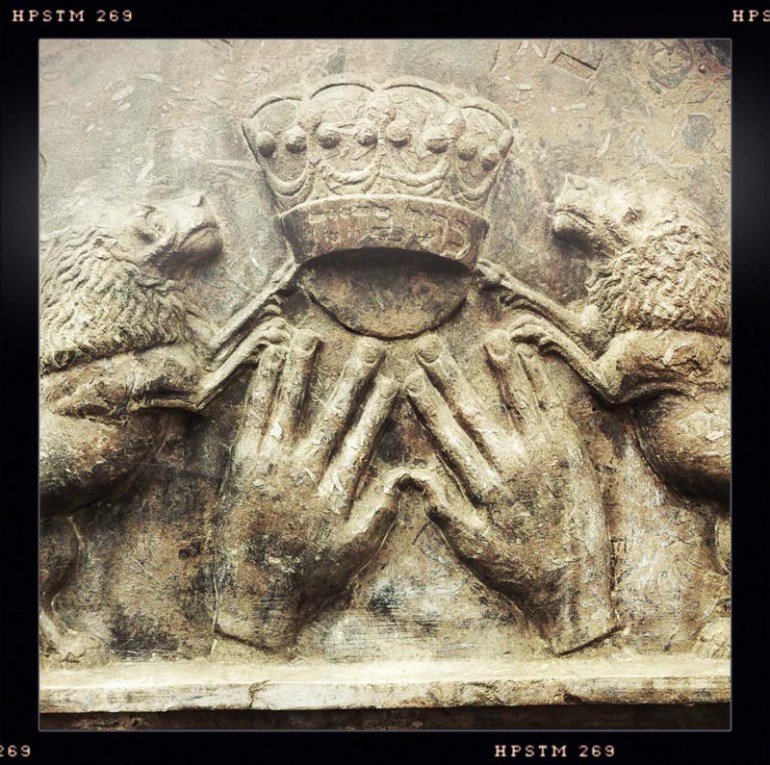
Detail of Matzevah in Jewish Cemetary, Photo: Paul Bargetto
In 1943, it was heavily damaged during the Warsaw Ghetto Uprising and was also the site of numerous mass murders by the German occupation government. In 1944 it suffered further damage, some of it still visible today on tombstones, during fierce fighting in the Warsaw Uprising. Nearly all of Warsaw’s Jews, almost 400,000 souls (one-third of the total population of the city), would perish during the war, either in the death camp at Treblinka, or by starvation or murder in the Warsaw Ghetto. After the war, with most of the families dead or gone, the cemetery gradually transformed into its current state. It is however, still an active cemetery for Warsaw’s small Jewish community, and a significant pilgrimage site for Jews throughout the world.
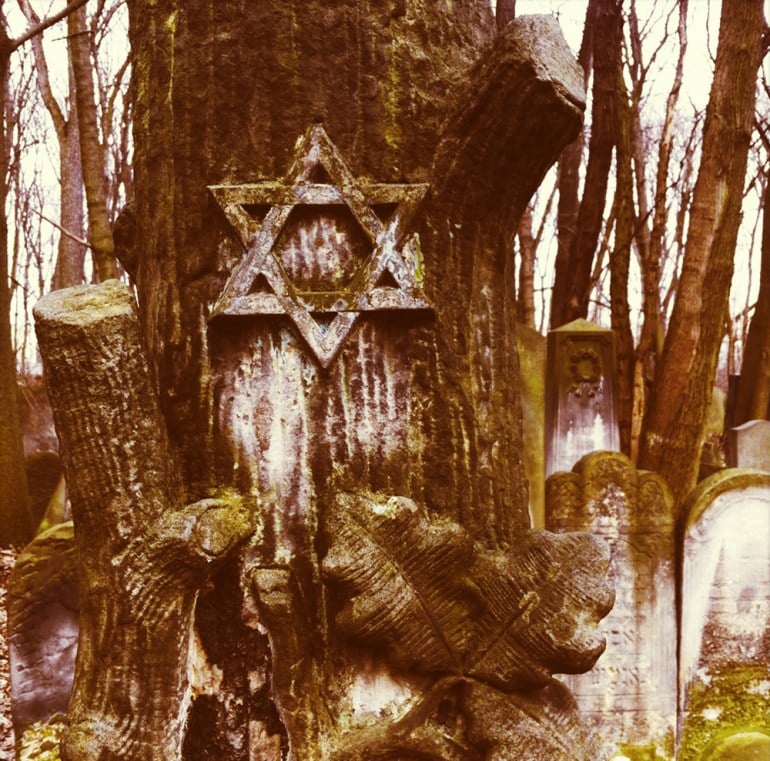
Detail of Matzevah in Jewish Cemetary, Photo: Paul Bargetto
With the recent addition of the nearby Museum of the History of the Polish Jews, and its revelatory permanent collection that unfolds a thousand years of Jewish life in Poland, the Jewish Cemetery is more important now than ever for understanding the deeply intertwined relationship of Polish and Jewish culture. In the tangled paths and ruined stones one can see the whole of Jewish society: children and adults, the poor and the most wealthy, Orthodox and Reformed, assimilated and Atheist, Zionist and Communist.
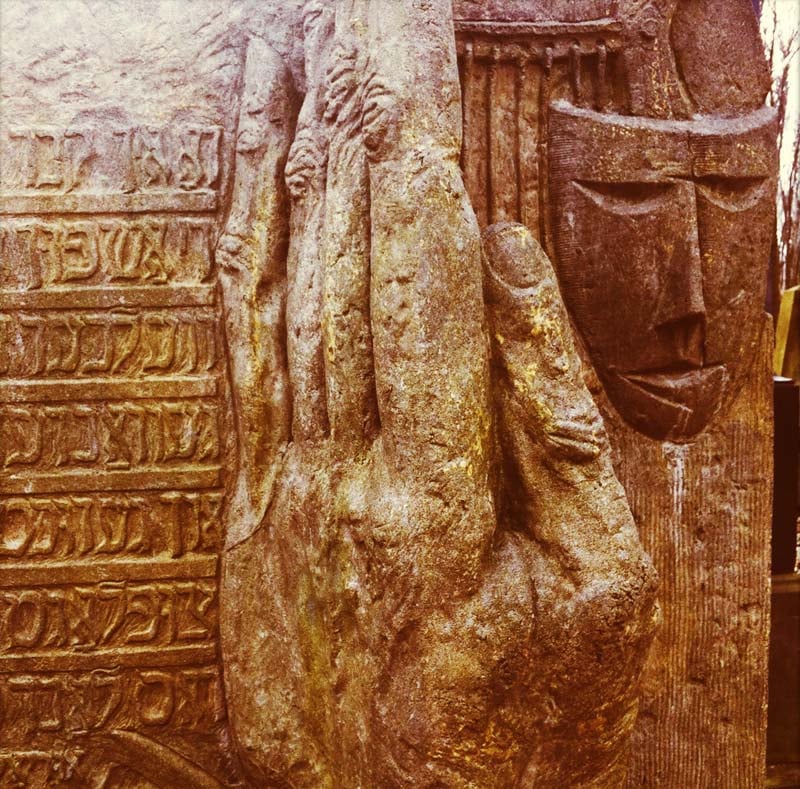
Detail of Matzevah in Jewish Cemetary, Photo: Paul Bargetto
There are many important people buried here such as Chaim Soloveitchik, the founder of the Brisk rabbinical dynasty, and famous writers such as Solomon Anski, the author of The Dybbuk, and Ludwik Zamenhof, the inventor of Esperanto, just to name a few. There were more Jews in Warsaw than in any other European capital before the war, and the cemetery bears silent witness to this rich and vibrant civilization that made Poland the most Jewish of nations in Europe.
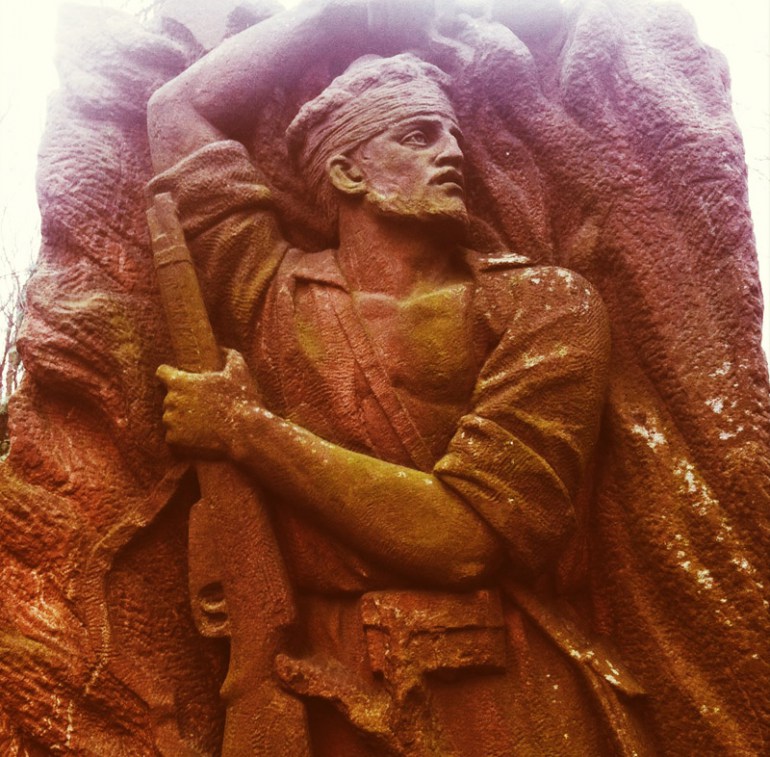
Detail of Matzevah in Jewish Cemetary, Photo: Paul Bargetto
It is a peaceful place, suitable for contemplating the enormous legacy of Jewish culture in Poland, and to gain a sense of the true scale of the tragedy of the Holocaust that one perhaps misses in places like Auschwitz.
And unlike the memorials and the concentration camps, the Jewish Cemetery in Warsaw remains a place for the living, full of life (and wildlife) and a welcome quiet refuge from the bustle of city life in Warsaw.
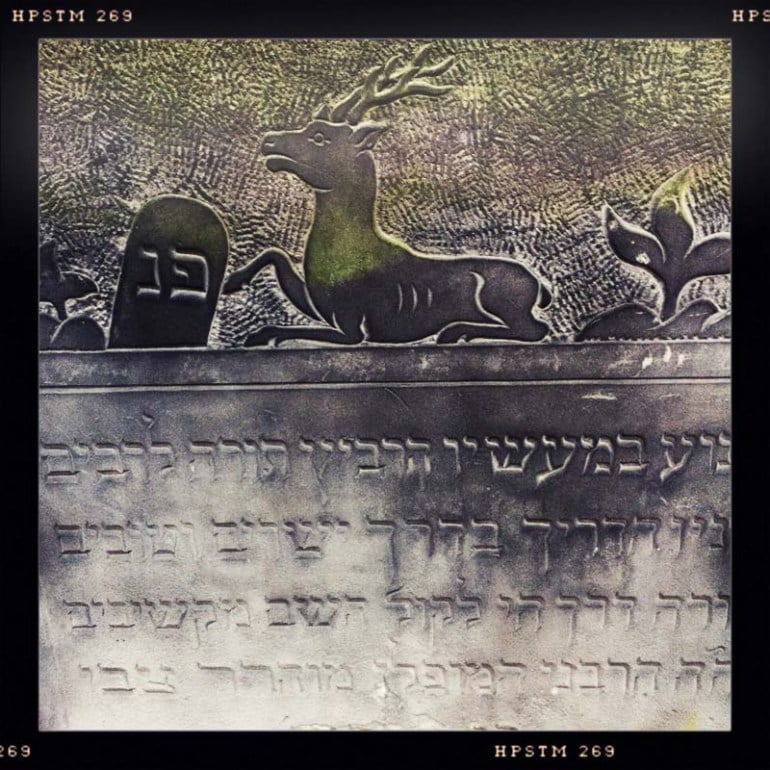
Detail of Matzevah in Jewish Cemetary, Photo: Paul Bargetto