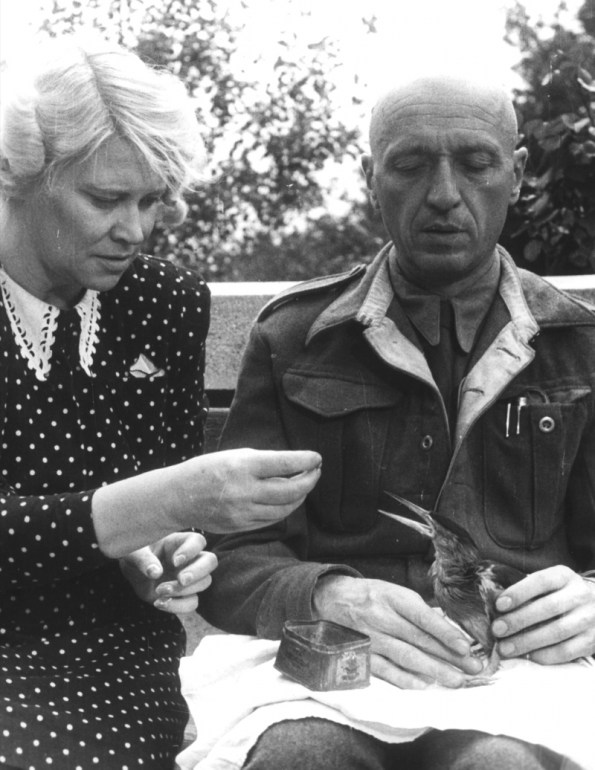
Antonina and Jan Żabiński,
photo: Zoological Garden in Warsaw
The villa of Jan and Antonina Żabiński which stands on the terrain of the Warsaw Zoological Garden has just become a site of an exhibition about Jews who hid in the zoo during WWII. In the framework of the Polish Righteous – Recalling Forgotten History project POLIN Museum (The Museum of the History of Polish Jews) has also launched an online exhibition which describes the zoo’s history in the days of occupation – the history of its owners and of some of the people that the Żabiński family saved.
“The House Under A Wacky Star”, as the villa was called, was an asylum for, among others, sculptor Magdalena Gross, writer Rachela Auerbach, boxer Samuel Keningswein and Szymon Tenenbaum – an entomologist. “The House Under A Wacky Star” exhibition is available to view here.
Jan Żabiński, an agronomic engineer and doctor of physiology, was appointed Director of the Zoological Garden in 1929. He was passionate about developing the newly-founded institution and Antonina became his closest associate. Their villa became a home for injured animals who recovered there under their loving care.
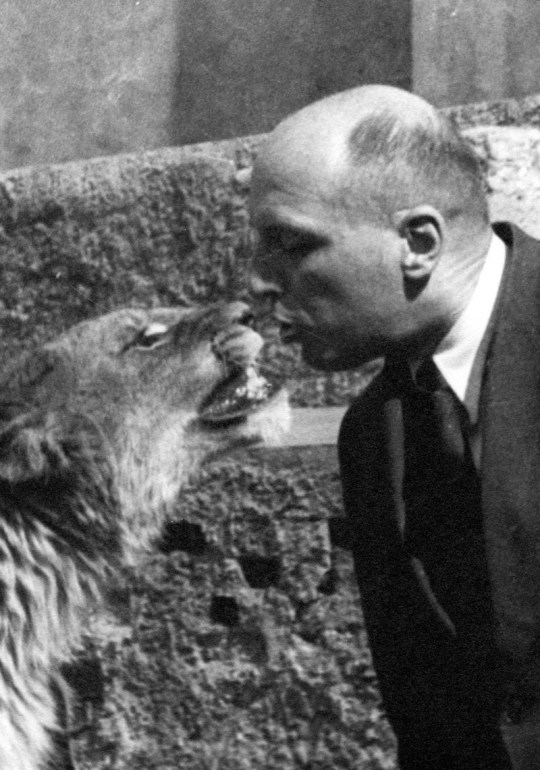
Jan Żabiński, photo: Narodowe Archiwum Cyfrowe
When the war broke out, most of the zoo’s animals were killed. Some of them were killed by their keepers; they decided that peoples’ lives would be jeopardised if the animals escaped during a bombardment. Other animals were lost during a hunt organised on the grounds of the zoo, some were eaten, and some of the animals were transported away by the Germans.
The Żabiński family took part in a conspiracy to hide people, weapons and ammunition in the abandoned cages and pavilions and in their villa. The zoo became an asylum for many Jews.
Based on the relations of the survivors, Jan and Antonina Żabiński were honoured with the Righteous Among the Nations title in 1965.
The exhibition is realized as part of the “Polish Righteous – Recalling Forgotten History” project.
Source: press materials, edit. & transl. Agata Dudek-Woyke, 08/05/15