The Holocaust
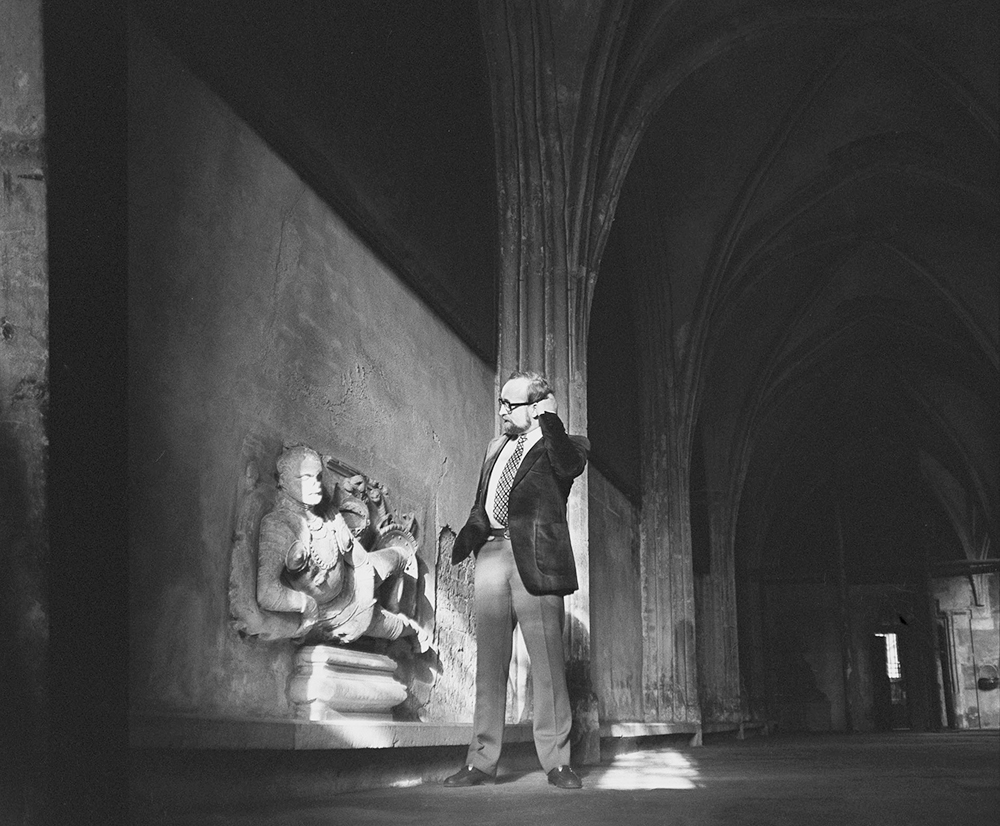
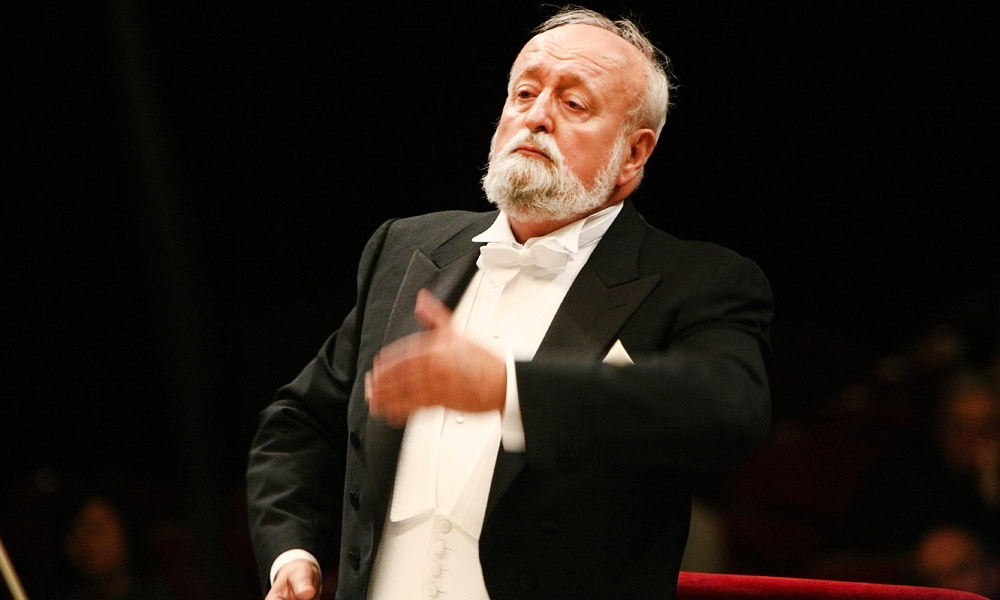
Krzysztof Penderecki in Dębica, 1969, photo: Wojciech Plewiński/Forum
Memories of Jews in a pre-war Poland keep surfacing not only in the klezmer motifs of Penderecki’s compositions but also in a constant reliving of the Holocaust. In 1963, Penderecki organised a naturalistic radio show, Brygada Śmierci (Death’s Brigade), based on the text by Leon Weliczker, a member of the Nazi Sonderkommando that erased traces of genocide. Weliczker was one of the Jewish prisoners incorporated into the unit by force, and after his lucky escape, he preserved his diary from the time.
The premiere performance of Brygada Śmierci was staged a year later in Warsaw, with the legendary Tadeusz Łomnicki reading the text. Two lights were placed on the stage, one a dead-blue colour, the other a screaming red. Weliczker’s text is a truly shocking testimony of the Holocaust – completely emotionless and terrifyingly detailed. Penderecki decided to use it without any modifications, only adding sound effects that were created at the Polish Radio Experimental Studio with Patkowski.
I am surprised that an artist of Penderecki’s format decided to mix, in this way, realistic documentation with an attempt at an acoustic soundtrack, which immediately makes one think of an art piece. Art ends where true realism begins.
Such was the commentary by Zygmunt Mycielski, Jarosław Iwaszkiewicz added:
This thing, performed in front of a concert audience, seated in a warm auditorium on comfortable chairs seemed to addres the worst of human instincts
Another significant and less controversial representation of the Holocaust in Penderecki's work is the piece Kaddish, with the dedication 'To the Abrahms of Łódź who wanted to live. To the Poles who saved Jews.'
When writing music for the Kaddish, I evoked the prayers that were sung in Eastern Galicia, Ukraine and Romania. I was advised by my late friend, Boris Carmeli. Before dying, in mid-July, he passed on his remarks, he corrected the accents. He would sing me various melodies that were sung by his grandfather, thus they had to be at least as old as the mid-19th century.