Solo debuts and new stagings by classic masters took place in spite of the dramatic financial cuts and the fall of the Śląski Teatr Tańca that sadly occurred in spite of the artists’ struggle. We bring you a review of the year’s most interesting phenomena of the Polish dance scene.
Faust goes rock!
This year was undoubtedly owned by Ewa Wycichowska and artists of the Poznań-based Polski Teatr Tańca (Polish Dance Theatre), PTT for short. As part of the celebrations of their theatre’s 40th anniversary, the PTT organised a festive array of shows in 10 installments throughout 2013. PTT’s Jagoda Ignaczak summarises:
We had three premieres, one renewal and five premiere shows by the Atelier of Polski Teatr Tańca. We performed in Norway, Slovakia, and in Russia. We also hosted two festivals and international workshops.
PTT’s commemorative marathon was launched in January, with a contemporary remix of Conrad Drzewiecki’s hisotric choreography entitlted Don Juan i inni (Don Juan and others – a piece that held Polish audiences waiting on tip toe 40 years ago, in 1973.

A scene from Samotność Fausta (The Solitude of Faust), photo: press release
The young dancers presently engaged in PTT tackled other legendary pieces of the troupe, such as Krzesany, Yesterday, The Rite of Spring, Carmen, and Faust goes rock. A new piece, Album z tego świata was also created by Ewa Wycichowska, who drew on the poetry of Stanisław Barańczak for inspiration. The PTT also hosted a residency staging directed by Jo Strømgren, a Norwegian dancer and choreographer famous for his adaptations of Ibsen. The acclaimed artists engaged PTT dancers in a piece under the telling title Czterdzieści (Fourty).

A scene from Architecture of light, photo: press release
Paulina Wycichowska authored a special dance piece as part of the jubilee celebrations. She based her Architecture of light on religious rituals and rites. A dancing area was marked off within the space of a bare industrial hall, with a moving orchestra playing live as part of the piece. Wycichowska made the trumpet player and the singer into commentators of the piece and as she had the musicians wonder and join in the show, according to Stefan Dryjewski’s review the narrative of movement was given a new framework and became much more condensed.
The celebrations were crowned with the bold Volta performance, directed by Andrzej Adamczak and the screenings of Anna Kochnowicz’s documentary film about the four decades of PTT’s work.

Volta, photo: press release
Centrum w ruchu - the centre in motion
A group of young, independent dancers and choreographers who returned to Poland from their studies abroad created a special space in Warsaw for dance experiment and research. Among those who decided to develop their talent and continue working in Poland are Weronika Pelczyńska, Karol Tymiński, Iza Szostak, Aleksandra Borys, Izabela Chlewińska, Magdalena Ptasznik, Maria Stokłosa, Karina Kordova and Wojciech Ziemilski. Apart from a dozen performances and hundreds of workshops those engaged in creating the centre have also created socially engaged projects in public space. The dancers state:
CENTRUM W RUCHU is our response to the situation we were confronted with – that of a lack of places where we could develop our work, create our performances and conduct workshops. In spite of our different interests and different artistic languages we decided to stick together in order to provoke changes. We want to stimulate a development within the dance and performing arts circles and increase their presence in the cultural life of the capital city.
The mayor of Wawer (a small town within the Warsaw vicinity) decided to give an under-populated school building over to the group. Old classrooms have been adapted into studios, and the centre is meant to also host various dance-related projects and activities for the local community. In a talk for the Gazeta Wyborcza daily, Izabela Szostak and Marysia Stokłosa added that the place was granted to their group free of any charge and it is supposed to function as a cultural centre.
Wielkopolska Revolutions
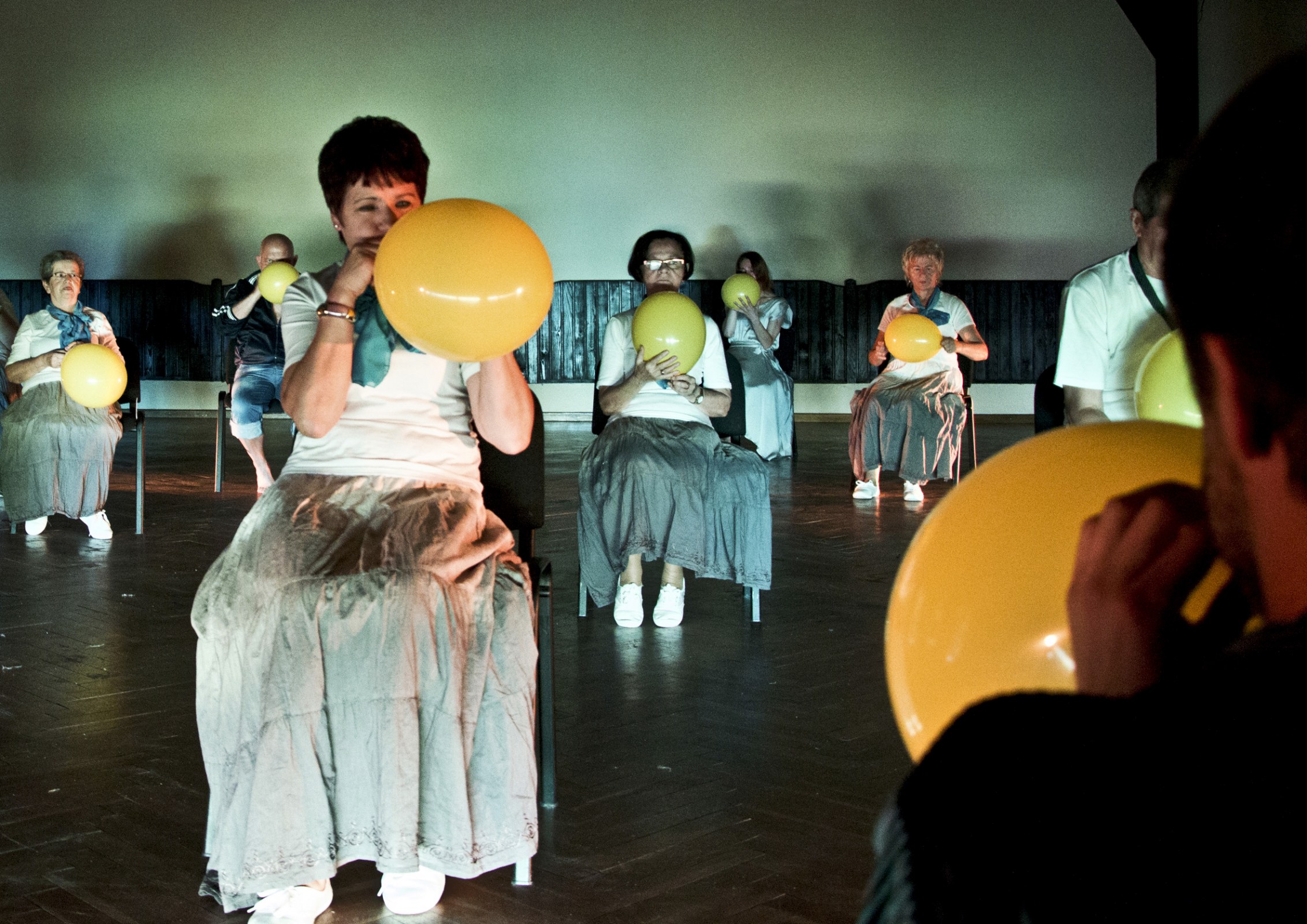
From the Zakrzewo performance, photo: Mirek Kaczmarek
Noce i dnie (Nights and Days) is a performance which has been realised as part of the broadly commented project, which runs under the title Wielkopolska:rewolucje. The initiative creates a meeting place for avant garde art and the Polish rural and folk reality. Noce i dnie engages contemporary choreographers and 15 amateur dancers - senior members from the Wrzos singing ensemble from Zakrzewie, under the lead of choreographer and dancer Mikołaj Mikołajczyk. The amateur performers decided to tackle not only new dance, but also the stories of their lives. They drew inspiration from Maria Dąbrowska’s novel entitled Noce i dnie, in which she attempts to sum up a lifetime, and look into a life’s fulfillments and failures. Mikołajczyk revealed that his encounter with the seniors gave him the desire to learn as well as great distance towards himself. For years, Mikołajczyk was a solo balet dancer of the Teatr Wielki in Poznań. At the height of his career, he had a tragic accident on stage, which excluded him from the possibility of performing. Maciej Nowak, a theatre critic and columnist commented:
Can one dance on the other side of the horizon? This is a question addressed not only to the Wrzos singers, but also Mikołaj himself, who is streched out helplessly across the laps of participating ladies. The answer is comforting: yes, there is also dance on the other side.
Mirek Kaczmarek is the author of the stage design for the Noce i dnie piece, and there is also the participation of dancer Iwona Pasińska as well as a guest performance by the actor Adam Ferency. The Wielkopolskie:Rewolucje programme has met with great interest, and it has brought its curator Agata Siwiak a nomination for the prestigious Polityka Passport Award.
The Rite of Dreams, Words, and of Spring
Stary Browar, located in the western city of Poznań is one of the most active and expanding centres for the development of contemporary Polish dance. Directed by Joanna Leśnierowska with great success, it also confirmed it is worthy of its fame this year. The most interesting and the most important dance projects of 2013 were created at the Stary Browar. The centre hosted numerous solo projects by young artists. It was also home for Iza Szostak’s project about childhood, Ciało. Dziecko. Obiekt (Body. Child. Object), which was realised as part of the SPAZIO educational and artistic programme of the EU.

Iza Szostak's Ciało. Dziecko. Obiekt (Body. Child. Object), photo: press release
Yet, the performance that drew the viewers’ particular attention was Niżyński. Święto snów (Nizynsky. A Feast of Dreams) a new staging of Stravinsky’s ballet. The solo performance created by Anna Godowska and Tomasz Wygoda was a journey through the states of consciousness of dance legend Vaclav Nizynski. The two artists based their work on the dancer’s Diary and it formed part of the Dance of the Sleeping Body project. The endevour is conducted by Sławek Krawczyński and Anna Godowska since 2004 and their artistic research is combined with implementing the ideas of Carl Gustav Jung’s psychology and process-oriented psychology of Arnold Mindell within the practice of dance and theatre.

Niżyński. Święto snów, photo: Jakub Wittchen
In 2013, the Poznań centre also became the second one in the world to create a special space devoted to children. Baby space brings together multimedia, animation, dance, music, theatre and the spoken word for an interdisciplinary experience as conceived of by Dalija Aćin Thelander. The Serbian choreographer has authored the concept of inviting local artists to create a friendly and stimulating space for children.
A Few Steps to Lutosławski
New Home of Contemporary Dance from Culture.pl on Vimeo.
Five young dancers decided to discover what contemporary choreography could have in common with the work of the great Polish composer Witold Lutosławski. They ran a series of workshops in the north-eastern beautiful Mazury region, in a house of creative work at Burdąg. Marysia Stokłosa said in a talk with culture.pl that it prooved a difficult task - not only does Lutosławski’s music lack the need for any complementation, but also Lutosławski didn’t really like dance. Stokłosa said, “We want to explore the relation between dance and music. We are faithful and concentrated on the pieve, we don’t bring in any extra content, no drama of emotions. We listen in to Lutosławski, but we don’t add anything of our own”. The effects of the workshops were later shown at Warsaw’s Centre for Contemporary Art.
On the Dancefloor with David Bowie

New (Dis)order, photo: Jakub Wittchen
Ramona Nagabczyńska and three fellow dancers, Magdalena Jędra, Kondrad Szymański and Izabela Chlewińska presented 15 performances of their staggering piece New (Dis)Order at the Edinburgh Fringe festival in August. Choreographed and directed by the Polish-Canadian dancer Nagabczyńska with, as underscored in the event’s programme, a generous input from the dancers, the piece stages a dynamically changing array of bodily reactions. The dancers are bodies, bodies prone to the beat and din of music (a flowing undercurrent in the piece) as they are susceptible to each other, and then - to their own organic reactions of breathing, sweating, giving off heat. They go on and on, as if without end, as the beat grows and fades, and a very special thing happens with the light… The dancers find the beat, it finds them. They search for and then abandon each other. The artists reiterate:
This dance piece is about alternative culture. This dance piece is about individuality. This dance piece is about collectively. This dance piece is about body politics. This dance piece is about aesthetics. This dance piece is about resistance. This dance piece is about conformity. This dance piece is about ecstasy. This dance piece is about eroticism. This dance piece is about history. This dance piece is about rhythm. This dance piece is about ritual. This dance piece is about new order. This dance piece is about new chaos. This dance piece is about dance.
The lighting design for New (Dis)Order was created by Jan Cybis. Music employed is from NEU!, Nisennenmondai, Ścianka, Chinawoman and David Bowie.
Gdańsk: The Dance Enclave
One of the leading dance groups in Poland, the Dada von Bzdulow troupe also had a very fruitful year. They staged premiere showings of Enclave4/7, which was prepared by Katarzyna Chmielewska (the co-founder of Dada) and the Spanish director and choreographer Roberto Olivan. Within the small space of the Malarnia stage at the Teatr Wybrzeże, the duo created a piece they described as “filled with risk and many questions for which not everyone will be able to provide an answer.” Together with the spectators, seven energetic and passionate dancers set out on the search for some of those answers.
The dancers are students of Leszek Bzdyl, Katarzyna Chmielewska and Anna Steller. Their mentors performed in a piece in which they experimented with popular culture. They entitled it Zagraj to czyli 17 tańców o czymś (Play it, or 17 dances about something).
Kaya Kołodziejczyk’s Improv Gone Green
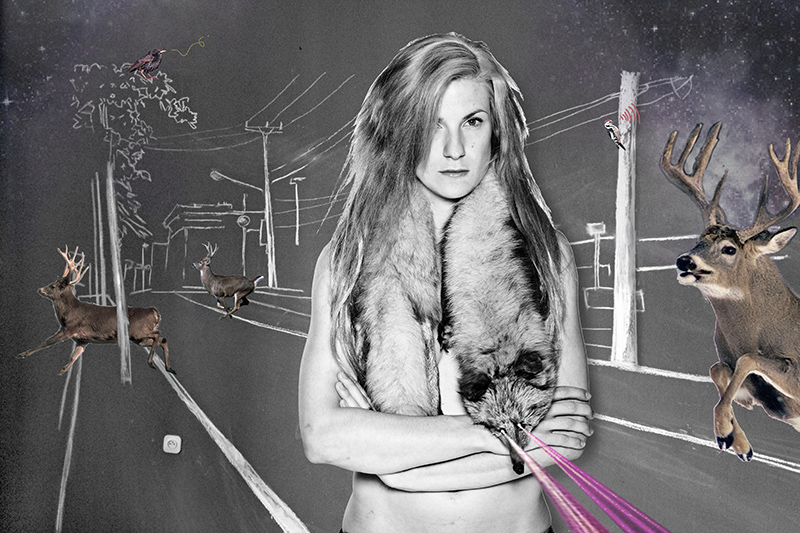
This is one of the hottest names in Polish contemporary dance. Kaja Kołodziejczyk has performed in pieces by masters in the genre, such as Anna Teresa de Keersmaeker, William Forsythe and Mariusz Treliński. She has choreographed for the Opera Harnasie, which she based on Wojciech Kilar’s Krzesane and Karol Szymanowski’s Harnasie. Kołodziejczyk is also a guest lecturer at the Franfurter HfMDK, and the renowned P.A.R.T.S. school in Brussels. She also collaborates with various theatres across the globe. After her oriental and folk inspirations, she decided to search for dance in nature and improvisation.
Her solo show, SOL, is the effect for her research on a new form of movement, which led her to the American Mad Brook Farm of Steve Paxton and Lisa Nelson - the precursors of contact improvisation. During her work on the piece, Kołodziejczyk also collaborated with the legendary and politically radical Bread and Puppet Theater from the United States, which was celebrating its 50th birthday this year. According the artist herself, her SOL is a critical look onto the world of contemporary dance a few decades after the revolution of post-modern dancing pioneers. It is also an attempt at summing up her own career to date.
The premiere showings of SOL took place as part of the Ciało/Umysł festival in Warsaw in autumn. She then took SOL to the Maat Festival organised by Tomasz Bazan in the south-eastern city of Lublin.
Author: Anna Legierska, translated with edits by Paulina Schlosser, 18.12, 2013