1. Crime: 'Drive Your Plow Over the Bones of the Dead' by Olga Tokarczuk
Olga Tokarczuk, Drive Your Plow...
The title of Olga Tokarczuk’s book is taken from William Blake. In Drive Your Plow Over the Bones of the Dead, the reader will find an intriguing and entertaining mixture of a detective story, noir fiction and the magical realism, with the narrative set in a remote little village in south-western Poland. The mysterious killings of members of the local hunting community raise eyebrows, as the police investigate a theory according to which the murders are being carried out as an act of revenge by... animals – a theme which earned the book the name of a ‘subversive eco-thriller.’ Drive Your Plow was popular in Poland upon its publication in 2009 and was later adapted for the screen by Agnieszka Holland – as the award-winning Spoor (Pokot, 2017).
Tokarczuk is one of Poland’s most popular and successful authors (importantly, among both readers and critics). She has also been fortunate with translators – Drive Your Plow is being translated by acclaimed Polish-English translator Antonia Lloyd-Jones. Drive your Plow, a slim book, comes only a year after the more testing Flights (Bieguni, 2007) – and we’re told that Tokarczuk’s other well-known work that’s equally grand and even bulkier, The Books of Jacob (Księgi Jakubowe, 2014), is also currently being translated into English.
Looking for some more crime from Poland? Priceless by leading crime fiction author Zygmunt Miłoszewski is slated for publication in June 2018 by AmazonCrossing (trans. Antonia Lloyd-Jones)
2. Fiction: 'Collected Stories' by Bruno Schulz

Collected stories (cover)
During his lifetime, Bruno Schulz published only two volumes of short stories: The Cinnamon Shops (known in English as The Street of Crocodiles) and Sanatorium Under the Sign of the Hourglass. Renowned for its originality, these stories are set largely in a fictional counterpart of his hometown of Drohobych, merging the real and the surreal.
Collected Stories brings together all of Schulz’s stories in a new translation by Madeleine G. Levine. (Included are also four stories which were not published in either of Schulz's collections). The new version of Schulz by an American translator will surely be regarded as a challenger to the older, authoritative British translation by Celina Wieniewska, which is already over 55 years old. This means yet another chance to relish in the Schulzian word and hear his characters once again speak in the English language. The father in the new translation states:
Matter has been granted infinite fecundity, an inexhaustible vital force, and at the same time, a seductive power of temptation that entices us to create forms.
3. Fiction: 'Sońka' by Ignacy Karpowicz
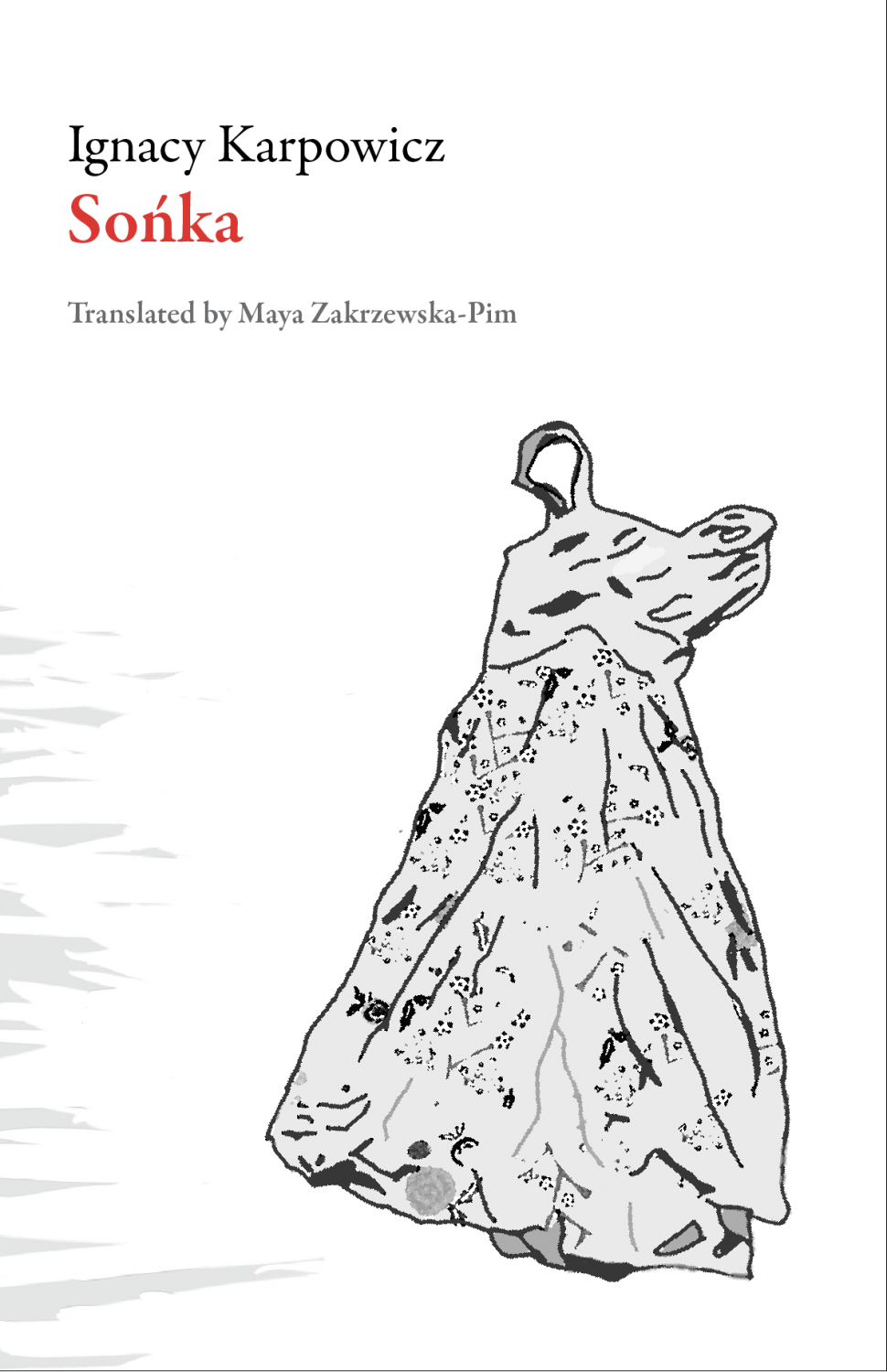
Ignacy Karpowicz, Sonka (cover)
Sońka is the story of an elderly lonely woman who one day gets a visit from an unexpected guest, which gives her the chance to tell her story for the first time. What unfolds is a wartime tale of love between an SS officer and a local girl against the backdrop of World War II – at a time of executions, abuse and oppression. In Sońka, 'everyday chores are threaded with executions, stolen moments in between episodes of abuse, lies are thoughtlessly uttered only to change the worlds and lives of two families forever.'
The author of Sońka, Ignacy Karpowicz (b. 1976) is the author of several novels, among them Balladyny i Romanse (2011).
4. Non-fiction: 'Dancing Bears' by Witold Szabłowski

Dancing Bears (Penguin cover)
In his Dancing Bears, Witold Szabłowski uncovers stories of people throughout Eastern Europe who, following the fall of communism, are now free but who seem to yearn for the time when they were not. In Bulgaria, he finds an apt analogy in the fate of local bears who, trained to dance for many generations, found themselves in a wildlife refuge after the fall of communism and still get up on their hind legs when they see a human.
Dancing Bears has the immediate power of observation typical of some of the best literary traditions of Polish reportage and just like its predecessors it relishes in an allegorical understanding of things. As Timothy Snyder writes in the cover blurb: 'Mixing bold journalism with bolder allegories, Mr. Szabłowski teaches us with witty persistence that we must desire freedom rather than simply expect it.'
Dancing Bears is Szabłowski’s second book available in English after The Assassin from Apricot City. The new book is being published by Text Publishing and Penguin, the latter company has also secured rights to Szabłowski's next still unpublished book under the working title Dictators' Chefs.
-
Dancing Bears by Witold Szabłowski, translated by Antonia Lloyd-Jones, published by Penguin Random House (US) and Text (UK/Australia); Publication date: 26th February in UK, Australia, New Zealand (Text) and 8th March in the US (Penguin)
5. Poetry: 'Aperture' by Jacek Dehnel
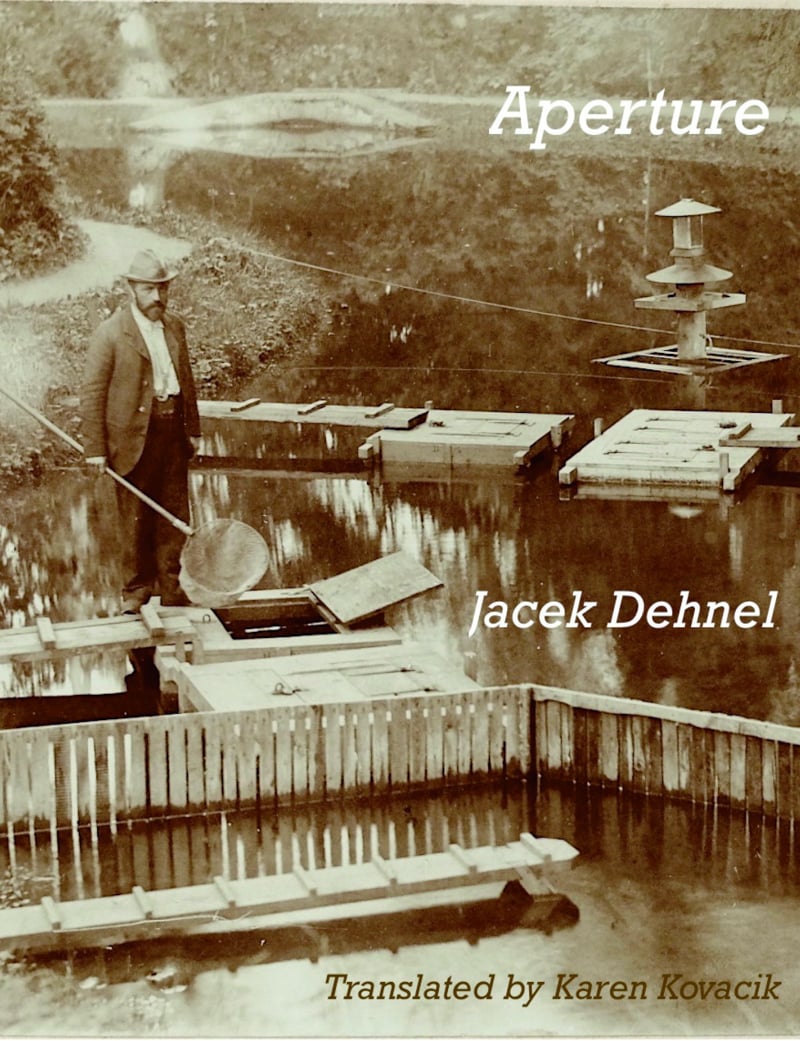
Jacek Dehnel, Aperture (cover)
Aperture presents poems by one of the most cherished Polish writers of the younger generation, Jacek Dehnel. Dehnel is a poet but also the author of novels (such as Saturn) and one of the most active literary presences on Polish social media.
This new bilingual edition of Dehnel’s poems brings ‘his fascination with formal poetry to 21st-century subjects – internet culture, science, postmodern architecture – even as he also explores intimacy, gay love and emotionally-charged objects. Dehnel’s range of styles includes poems based on the classic Polish alexandrine (each line is composed of thirteen syllables and divided into two half-lines) and intricate rhyming stanzas, to prose poems and freer lyrics’, according to the publisher. In the author’s own words:
My restlessness… is one of my strongest traits – that insatiability for places, books, paintings, people.
Looking for more Polish poetry? Posts by Tadeusz Dąbrowski, a minimalist poet of the younger generation, comes out in February 2018 (trans. Antonia Lloyd-Jones, publ. Zephyr Press)
6. Romantic poetry: 'Pan Tadeusz' by Adam Mickiewicz

Pan Tadeusz (cover)
After last year’s translation of Mickiewicz’s Forefather’s Eve by Charles Kraszewski, Pan Tadeusz joins the club. The new translation comes from Bill Johnston, the award-winning translator of Polish literature, after several years of hard work. Pan Tadeusz is a Romantic epic poem in twelve books written as a Polish alexandrine for which the translator set out to find English equivalent. Yes, it actually rhymes. Here's the translator explaining some of the difficulties of this work:
It’s a fearful thing—about 10,000 lines of rhyming couplets, with a magnificently controlled voice that shifts from the lyrical to the sardonic, the stirring to the humorous, and on the way paints a glorious picture of life in the Polish-speaking Lithuanian provinces around 1811-1812. I’m using rhyme or half-rhyme throughout; but an equal challenge is to maintain the measuredness of Mickiewicz’s language without striving for pseudo-Romantic effects and antiquated phrasing such as inverted word order ('when first the house he saw') or archaic lexis ('greensward'). I’m striving for a dignified but lively and thoroughly twenty-first century rendering of the poem'. (Find the whole interview here.)
We'll find out very soon how this works – the book is scheduled for publication in September.
- Pan Tadeusz by Adam Mickiewicz, translated by Bill Johnston, published by Archipelago Books;
Publication date: scheduled for September 2018
In case you’re looking for more Polish Romantic poetry, The Plays of Zygmunt Krasiński, including The Undivine Comedy in Charles Kraszewski’s translation, are slated for publication by Glagoslav (London) in the upcoming months. The same translator is preparing a new edition of the dramatic works of another Polish Romantic giant Juliusz Słowacki – which will hopefully be published by the end of the year (also by Glagoslav). Prepare for an English-speaking Balladyna and Kordian!
7. Non-Fiction: 'Inhuman Land' by Józef Czapski
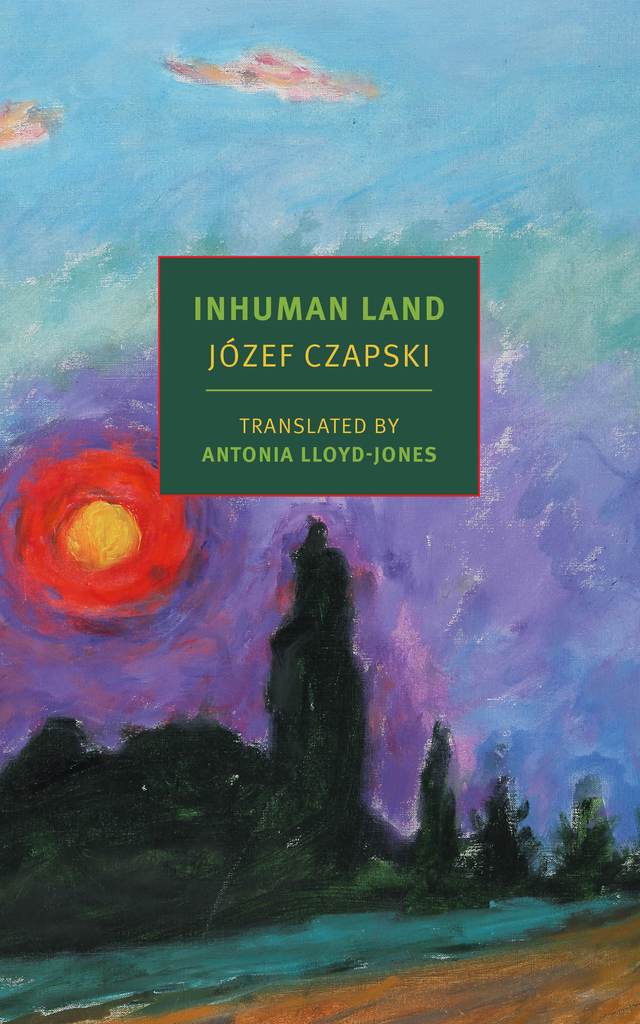
Inhuman Land (cover)
One of the two books by Józef Czapski (1896-1993) to be published by the New York Review of Books in their acclaimed NYRB Classics series this autumn. Published originally in 1949 in Paris, where Czapski stayed after World War II, Inhuman Land is the author’s first-hand account of the war years spent in the Soviet Union and the mission which he was assigned by the Polish army’s commander-in-chief, General Anders. Czapski who was charged with receiving the Polish soldiers arriving for military training in the Soviet Union, organised educational and cultural activities for the soldiers and, most importantly, investigated the disappearance of thousands of missing Polish officers. On the book's NYRB site, we read:
Blocked at every level by the Soviet authorities, Czapski was unaware that in April 1940 the officers had been shot dead in Katyń forest, a crime for which Soviet Russia never accepted responsibility.
Along with Inhuman Land, the NYRB will be publishing Czapski’s classic essay Lost Time (translated from the French by Eric Karpeles), which gathers his lectures on Proust given to his fellow prisoners of war in a Soviet prison camp.
Presenting a series of lectures in an attempt to distract his fellow officers from their collective misery, Józef Czapski managed to revive the novel and his experience of reading it purely from memory. It was a clarifying moment for him, a Proustian moment. His talks were given in French, helping to focus the men’s minds and distract their thoughts from their grim surroundings.
To complete the celebration of Józef Czapski’s life and work, the NYRB will also bring out a new biography of the Polish painter and writer. Almost Nothing: The 20th Century Art and Life of Józef Czapski by Eric Karpeles is scheduled to come out on 6th November 2018. Find out more here.
- Inhuman Land by Józef Czapski, translated by Antonia Lloyd-Jones, published by New York Review of Books; Publication date: 6th November 2018
8. Diary: 'Wartime Notebooks' by Andrzej Bobkowski
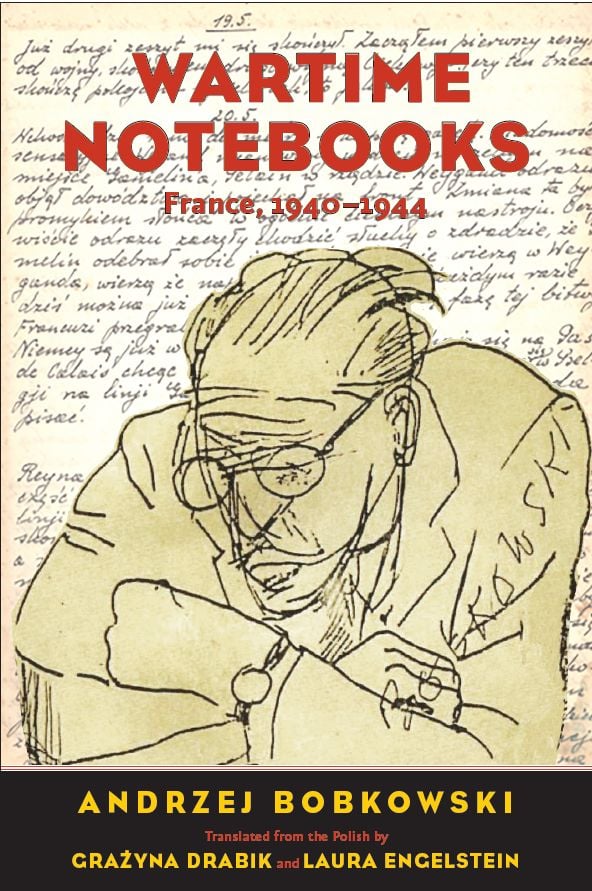
Andrzej Bobkowski, Wartime Notebooks (cover)
Also in autumn 2018, English-language readers will have their first chance to read the work of another brilliant author, who was associated with the Parisian Kultura magazine (a Polish dissident magazine run by Jerzy Giedroyc in Paris in the years 1947–2000).
Stuck in France during World War II, Andrzej Bobkowski experienced the hardships of occupied Paris and the remaining pleasures of life from the seat of his racing bicycle. Cycling down country roads and narrow Parisian streets, he recorded his observations in notebooks published after the war. ‘In the face of war, Bobkowski celebrates the value of freedom and human life through the evocation – in a daringly untragic mode – of ordinary existence, the taste of simple food, the beauty of the French countryside,’ as we read in the press note.
Bobkowski, a self-styled cosmopolitan Pole, decided to stay in exile after the war and never returned to Poland (he lived in France and Guatemala).
His irreverent tone, insistence on personal freedom, and rejection of dogmas of any stripe deprived him of a readership in Poland until Communism ended. His distinctive voice awaits discovery in the English-speaking world.
Bobkowski’s Wartime Notebooks will be published in the prestigious Margellos World Republic of Letters series created by Yale University Press
- Wartime Notebooks: France, 1940-1944 by Andrzej Bobkowski, translated by Grażyna Drabik and Laura Engelstein, published by Yale University Press; Publication date: autumn 2018
9. Educational writings: 'How to Love a Child and Other Selected Works' by Janusz Korczak
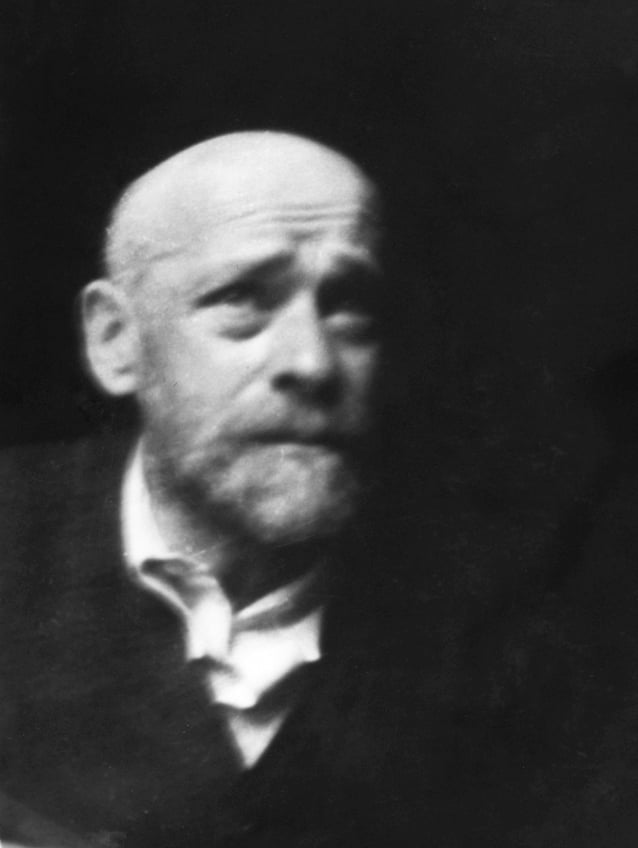
Janusz Korczak, photo: courtesy of
Joanna Rudniańska/Korczakianum
Janusz Korczak, one of Poland’s greatest pedagogues and educators, was also a great writer – and not only of children’s books. This should become quite clear in the two-volume edition of Korczak’s Selected Works, prepared by the Janusz Korczak Association of Canada and scheduled to come out later this year. The publication will include new translations of classics such as How to Love a Child and A Child's Right to Respect, along with other pieces like The Ghetto Diary, translated by some of the most accomplished Polish-English translators. The publication is co-financed by the Adam Mickiewicz Institute.
-
How to Love a Child and Other Selected Works by Janusz Korczak, translated by Danuta Borchardt, Sean Bye, Margarita Nafpaktitis, Benjamin Paloff and Anna Zaranko, published by Vallentine Mitchell; Publication date: end of 2018
10. Children’s books: 'Impossible Inventions' by the Mizielińskis
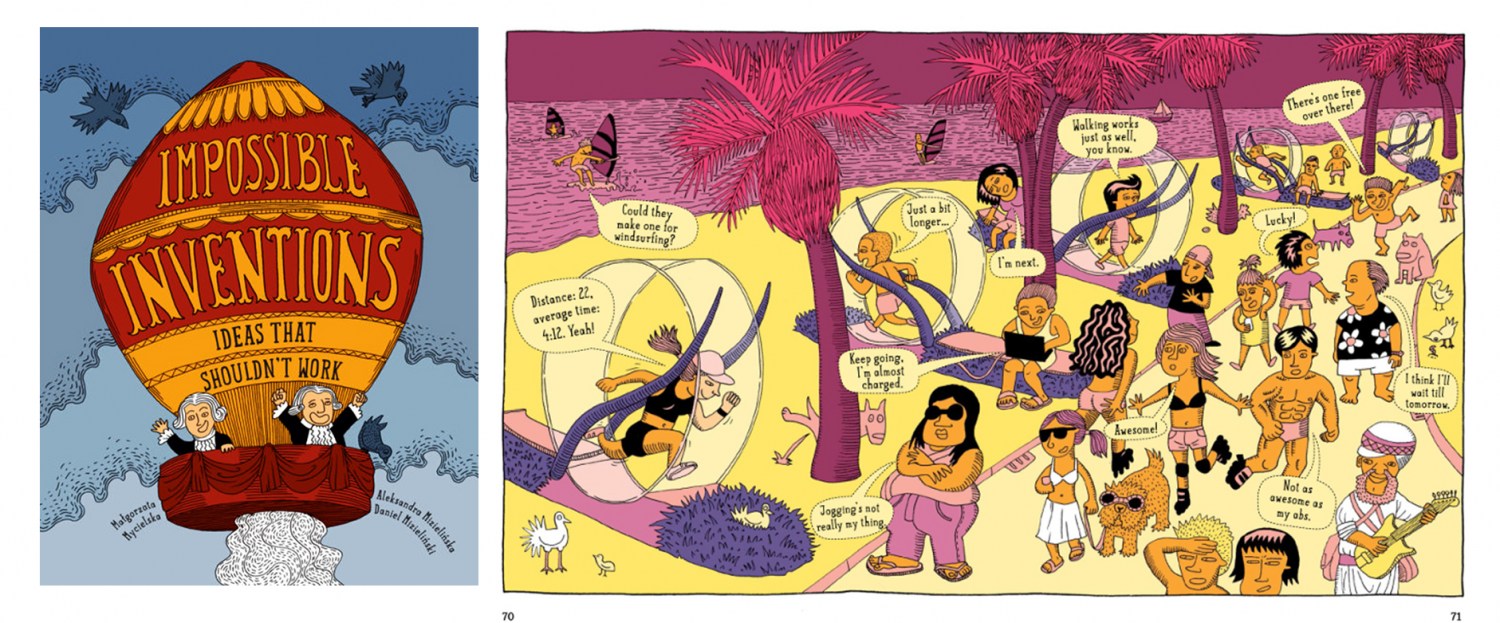
Impossible Inventions: Ideas that Shouldn’t Work by Małgorzata Mycielska, illustrated by Aleksandra and Daniel Mizielinski, photo: http://www.wydawnictwodwiesiostry.pl
Remember Maps? Impossible Inventions is another book from the dynamic duo Aleksandra and Daniel Mizieliński, the couple behind one of Poland’s international best-selling children's books of all time.
In their new book, written by Małgorzata Mycielska and illustrated by the Mizielińskis, the authors set out to tell (and illustrate!) the fascinating stories behind some of the world’s greatest 'ideas that really shouldn't work' and the people behind them: dreamers, weirdos and geniuses. Will their new book repeat the success of Maps?
-
Impossible Inventions: Ideas That Shouldn't Work, written by Małgorzata Mycielska, illustrated by Aleksandra and Daniel Mizieliński, published by Gecko Press Titles, Publication date: January 2018
And if your kids want more, there’s Kayko and Kokosh, the classic comic series by Janusz Christa, now translated into English by Michael Kandel. Started originally in 1972, the series brings the adventures of two Slavic warriors – the clever, polite Kayko and the strong, conceited Kokosh. If your kids loved the French Asterix series, they will adore Kayko and Kokosh.
There are plenty of great Polish reads for all kinds of readers out there this year. And who knows what more may pop up?
Author: Mikołaj Gliński, 2 March 2018