Interestingly, neon signs' presence on Warsaw buildings was somewhat paradoxical, especially in the period of communism, a socio–political system that fought against Western capitalist philosophy. From this perspective, they were the most unexpected commercial signs. Over time, they have come to be landmarks of Warsaw's cityscape. During the period of martial law, all the neon signs were switched off. Metaphorically speaking, they shared the fate of Polish citizens, similarly victimised by the political decisions of the communist party. Most of them have never retrieved their glow. Moreover, a great number of them were destroyed after 1989, because Poles associated them with the earlier era of political coercion.
Neon signs from different perspectives
Bednarski's story of neon signs is exceptionally captivating. The film features the surviving neon signs, as well as those that have gradually disappeared, which came to be objects of interest for art historians, gallery owners, scholars of Warsaw history and other enthusiasts. It is thanks to them that neon signs started to attract public attention and were given a second life. Each year, new neon signs inspired by old designs appear in the urban landscape. Bednarski cleverly creates links between the past and the present. In the film, he takes the viewer to the (now defunct) studio Reklama (Commercial) in Warsaw's Praga district, which was one of the major manufacturers of neon signs. He also visits the Museum of Neon Signs in the Soho Factory, and the Museum of Modern Art in Warsaw, which has a big collection of archival materials concerned with neon signs.
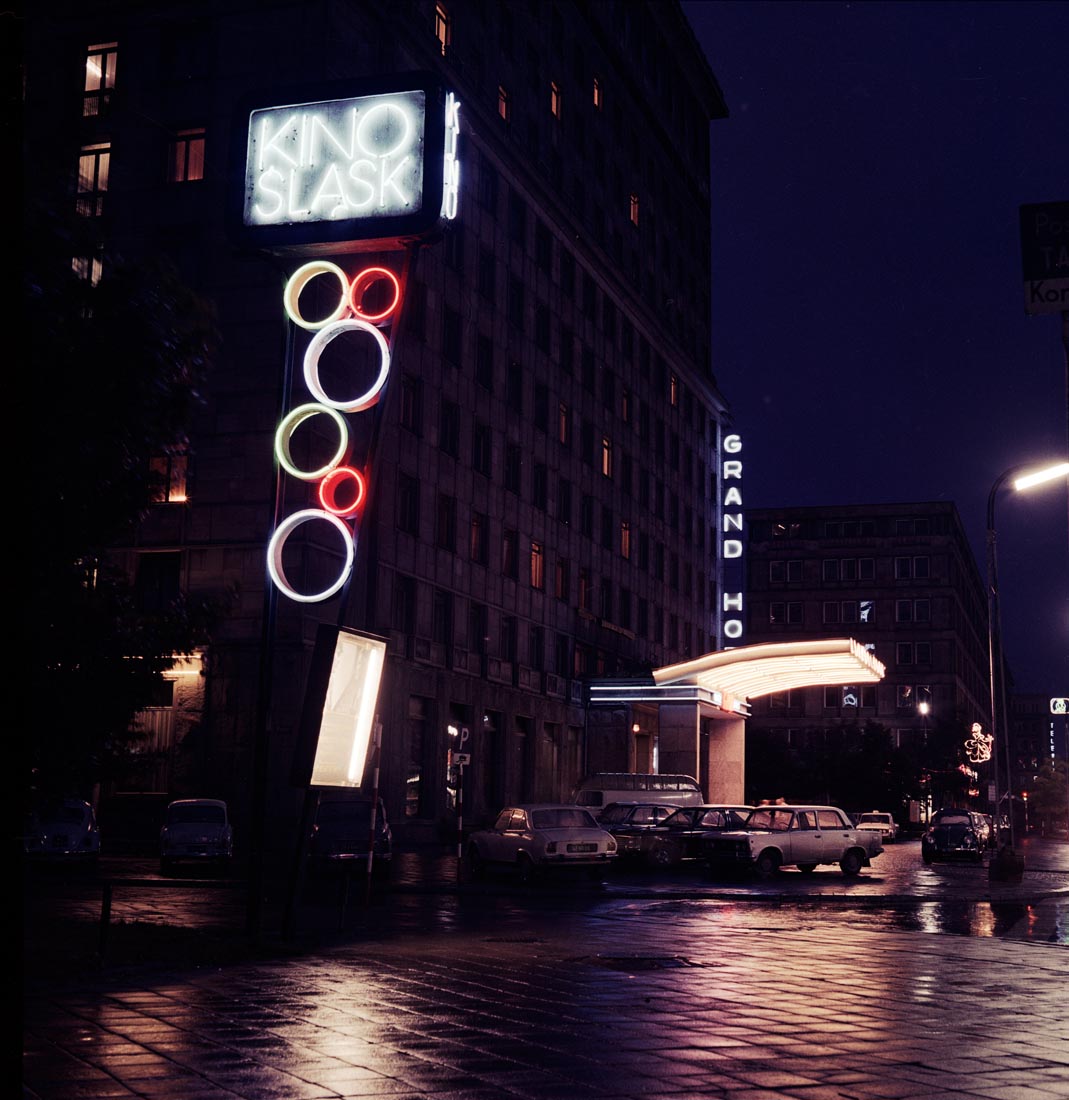
Neons in Warsaw, courtesy of the producers
Bednarski's film is composed of many found footage materials and photographs showing Warsaw by night over the pre-War period and through the 50s, 60s, 70s, and 80s. The audio commentary is composed of interviews with visual artists, architects, art historians, neon sign designers and manufacturers, and the music composed by Daniel Bloom refers to the times and places the film depicts.
Line up of screening dates within Planete+Doc Festival:
10 May, 6pm - Iluzjon Cinema - premiere
12 May, 8.30pm - Iluzjon Cinema
15 May, 3pm - Iluzjon Cinema
Section: The City is Ours
Neon – written and directed by Eric Bednarski, cinematography: Jacek Knopp Andrzej Wojciechowski, Tomasz Król, Michał Pałka-Keff, editing. Rafał Samborski, Katarzyna Zajączkowska. Music: Daniel Bloom. Production: Culture.pl, Telewizja Polska S.A. – TVP Kultura, Pado Studio Film. Polska, 2014, 52 min
Author: BS, transl.GS, 14.05.2014
