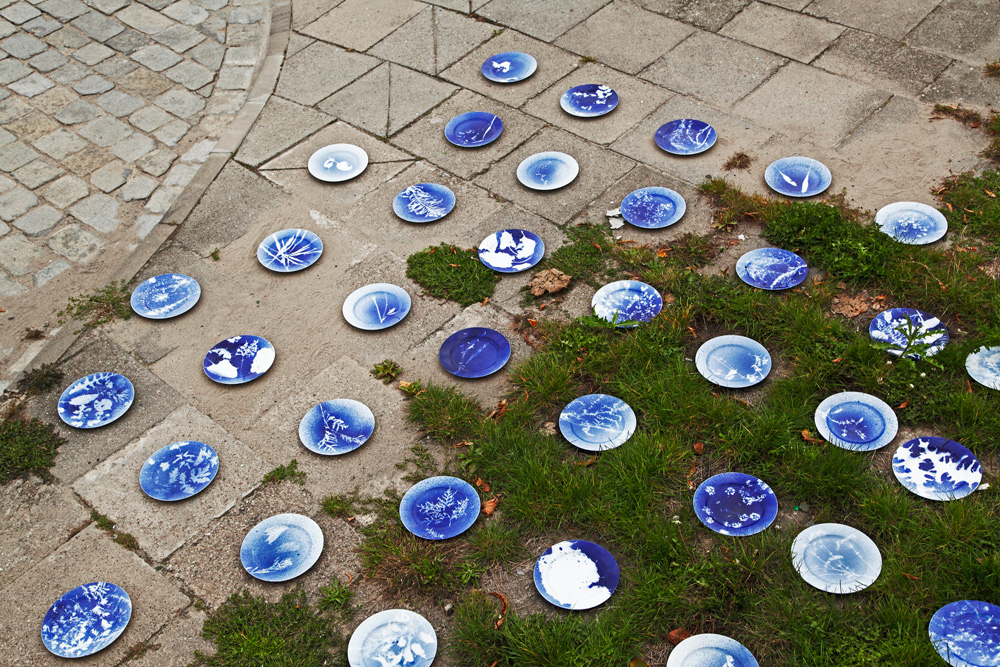
Others take interdisciplinarity as a basis of thinking about a project. Examining culture, namely observation of an ever-changing world, makes the objects gain symbolic meanings. From time to time, they become a socially-engaged carrier of value, like the work of Karina Marusińskia and Alicja Patanowska. All of the works presented at the exhibition share a common feature – these are examples of good Polish design.
What goes behind… includes the results of collaborations between two well-known Polish porcelain factories, Ćmielów and Kristoff, and three young designers: Kaja Kusztra, Magda Pilaczyńska and Tymek Jezierski. The layout of the exhibition will be designed by a team of architects, engineers, and technologists, Zieta Prozessdesign, led by one of the most famous Polish designers, Oskar Zięta. Prozessdesigne will use its newest furniture collection made of plywood and steel called PAKIET to create the exhibition space.
Designers: Karolina Bednorz, Marta Dachowska, Natasza Grześkiewicz, Maria Jeglińska, Tymek Jezierski, Kabo-Pydo, Malwina Konopacka, Bogdan Kosak, Kaja Kusztra, Magdalena Łapińska, Karina Marusińska, Bartek Mejor, Modus Design, Alicja Patanowska, Magdalena Pilaczyńska and Agnieszka Tomalczyk
Porcelain factories: Kristoff Porcelain, and Polskie Fabryki Porcelany “Ćmielów” i “Chodzież” S.A.
The exhibition was organised by Culture.pl, a flagship brand of the Adam Mickiewicz Institute.
What Goes Behind… Contemporary Polish Ceramic Design
24th to 27th September 2015
Tent London
London Design Festival
Source: londondesignfestival.com, culture.pl, edited by AS & AZ, translated by ND, 4.09.2015