He is one of the most expressive figures on the Polish acting scene. ‘A womaniser, gambler (Szu), Prince (Konstanty), Josef K. (Kafka), one of the most important creators in Polish cinema, a moody capitalist, a young creator, a humble Catholic from Kowal… these are just a part of his recognizable characteristics’, comments Jerzy Jarocki.
After graduating from high school in 1958, Nowicki started studying acting at the Leon Schiller National Higher School of Film, Television and Theatre in Łódź, but did finish it. After leaving his studies, he worked for a short while as a miner before applying again to film school, this time in Kraków, where he studied under the supervision of Eugeniusz Fulde and Jerzy Jarocki. He graduated in 1964 and in the very same year debuted at the National Stary Theatre, with which he still cooperates, in the role of Piotr in Jean Giraudoux’s Chaillot directed by Zygmunt Hübner. At the same time, he started to act in films, debuting in Aleksander Ford’s The First Day of Freedom (1964). Next, he acted in Andrzej Wajda’s The Ashes (1965).
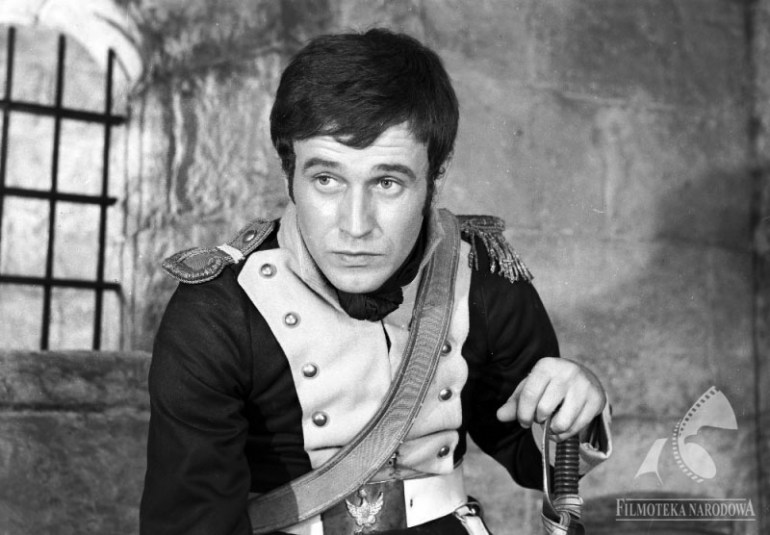
Jan Nowicki in The Ashes by Andrzej Wajda, 1965, photo: 'Zebra' Film Studio / photo: Filmoteka Narodowa/www.fototeka.fn.org.pl
In the years 1965-1971 Nowicki played several roles at the National Stary Theatre. Dariusz Domański noted:
Critics compared Nowicki to the famous Italian actor Vittorio Gassman. Undoubtedly, they were physically very much alike but apart from this similarity much more separated them. As critics rightly noticed, there was no cruelty in Nowicki’s acting, one could rather find a witches' sabbath. Cruelty was only seemingly visible in Nowicki’s interpretations of Dostoyevsky.
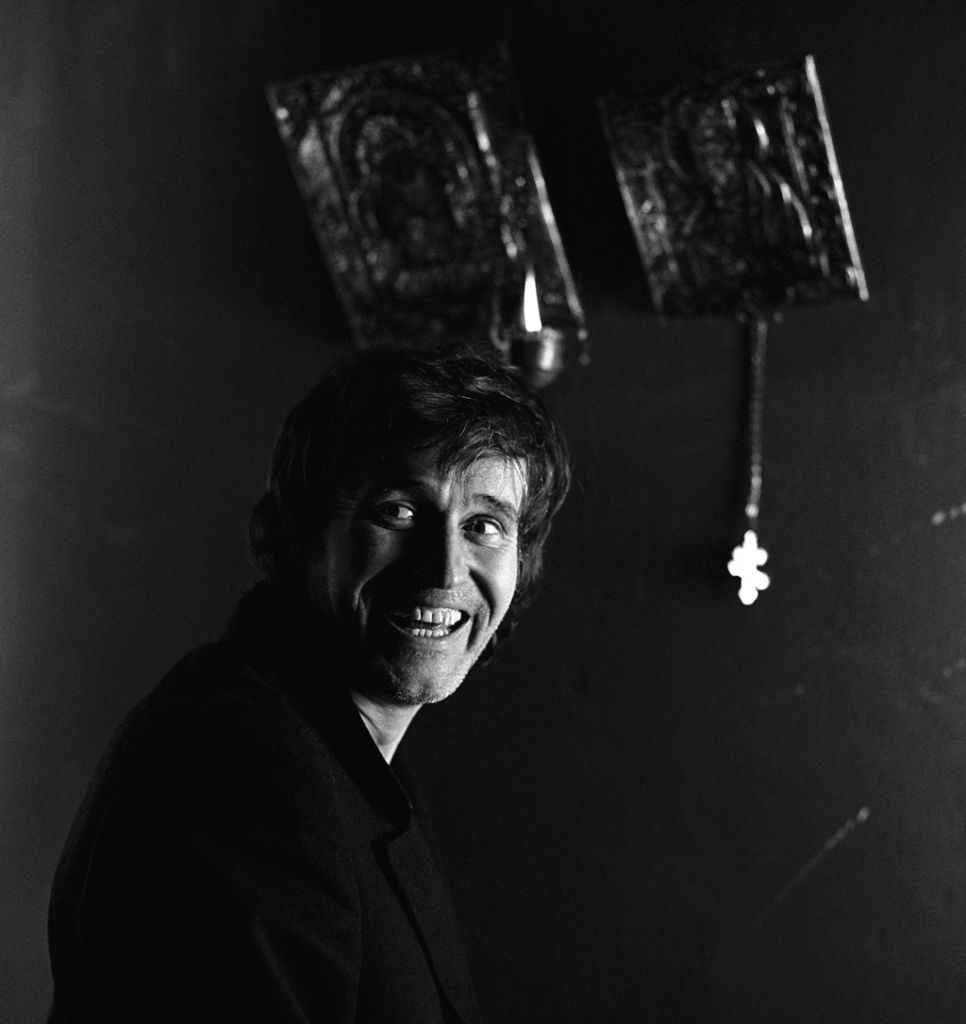
Jan Nowicki in Nastasja Filipowna by Andrzej Wajda, the National Stary Theatre, 1977, Kraków, photo. Wojciech Plewińsk
Thanks to his intriguing lover’s look, Nowicki played different roles, including: Artur in Sławomir Mrożek’s Tango directed by Jerzy Jarocki (1965), Brindsley in Peter Shaffer’s Black Comedy directed by Zygmunt Hübner (1968), Lucencjusz in Shakespeare’s The Taming of the Shrew directed by Zygmunt Hübner (1969), Jacek in Edward Albee’s Everything in the Garden directed by Jerzy Jarocki (1970) and Faust in Christopher Marlowe’s The Tragical History of the Life and Death of Doctor Faustus directed by Bohdan Korzeniowski (1971). Nowicki proved his great workshop by coping greatly with both classic and contemporary repertoire. Zofia Szczygielska wrote:
Some of those roles have stayed in the memory of the viewers to date, for instance his Brindsley, full of verve and humour; the charming Lucencjusz; and the greatly portrayed Jack in Albee’s drastic comedy about a modern American family.
Nowicki, who has always been distinguished by ‘his free way of acting on stage’ and ‘naturalness’, starred in many films too. In 1966 he played Staszek (who represented the young post-war generation) in Jerzy Skolimowski’s The Barrier. In 1968 he was Kettling in Jerzy Hoffman’s Sir Michael. Later on, he played in Krzysztof Zanussi’s Family Life (1970), Andrzej Kondratiuk’s A Hole in the Ground (1970) and Wojciech Jerzy Has’s The Hourglass Sanatorium based on Bruno Schulz’s novel.
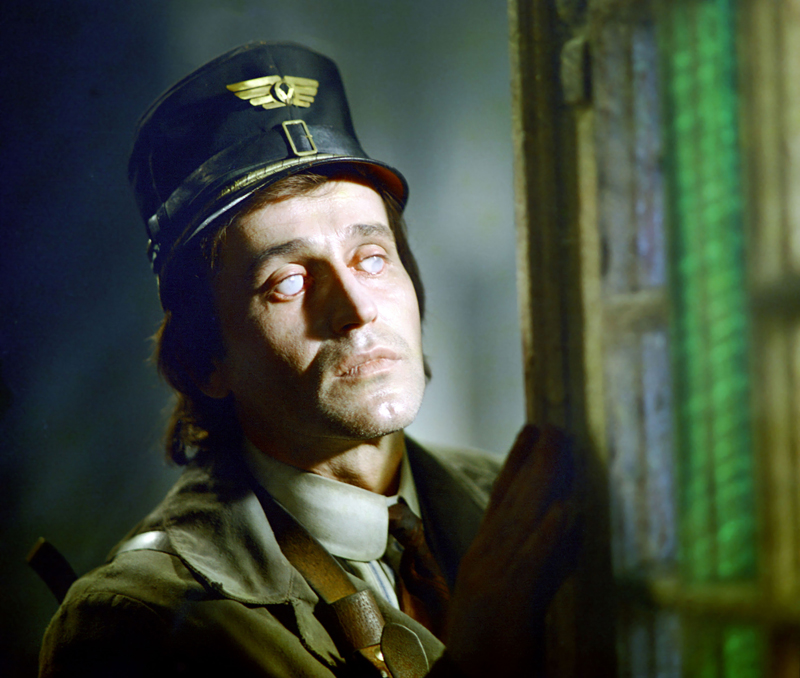
The Hourglass Sanatorium by Wojciech Jerzy Has. In the photograph: Jan Nowicki, photo: Polfilm / East News
The 1970s brought the actor popularity and acclaim thanks to his participation in huge film productions. During that decade he worked most closely with director Marta Meszaros, starring as Janos in The Two of Them (1977), Andras Novak in Just Like at Home (1978), and Marek in On the Way (1979). He also starred in Krzysztof Zanussi’s Spiral (1978) and Sylwester Chęciński’s Big Shar (1983). It became an iconic role in which Nowicki sported a sarcastic, wry face and a diabolic smile, creating one of the most expressive portraits in the past three decades.
Despite the films mentioned above, for Nowicki the 1970s was mainly a decade devoted to the National Stary Theatre: he played Mikołaj Stawrogin in Fyodor Dostoyevsky’s Demons directed by Andrzej Wajda (1971), Josef K. in Franz Kafka’s The Trial directed by Jerzy Jarocki (1973) and in further plays directed by Wajda: Stanisław Wyspiański’s November Night (1974) and Nastazja Filipowna based on Dostoyevsky’s The Idiot. Those roles provided him a place in the ranks of the best Polish actors of all times. Dariusz Domański wrote:
What was the role of Stawrogin for Nowicki? A symbolic role, a theatrical torch which still burns. This character had defined his career and his acting vocation. Playing Stawrogin, Nowicki showed a dangerously ill and corrupt demon of perversion. He played a tragic hero for whom the world is evil; this observation pushed him to all the tragic conclusions and consequences that led to murder. Evil cannot be stupid, hence Stawrogin is intelligent.
Of his role as Josef K.:
The actor was acclaimed for his acting maturity and praised in reviews for ‘intelligence and laudable discretion’ (…), chariness in using acting means, the normality in the way he builds the figure and credibility in presenting his reaction to the increasing nightmare. (…) Following the director’s concept, Nowicki gives no signs of being a victim. It is reality that becomes more and more absurd. He himself is an ordinary man, a young, thirty-year-old clerk at a huge bank who leads a banal and strictly regulated life.
After playing two completely different protagonists from the canon of world literature, Nowicki faced the Polish repertoire. Zofia Szczygielska wrote in Nowicki’s biography:
The concept of the Great Duke came to Nowicki – as he recollects – as a surprise, almost out of helplessness. He knew one thing from the very first moment – he cannot portray Konstanty as a jester.
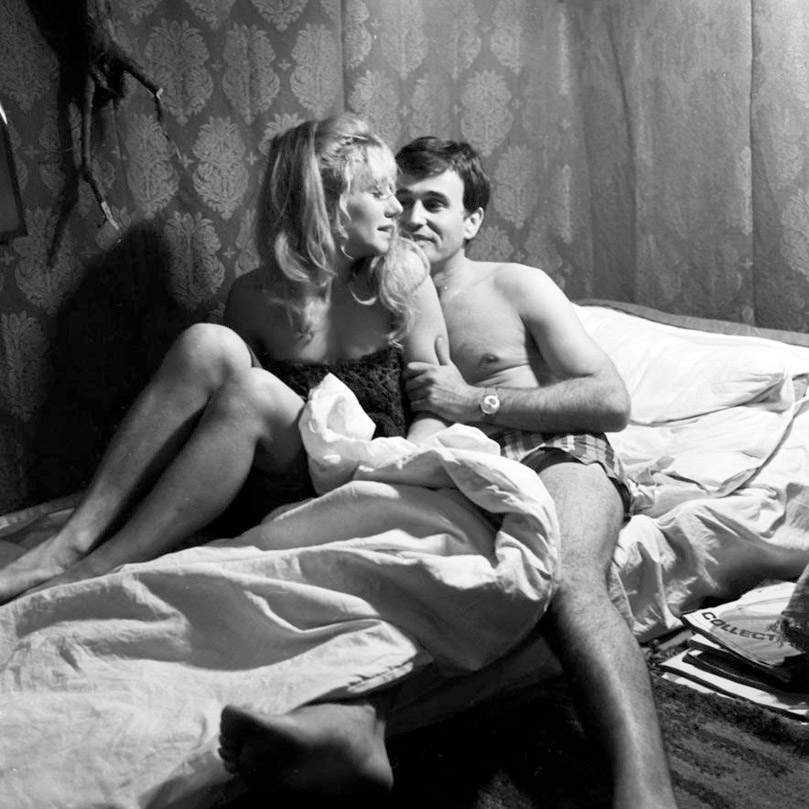
Still from Family Life by Krzysztof Zanussi, 1971. In the photograph: Maja Komorowska and Jan Nowicki, photo: Filmoteka Narodowa/www.fototeka.fn.org.pl
Nowicki handled the problem brilliantly. In a contemporary imagery of November Night, in which Wajda brought off an interpretation of Wyspiański’s drama, the Great Duke played by Nowicki was according to Marta Fik:
A dual representation, a pendant between ambition and cowardice, Polish character and tsar, passionate, miserable, revolting (…), ironic, and hidden under a mask. (…) Konstanty’s comments strike most sorely at Polish sins not because the comments are tendentious but because they are profound. Who knows if the tsar’s brother wasn’t the one who understood the reasons for the uprising most thoroughly.
Dariusz Domański wrote that paradoxically Nowicki became an idol of his generation thanks to his depiction of Konstanty:
Paradoxically, because not Hamlet, neither Kordian but the Great Duke who at the moment the uprising struck was over fifty years old, aged, and ugly. Nowicki showed only a part of his ugliness – the inner one.
The culminating point of Nowicki’s cooperation with Wajda was Nastazja Filipowna, an incredible theatrical duet with Jerzy Radziwiłowicz who played Myszkin. The director left the performers a lot of freedom and allowed them to improvise. A part of rehearsals was open to public. Nowicki once stated:
One have to think Dostoyevsky. He is so tremendous that one does not have to play an unfamiliar character, it is enough to play your own damned problems.
Nastazja Filipowna was an expression of spiritual interior, a spectacular work of the two actors.
November Night was moved to television theatre by Wajda in 1978. Nowicki had already worked in there before. He debuted in 1970 in Fyodor Dostoyevsky’s Player directed by Bogdan Hussakowski. Up till today Nowicki has starred in several dozen plays, including August Strindberg’s Erik XIV directed by Jerzy Gruza (1979), Per Olov Enquist’s Rain Snakes directed by Krzysztof Babicki (1988), Antoni Czechow’s Platonov directed by Andrzej Domagalik (1992), Dunia based on Dostojewski’s Crime and Punishment directed by Leszek Wosiewicz (1993), Stawrogin’s Case based on Dostoyewsky’s Demons directed by Krzysztof Zaleski (1995), Maryna Miklaszewska’s Count directed by Filip Bajon (1998), Stieg Larsson’s Chief directed by Anna Augustynowicz (1999), and the main role in Zbigniew Książka’s Master’s Birthday, a contemporary Polish comedy about the life of a famous actor created by Magda Meszaros (2000). On the TV screen he appeared in a few popular TV series such as Apetyt na Miłość / Appetite for Love, Egzamin z Życia / Life Exam and Magda M. He returned to the role of Marek Sobota played in Życie Rodzinne / Family Life in Krzysztof Zanussi's Rewizyta / Revisited (2009). He also appeared in smaller roles in Adran Panek's Daas (2011) and Jerzy Skolimowski's 11 minutes (2015).
In the 1980s there were no plays that fit Nowicki’s talent in the National Stary Theatre. The actor dealt with the situation by playing interesting parts in the television theatre and in films where he played memorable roles as Prince Hans Friedrich von Teuss in Filip Bajon’s Baron (1986) and Mister Beelzebub in Lava, based on Adam Mickiewicz’s Dziady (Forefather’s Eve) directed by Tadeusz Konwicki (1989).
Nowicki, once the first love of Polish cinema and later, against his specialisation, a creator of psychologically complex, multi-layered roles, remains in the centre of public attention. He rarely stars in the National Stary Theatre – e.g. in August Strindberg’s The Road to Damascus directed by Krzysztof Babicki (1991), The So-called Humanity in Madness based on Witkacy and directed by Jerzy Grzegorzewski (1992), Czechow’s Uncle Wanya directed by Rudolf Zioło (1993); but much more often in cinema: he starred for instance in Jarosław Żamojda’s Young Lions (1995), Jan Jakub Kolski’s History of Cinema in Popielawy (1998), Filip Bajon’s The Coming Spring (2000), and in Leszek Wosiewicz’s series Relocation (2000).
He also starred as the famous writer Jan in Franciszek Dzida’s The Dusk Area (2003) and the consummate fraud Mieczysław Małecki in Filip Bajon’s Foundation (2006). He played one of the men after sixty – ‘Mother’, in Jacek Borcuch’s warm film about oldness called Tulips (2004) and Jerzy ‘Big Shar’ in Jacek Bławut’s No Evening Yet (2008), a film about oldness, passing, and acting. In 2004 Nowicki portrayed Imre Nagy, the leader of the Hungarian uprising in 1956 in Marta Meszaros’s Unburied.
In 2001 he created a great character as Czebutykin in Antoni Czechow’s Three Sisters directed by Andrzej Domalik. Krystian Lupa once said about Nowicki:
His face changes, gets older, in the corner of his face features one can notice exhaustion and disappointment… but he still hypnotises with a pinch of auto reflexive distance. His smile has become much more sardonic when he stopped (at least directly) being an erotic appeal… But Nowicki still remains a lover…
In 2004 Nowicki played Cadyk in Isaak Beshewis Singer’s The Magician of Lublin directed by Jan Szurmiej (Rampa Theatre in Warsaw and Bagatela Theatre in Kraków, 2004) and Kalman in Emmerich Kalman’s The Csardas Princes (The Jan Kiepura Mazovian Music Theatre, 2006). In 2006 Nowicki directed a musical-poetic play called Between Banks and the Earth, which is based on poems written by Jan Twardowski, Bolesław Leśmian and Jan Nowicki. Both Marek Stryszowski and Cezary Chmiel played roles in the process of creating it. In 2000 the actor published the book on which the play was based, Between Banks and the Earth, a collection of columns and letters published between 1998 and 2000 in Przekrój. The letters were addressed to Piotr Skrzynecki, the founder of Piwnica pod Baranami.
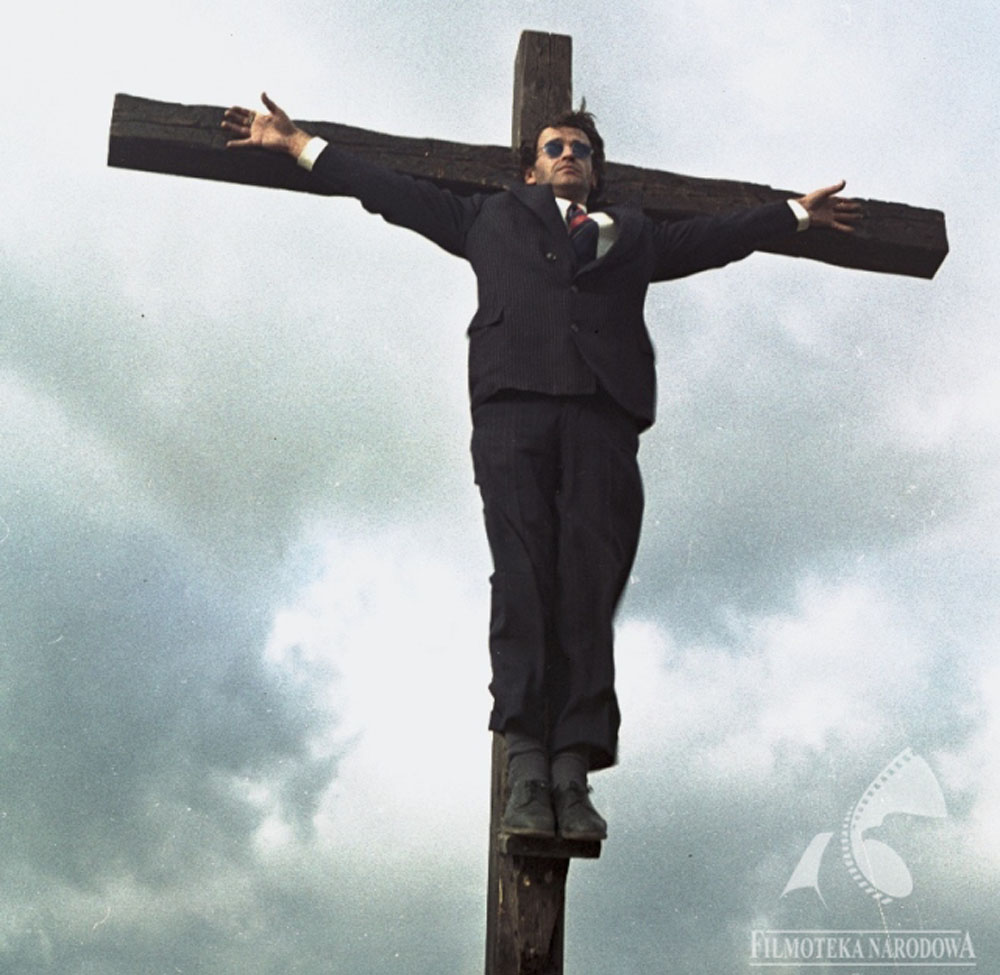
Jan Nowicki in Scorpion, Miss and Archer by Andrzej Kondratiuk, 1971, photo: Filmoteka Narodowa/www.fototeka.fn.org.pl
Selected awards:
- 1966 – Prize for the role of Artur in Sławomir Mrożek’s Tango directed by Jerzy Jarocki at the 7th Polish Contemporary Art Festival in Wrocław;
- 1972 – Dziennik Polski’s Award for the role of Stawrogin in Fyodor Dostoyevsky’s Demons directed by Andrzej Wajda;
- 1974 – City of Kraków Acting Achievements Award;
- 1976 – Radio and Television Committee Individual Award; Second National Award for his role in Directors directed by Zbigniew Chmielewski;
- 1977 – Prize awarded by Przyjaźń for the role of Myszkin in Nastazja Filipowna according to Fyodor Dostoyevsky’s The Idiot directed by Andrzej Wajda; Prize for his role in Stanisław Wyspiański’s November Night directed by Andrzej Wajda at the 3rd Theatrical Confrontations; Golden Cross of Merits; Golden Badge of the city of Kraków;
- 1982 – Honorary Prize in a vote organised by Przekrój for the most popular actors from Kraków in the years 1946-1981;
- 1983 – First prize in a vote organised by Dziennik Łódzki for the most popular film actor;
- 1984 – Prize for the role of Andersen in Per Olov Enquist’s Rain Snakes directed by Krzysztof Babicki at the 24th Theatrical Meetings; Golden Grape at the Łagów Film Festival; Golden Duck for the role of Szu in Sylwester Chęciński’s Big Shar;
- 1999 – Honorary Citizenship of the city of Kowal;
- 2001 – Commander’s Cross with the Order of Rebirth of Poland;
- 2002 – Golden Mask for the role of Czebutykin in Antoni Czechow’s Three Sisters directed by Andrzej Domalik;
- 2005 – Best Actor Award for the role of Imre Nagy in the Polish-Hungarian Marta Meszaros’s production Unburied at the 19th Tarnowski Film Festival;
- 2008 – Prize for the leading role in Before Twilight directed by Jacek Bławut at the 33rd Feature Film Festival in Gdynia; Golden Laurel for Mastery in Art.
- 2012 - 'Platinum Puppy' for great achievements in film acting at the Tadeusz Szymków Film Actors' Festival in Wrocław;
- 2013 - Life Achievement Prize at the 27th Tarnów Film Awards; 'Big Nod' for life achievement at the Quest Europe International Authors' Festival in Zielona Góra; Kołobrzeg Actor's Award 'Polish Film Icon' at the Kołobrzeg 'Summer of Thrillers' Film Festival.
Author: Monika Mokrzycka-Pokora, May 2003; translated by A.W., October 2016; updated: November 2016.

