With culturally rich metropolitan centres and a breathtaking natural landscape, Poland was historically a popular destination for travellers. Finding itself at the centre of violence and upheaval in the 20th century, the country had perhaps faded in the imagination of travellers. Now, drawn to the nation by family ties, the promise of seeing the stage upon which much recent history unfolded, or mere curiosity, foreigners are once again exploring Poland. And many are writing books about it.
We present here a collection of recent publications that present international perspectives on Poland. British comedian Michael Palin’s account offers an entertaining blend of humour and introspection. Beata Zatorska, a Pole who returned to her homeland with her English husband, has written a beautiful cookbook that supplements traditional recipes with personal memories. Marci Shore’s recent The Taste of Ashes is a different type of story – less a travel narrative than a history of post-communist Eastern Europe constructed around the people she has met over the course of decades spent researching and travelling in the region. Whether you’re looking for a light summer read, a moving family saga or a rich history, this collection has something for everyone. Poland, viewed from the perspective of outsiders, makes for a truly fascinating subject.
Michael Moran – A Country in the Moon (2008)
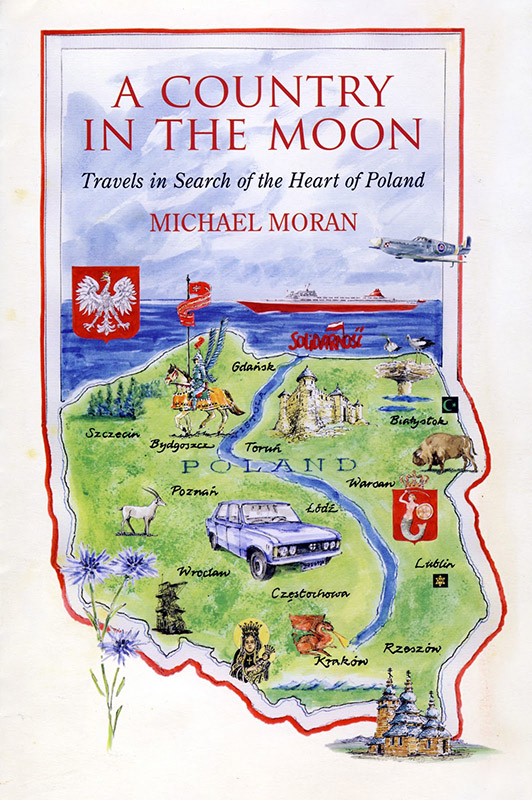
A promise to his dear uncle, to visit the birthplace of their beloved Chopin, brought Michael Moran to Poland in 1992. He arrived on a cold winter evening, to a country he suggests 'hardly anyone wanted to visit.' The early chapters of his memoir, A Country on the Moon, speak to the struggles of a foreigner entering a country and a culture he does not understand. As Moran begins to explore his new home, he discovers the charm of the country and the text becomes a pleasant account of his experiences in Poland, blending memoir with illuminating historical context.
Of A Country in the Moon, The Guardian’s Rory MacLean wrote:
By following the course of the Vistula – one of the last great natural rivers in Europe – and then criss-crossing the country during the first international car rally in generations, he begins to fill the absences in our knowledge. […] His breadth of knowledge is profound, his views opinionated, his writing passionate and heart-felt. The result is the best contemporary travel book on Poland….
Moran’s text takes its title from the words of Irish statesman Edmund Burke. Upon the final partition of Poland in 1795, Burke commented that, 'with respect to us, Poland might be, in fact, considered as a country in the moon.' Moran’s text brings readers to that 'country in the moon', and provides an accessible and entertaining account of Poland’s past, present and future.
Finding Poland – Matthew Kelly (2011)
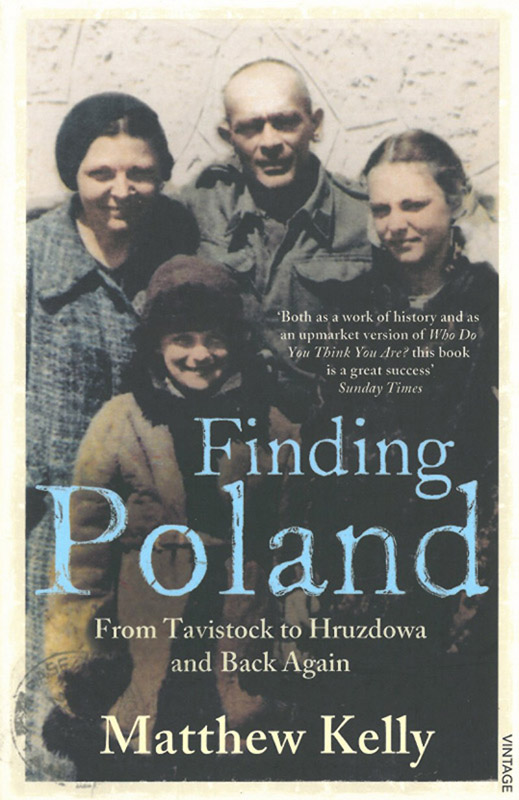
Growing up in England, Matthew Kelly always knew his grandmother was Polish. Photos of Pope John Paul II decorated her walls and she’d often feed her visiting grandchildren pierogi. She occasionally spoke of her childhood in Poland and her tumultuous journey to the UK. Finding Poland documents Kelly’s attempt to reconstruct and understand his ancestors’ history. Part memoir, part history and part travel narrative, it tells the story of the author’s journey through Poland and his family’s past.
Following the Soviet invasion in 1939, Kelly’s great grandmother and her two daughters were deported east. They were lucky enough to survive the rough road to Siberia and later found their way to Kazakhstan. After a 7-year exile in Central Asia, Kelly’s grandmother and her sister moved to Britain as displaced persons. Over the years, memories of this traumatic journey had become a series of light anecdotes Kelly’s grandmother would tell her family. A trained historian, Kelly looked to reconcile these family memories with archival texts and historic research.
The resulting book offers fascinating insights into both personal and national history. It speaks to the legacy of historic trauma, the stories families tell, and an individual’s search to understand what it means to be 'Polish'.
New Europe – Michael Palin (2008)
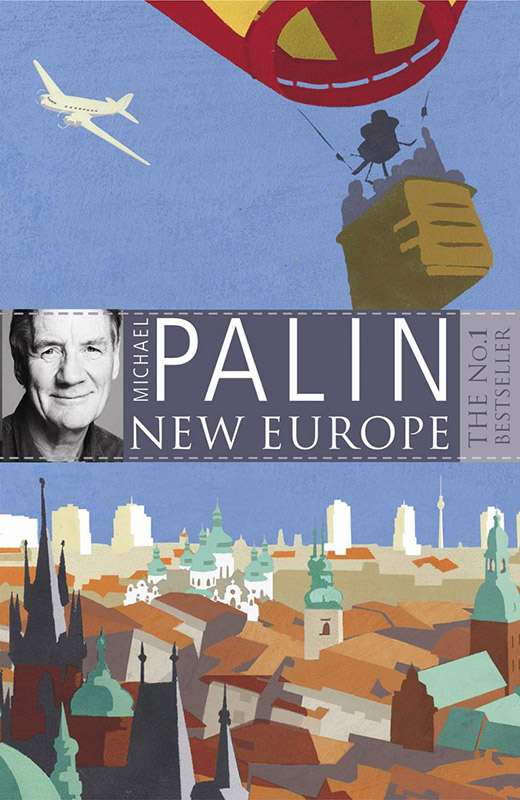
This charming volume was written to accompany Michael Palin’s 2007 BBC travel documentary, New Europe. The British comedian (Monty Python, A Fish Called Wanda) set off to explore and document countries that had been, for most of his life, hidden behind the iron curtain. His journey took him to 20 'new' countries across Central and Eastern Europe. The resulting book, accompanied by photographs from Basil Pao, is a witty account of the interesting characters and unexpected adventures Palin encountered along the way.
One episode of Palin’s documentary, From Pole to Pole, was devoted to his time in Poland, and the text of New Europe features a chapter on his experiences there. Palin is obviously very aware of the tumultuous events of the 20th century that have shaped the physical and psychic landscape of Poland. Among the achievements of his writing is that he is able to effectively balance thoughtful reflection with lighthearted sketches. He, of course, visits Auschwitz. But he also shovels coal on a cross-country rail line and marvels at the variety of Polish soups.
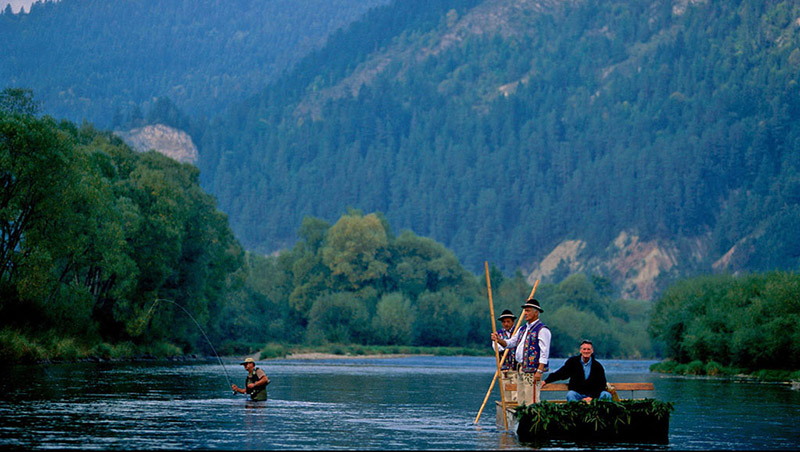
Though not totally devoted to Poland, New Europe is a highly entertaining text that places travel through Poland in a broader European context. As he floats down the Dunajec River on a wood raft, Palin marvels at the 'short Poles with long poles' who are steering him towards his next destination in Slovakia.
Rose Petal Jam: Recipes and Stories From a Summer in Poland – Beata Zatorska & Simon Target (2011)
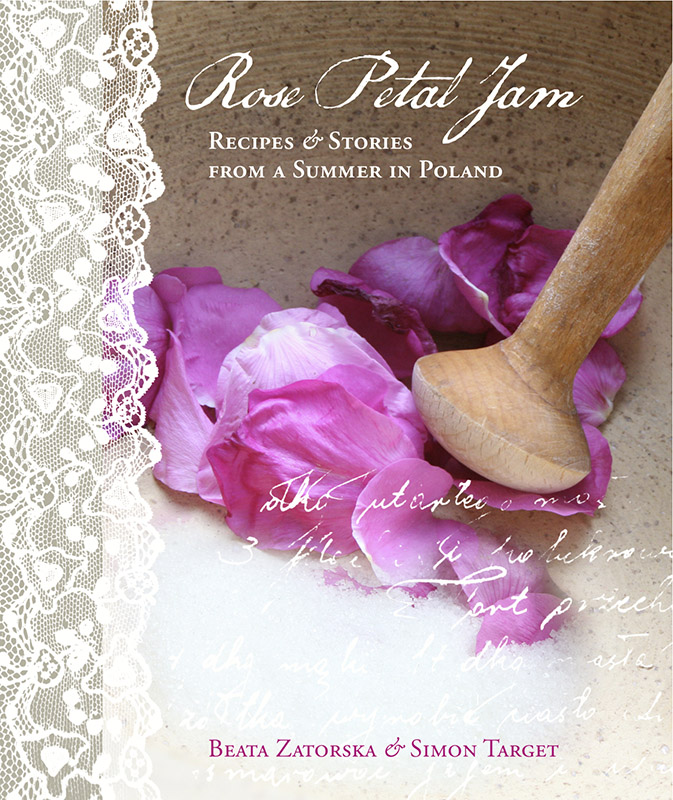
Born in southwest Poland, Beata Zatorska now works as a family doctor in Australia. She credits long mountain walks taken with her grandmother for sparking her interest in medicine. A professional chef in Poland, her grandmother would often point out herbs and wildflowers that could be used in cooking and healing. Though she left Poland to finish her medical studies at the University of Sydney, Zatorska has never forgotten her homeland.
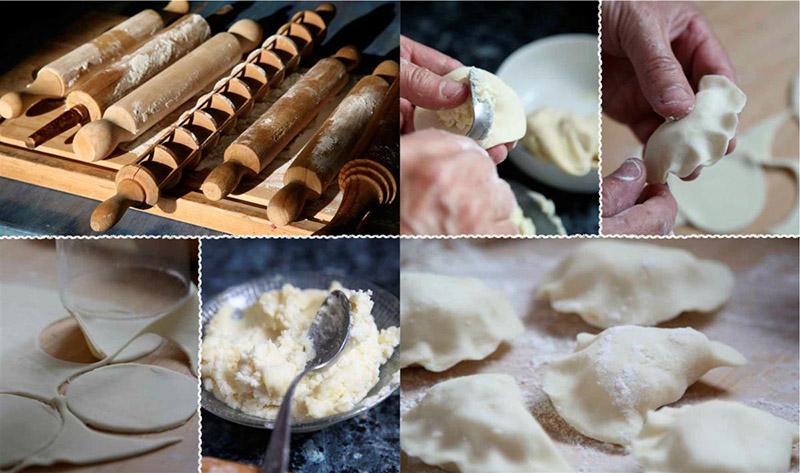
After 20 years away, Zatorska returned to the small village where her grandmother raised her. With her English husband, she rediscovered the country and recreated some of her grandmother’s favourite recipes. Rose Petal Jam is a story of travel and the tastes of home. Making the most of seasonal produce and fresh Polish products, Zatorska’s provides recipes for rose jam, pepper vodka and everyone’s favourite – pierogi. The beautiful (and enticing) accompanying photographs were taken by Zatorska’s husband, Simon Target.
One reviewer writes:
Rose Petal Jam: Recipes and Stories from a Summer in Poland allows me to indulge my twin passions of food and travel. It masterfully charts a path between cookbook and travelogue… Buy two copies of this book: keep one on the book shelves as a travel guide for the food lover, and leave the other, soon to be butter-smeared, in the kitchen as a well-used cookbook and a reminder of the reasons you will want to visit Poland.
This text not only tempts readers to visit Poland, but also equips them to recreate the tastes of the country in their own homes.
The Taste of Ashes – Marci Shore (2013)
Marci Shore’s new book, The Taste of Ashes, offers a more personal vision of Central and Eastern Europe than the historian’s earlier scholarly work. Shore has been studying Eastern Europe for 20 years, and in The Taste of Ashes she examines the region after the fall of communism. It is a history in the tradition of Timothy Garton Ash’s The File (1997) and Anne Applebaum’s Between East and West (1995), with Shore drawing on her personal experiences and interactions with people across the region. Of the book, the New York Review of Books writes:
The narrative invites the reader to share in encounters, conversations, and inquiries about the war and the postwar period, each conducted in a very specific milieu. It starts in Prague and Bratislava before settling down in Poland, with side trips to Bucharest, Budapest, Vienna, and Kiev. The author pursues research in New York, Moscow, and Tel Aviv, and does not seem to have stood still in twenty years. Her interlocutors are academics, writers, artists, or professionals, predominantly Jewish, and all somehow connected with the erstwhile communist regimes.
This is not a traditional travel narrative, nor is it a personal memoir. Here Shore has used personal encounters and observations to construct an insightful history and investigate the ways in which Eastern Europe has developed in the transitional years after 1989. Readers won’t find amusing anecdotes about where to find the best bars in Warsaw, but for those seeking a better understanding of contemporary Poland and the historical legacy of communism, The Taste of Ashes is a good place to start.
There’s an Egg in My Soup – Tom Galvin (2007)
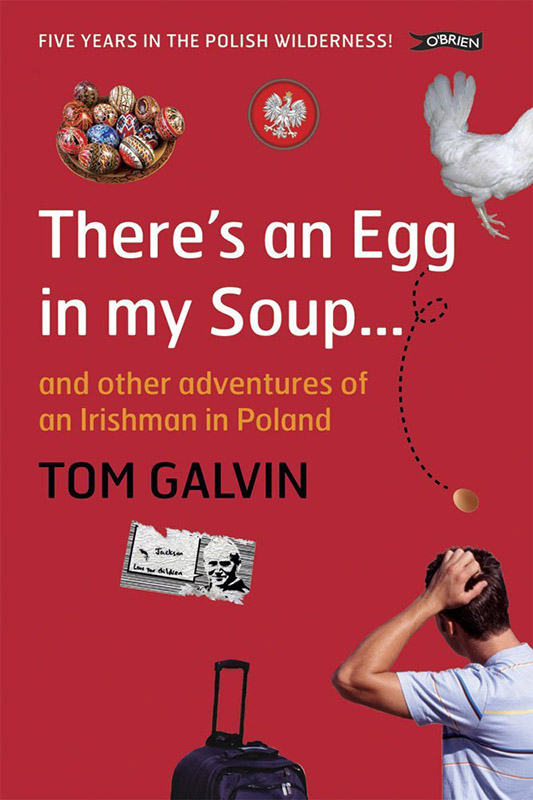
Tom Galvin moved to Poland in 1994 as a trainee teacher. Knowing no Polish, he found himself in a country he did not understand. After all, who puts an egg in soup?
There’s an Egg in My Soup is an account of Galvin’s time in Poland. It’s a story that documents the growth of the author, as well as the nation. Galvin’s personal stories might be recognisable to expats who have had their own experiences moving to a country they don’t quite understand. The Sunday Tribune calls it a 'joyous account of our hero floundering'.
Galvin lived in Poland from 1994-1999, a transitional time for the country. Readers get a sense of this dynamic period in Galvin’s memoir. The author’s lively style and amusing memories make this memoir of adjusting to life in a foreign country a pleasure to read.
Sources: culture.pl, http://www.guardian.co.uk/, http://en.poland.gov.pl/
Written by Alena Aniskiewicz, 09.07.2013.