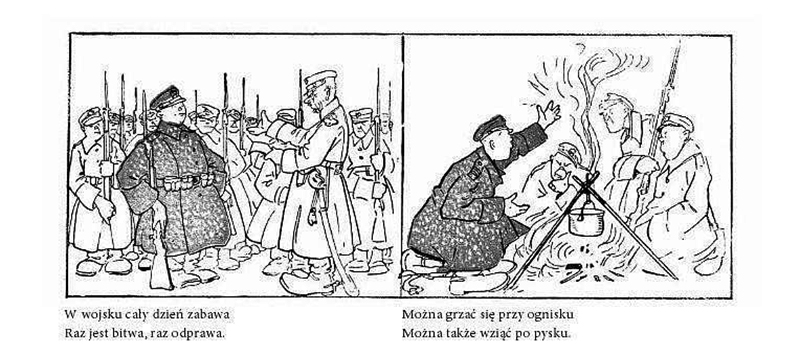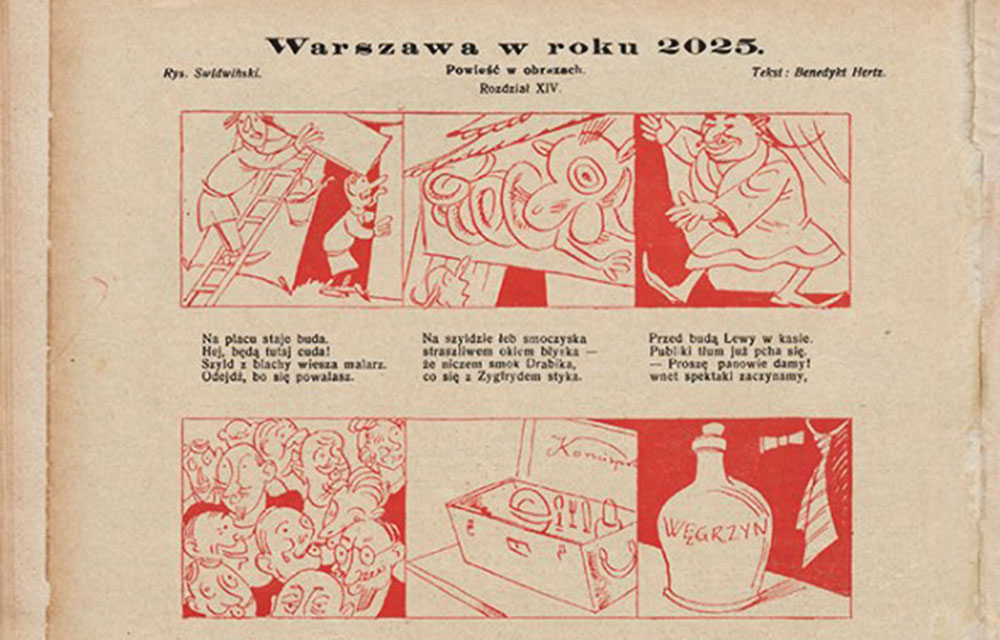
Warsaw 2025. written by Benedykt Hertz, an archival copy archiwalna plansza komiksu, fot. Wydawnictwo Komiksowe
Warszawa W Roku 2025 (Warsaw In The Year 2025) was based on an interesting premise, and was later reprinted in the Dawny Komiks Polski series. This rhyming story, written by Benedykt Hertz and illustrated by Aleksander Świdwiński, recounts the adventures of a couple who, wishing to dodge the depression, inhale anaesthetic gas and sleep for a whole century. When they wake up, Warsaw turns out to have been overrun by the Chinese. The former Ziemiańska Café has become an opium den, and homelessness and the housing shortage have been resolved by floating houseboats on the Vistula River. This futuristic backdrop was merely a pretext for satire on current affairs, and there were numerous references to the realities and famous names of the 1920s.
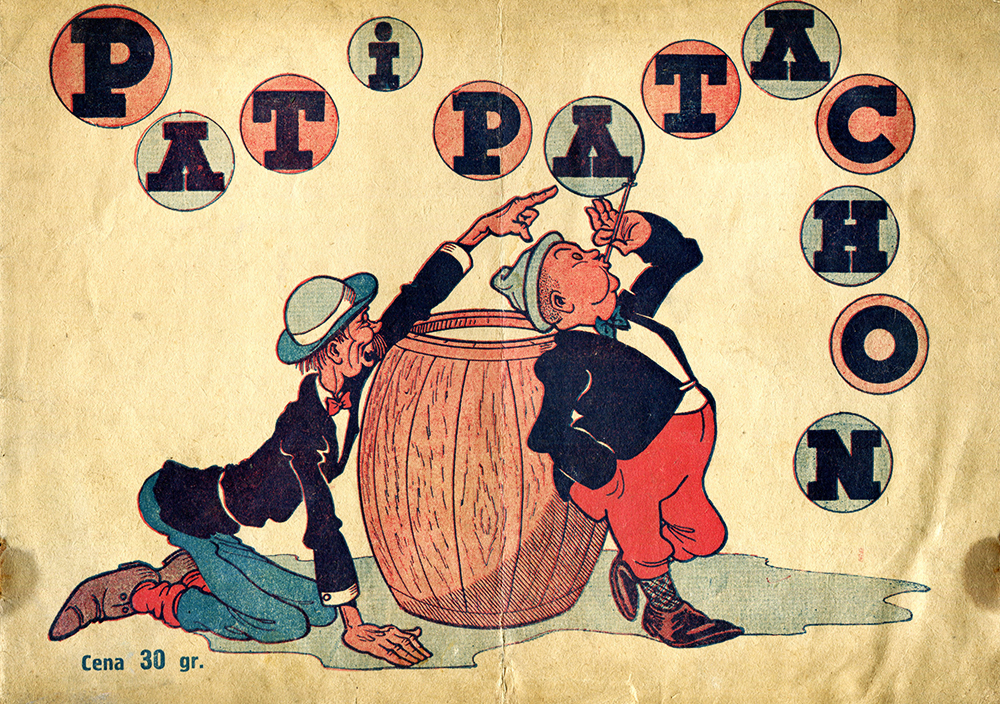
Whenever creators delved into political themes, their comics usually lacked what we would now term political correctness, and served as propaganda for a specific party. This was the case with Kazimierz Grus’ strip Prot and Gerwazy in the National-Democrat paper Orędownik. They were another pair of vagrants like the ones mentioned above, but had ‘proper Polish names’ and were forever sniffing out Jewish or Communist plots, or cursing life under the Sanation (although it was rather an odd concept to make two scruffy rogues into ‘defenders of the nation’). Once, they even beat up their rivals, Pat and Patachon, whose adventures were published in a paper that right-wingers regarded as a ‘Jewish gutter rag’.
Przygody Wicka Buły W Raju (Wicek Buła’s Adventures In Heaven) published in a supplement to the Silesian Gość Niedzielny (and recently reprinted in the Dawny Komiks Polski series) was both anti-Communist and anti-Semitic. After squandering his last wages on drink, the titular Wicek, a redundant miner and dissolute wise-guy, finds an issue of Płomyk magazine on a bench, showing the life of Soviet children (the issue actually existed, and led to a national outcry). Inspired by what he reads, he resolves to start a new life in the motherland of the proletariat. It all seems delightful at first, but soon turns out to be an illusion:
Then on a rubbish dump he sees
A sickly urchin on his knees
(Nothing like they showed in ‘Płomyk’),
Gnawing bones with rumbling stomach.
Wicek experiences poverty, hunger, slave labour, the gulags, and the terror (n.b. according to the comic’s anonymous author, the USSR’s entire system of control and repression was staffed by Jews persecuting the kind-hearted Orthodox people). In the end, he manages to escape the Soviet Union (via Spain) and radically changes his life: working assiduously, promoting temperance, and chasing penny-dreadful peddlers out of tenement courtyards.
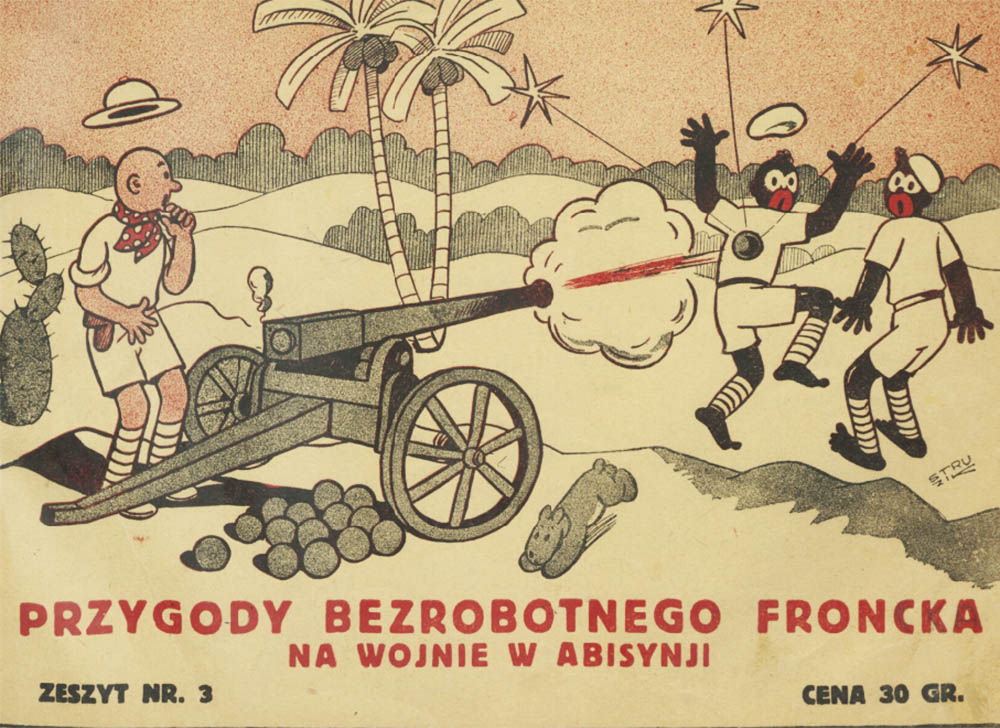
Comics acquired an increasingly anti-German tone as war loomed closer. This was especially true of Froncek and Wicek Buła, since the menace of Hitler was especially noticeable in their native Silesia. In 1939, Stanisław Dobrzyński drew the anti-Nazi satire Heil Piffke, starring a Berliner who resembled a miniature Hitler – an obtuse, mean conformist who made a career for himself after joining the Nazi Party. The comic mocked Prussian discipline and the purported prosperity under Nazi rule:
Breakfast’s nothing but a sham / There’s naught to nibble or to sup.
The coffee’s tea; the tea is twigs / It’s not worth pouring in your cup… […]
But there’s meat in great abundance / And of that you can be certain!
In Leipzig, Berlin, Gdańsk and Szczecin / There’s lots of fodder for the cannon!
The last comic newspaper to come out before the war was Gazetka Miki, which reprinted strips from the Walt Disney stable. Its literary editors were two incognito communist writers, Jadwiga Broniewska and Wanda Wasilewska, who had been out of work since the same ill-fated issue of Płomyk that Wicek Buła was reading. Thanks to them, the paper became a safe haven for other revolutionarily-minded creators with no fixed employment. Its chief graphic artist, Jan Marcin Szancer, recalled:
At the beginning, our job seemed simply unbearable. We, who had been waging a holy war against Disney’s clichés, and comics featuring idiotic scripts for the illiterate […] were now stuck in two rooms whose walls were plastered in abominations like Mickey Mouse – whom we loathed in those days – poisoning […] our young hearts and minds.
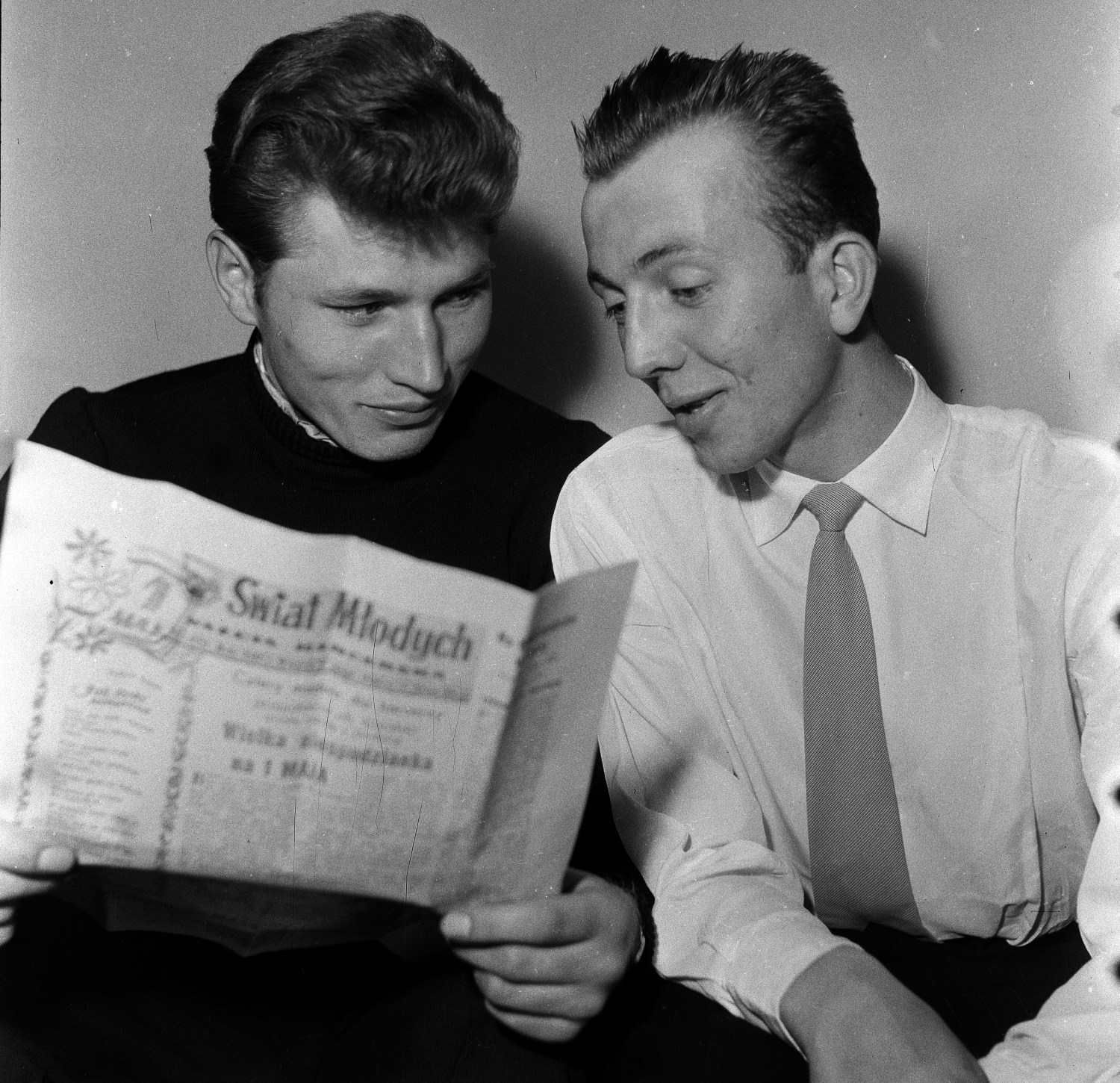
The Polish cyclists Stanislaw Krolak and Henryk Kowalski reading 'Świat Młodych', 1956, photo: Jerzy Dąbrowski/Forum
This group’s attitudes to comics would come to shape the fate of the genre after the war, and Julien Bryan’s photo of children reading the paper amidst the rubble, during the siege of Warsaw in September 1939, soon became famous the world over.
Originally writtten in Polish by Patryk Zakrzewski, March 2018, translated by MB, April 2018
Sources: Janusz Dunin, 'Papierowy bandyta', Warsaw 1974; Adam Rusek, 'Od rozrywki do ideowego zaangażowania. Komiksowa rzeczywistość w Polsce w latach 1939–1955', Warsaw 2011; Adam Rusek, Tarzan, Matołek i inni, Warsaw 2001