Relaks Boots – Wojas
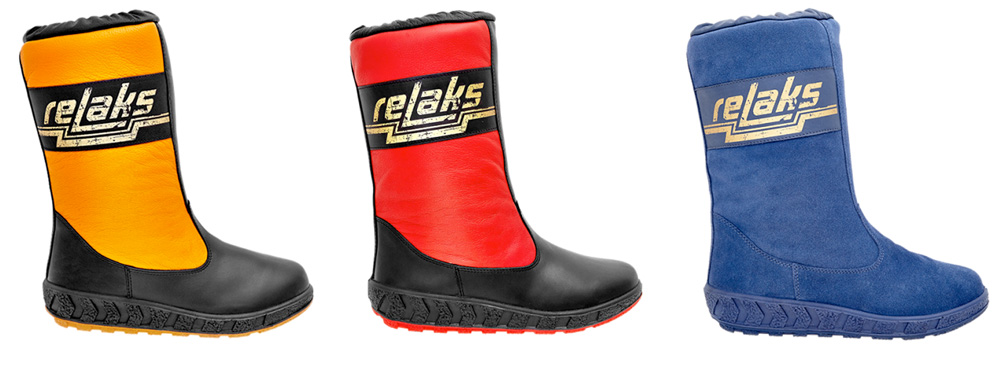 Relaks Boots, photo: http://wojas.pl
A nightmare for some, heavenly Relaxes for others. Together with the Sofix (a Vans looking Velcro sneaker), this futuristic Welly, Moon Boot fusion was socialist Poland's trademark shoe. Produced in the Polish highlands from the 1950ties, and purchased by a couple of generations, they reached their heyday in the 70ties, 80ties. Worn back then due to scarcity of offer, now they are a cult classic. The Polish après ski boot was often referred to as "the moonwalk". The name's hockey stick shaped letter L was a reference to the highland's famous team. The first pairs of Relakses appeared on the set of Poland's most popular comedy of the 1980s - Juliusz Machulski's Sexmission.
In 2013 the shoe company brings the Relaks back to life. Internet users are optimistic, "They're as sexy as the emu, they probably won't wear down as quickly."
Brulion – Ania Piesiewicz / Studio Pisak
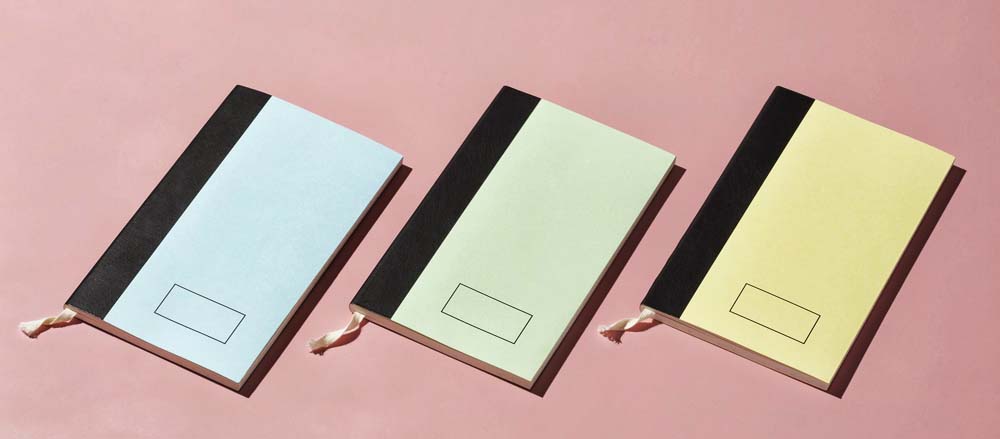 Brulions, project by Ania Piesiewicz, produced by Pisak Studio, photo: Jakub Bereza
The popular notebook had a characteristic softcover and synthetic leather binding. A contemporary version of the notepad, with an added ribbon bookmark and three types of writing surfaces (ruled, checkered or with waves), was reinstated by a young Studio Pisak designer Ania Piesiewicz. The Brulion received a Must Have recognition at the 2013 Łódź Design Festival (competition for young designers for made-in-Poland products).
RM58 Armchair – Roman Modzelewski – Vzór
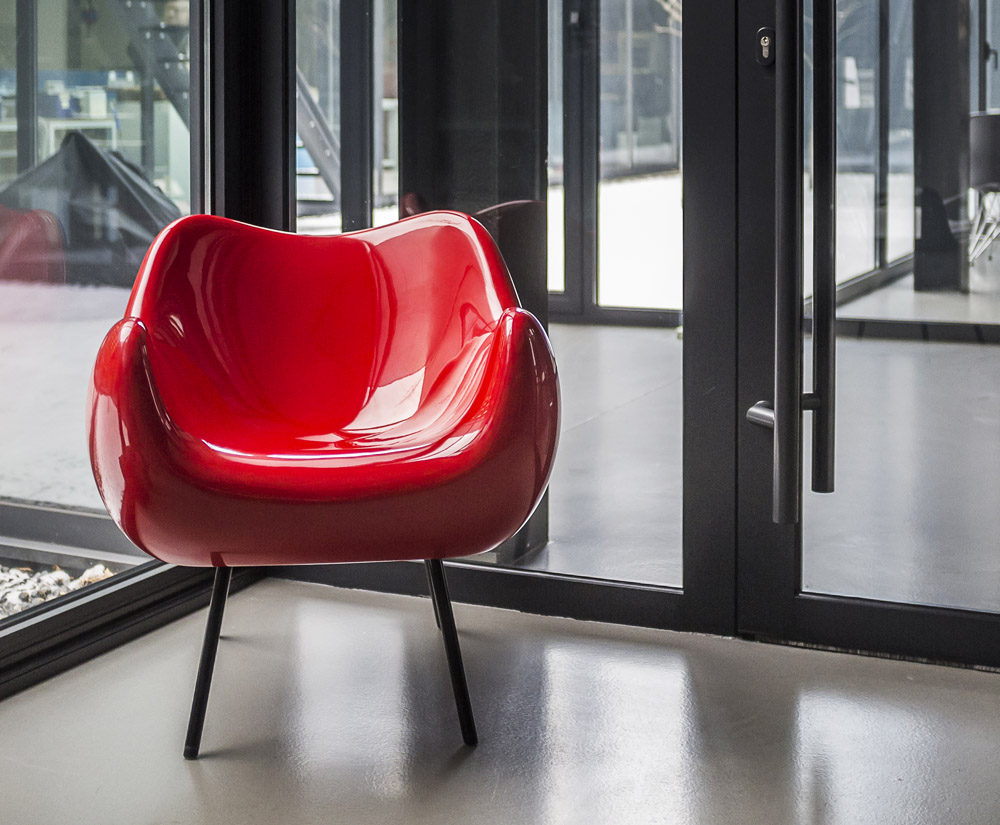 Roman Modzelewski "RM58", producer: Vzór , photo: Vzór
Admired by Le Corbusier himself, this lucious armchair was designed by Roman Modzelewski, the pioneer of experimentation with man-made materials in Poland in the 19050s. The RM58, an iconic element of Polish design, has prototypes in the world's most important collections. The armchair entered the market as a product for the first time in 2012. Made of a new material and with the use of new technology, it was brought into mass production by the Warsaw based company VZÓR "for confirmation of its visual appeal as well as proof of its comfortable feel". VZÓR is also planning editions of two other Modzelewski armchairs - the RM57 and the RM56.
Bambino Crayons – Stanisław Jan Majewski
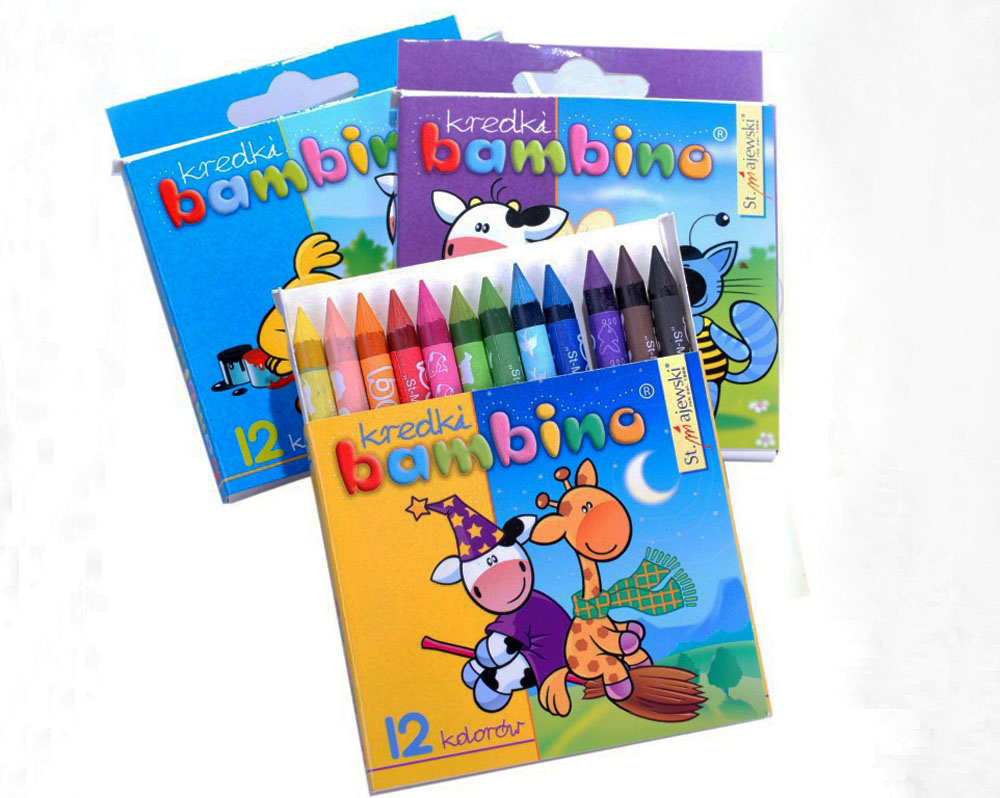 Bambino Crayons, photo: www.mojebambino.pl
Just like the deliciously fragrant Chinese eraser (which every kid tried to eat at one point or another), the Bambino crayons smell brings back memories of a childhood during communism. Produced from the beginning by the "St. Majewski and S-ka" factory, whose only metamorphosis, in the stream of major changes in Poland, was an evolving name. It was the first graphite pencils and wax crayon plant (existing since 1889) founded by engineer Stanisław Majewski and its products gained international renown. The Polonia 340 pencils received the gold medal at the Paris Exposition of 1937. The Bambino crayons continue to be the go-to and favourite crayon in Polish kindergartens and schools.
Lattice Net chair – Henryk Sztaba – Mamsam
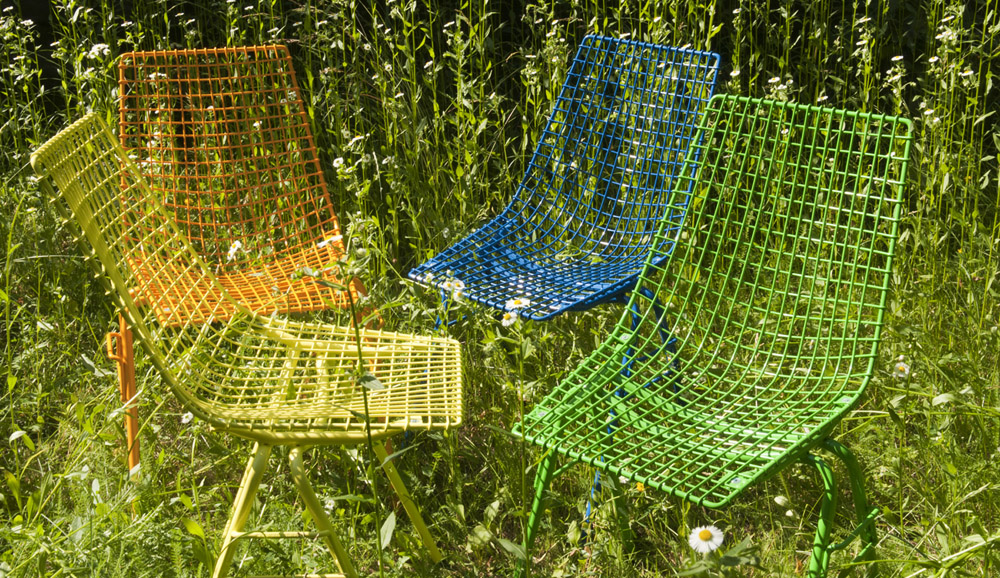 Net chairs, photo: Mamsam
The Net Garden Chair was designed by the director of a Lower Silesia factory, Henryk Sztaba in 1968. Popular in cafés, these light lattice seats were made from white laminated elasticated wire - one of the few readily available materials at those times. They were manufactured on the same machines which made shopping carts for communist Poland's popular grocery chain SAM. The Mamsam company started mass producing the chair in 2011. Founded by the artist and photographer Mikołaj Długosz, they un-dust and upgrade Polish design and typography.
Sigmund Armchair – Marian Sigmund – Paged Meble
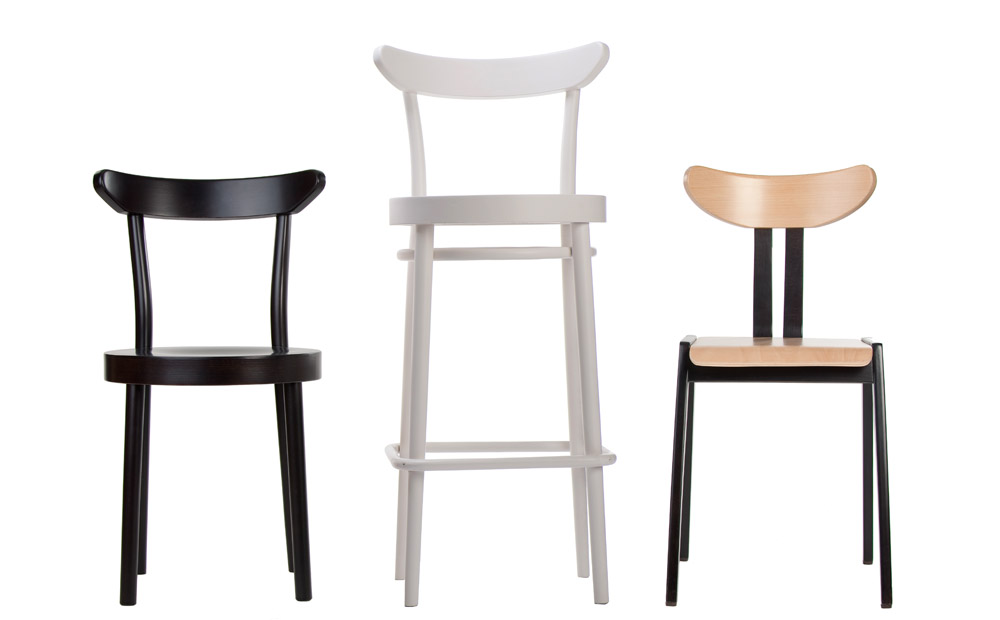 Marian Sigmund, from left to right: chair Sig1 A587, photo: Paged Meble
The chairs and armchairs designed by interior designer, set designer and painter Marian Sigmund at the Fabryka Mebli Giętych in Jasienica (the Jasienica Factory of bentwood furniture, now called Paged Meble) were predominantly made for export. The best market was Great Britain, where the bent beech wood furniture was destined for schools. Around 40 models of the Sigmund were conceived in Jasienica, but most of them were never put into production. Marian Sigmund's pursuit of "the perfect form, material and fabrication" is visible in the A587 spring backrest chair project (1957-58), which, revamped, was put into production in the same factory after almost 50 years later. The newer version was modified in the width of the seat because it turned out to be too narrow for contemporary sitters. The chair received a Must Have recognition at the 2011 Łódź Design Festival (competition for young designers for made in Poland products), and was nominated for the Germany Design Award.
Canteen mug – Mamsam
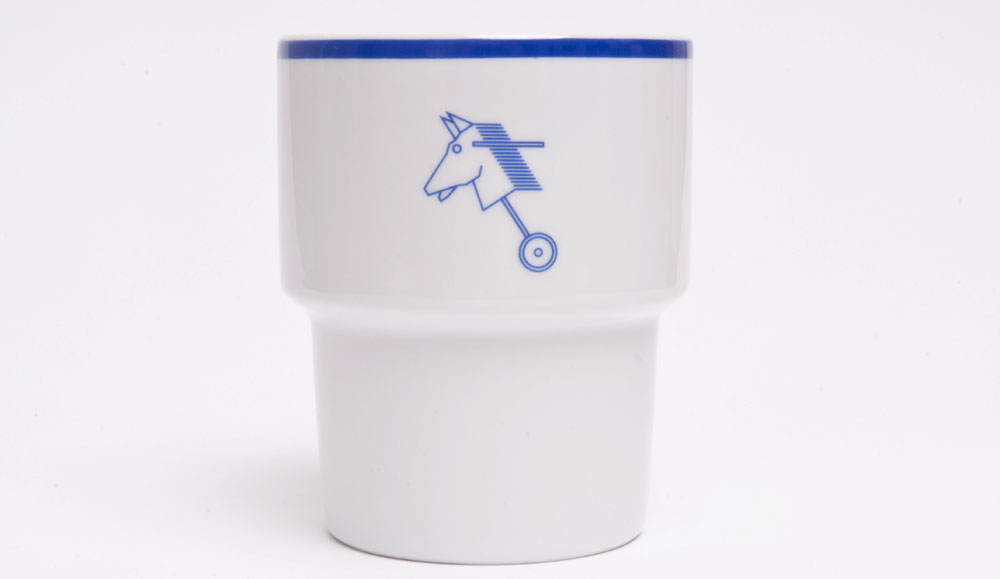 Canteen mug (Mamsam) "Horse", project: Olek Modzelewski, photo: Mamsam
A vintage cult mug in which school and office cafeterias and milk bars (bar mleczny in Polish - a government-subsidised cafeteria from communist days) served typical communist era beverages and desserts: kompot (a non-alcoholic home-made fruit punch) kisiel (liquid fruit jelly), milk and kawa zbożowa (caffeine-free roasted grain beverage). The procelite dishes were made according to a design by a German designer intended for hotels (1963). With "Społem" and "GS" (food cooperative of the People's Republic of Poland) in eateries, "health care" in hospitals and "PKP" (Polish National Railways) at railway stations printed on them, the mugs were assigned to locations. Manufactured from 1969 by the Lubiana Chinaware Factory, the added top border blue line (hospital mugs had a green line) made them the symbol of late communism. Their shape, which allows to place one on top of the other, earned them points for saving space.
From the beginning of the 1990s, the mugs are produced by Mamsam, a company founded by Mikołaj Długosz. Designers, artists and studios (among others Janek Bersz, Maurycy Gomulicki, Mamastudio and Honza Zamojski) have created dozens of mug logotypes imitating design from past eras.
"Blue Line" Chinaware – Marek Cecuła and Daga Rogers / Modus Design
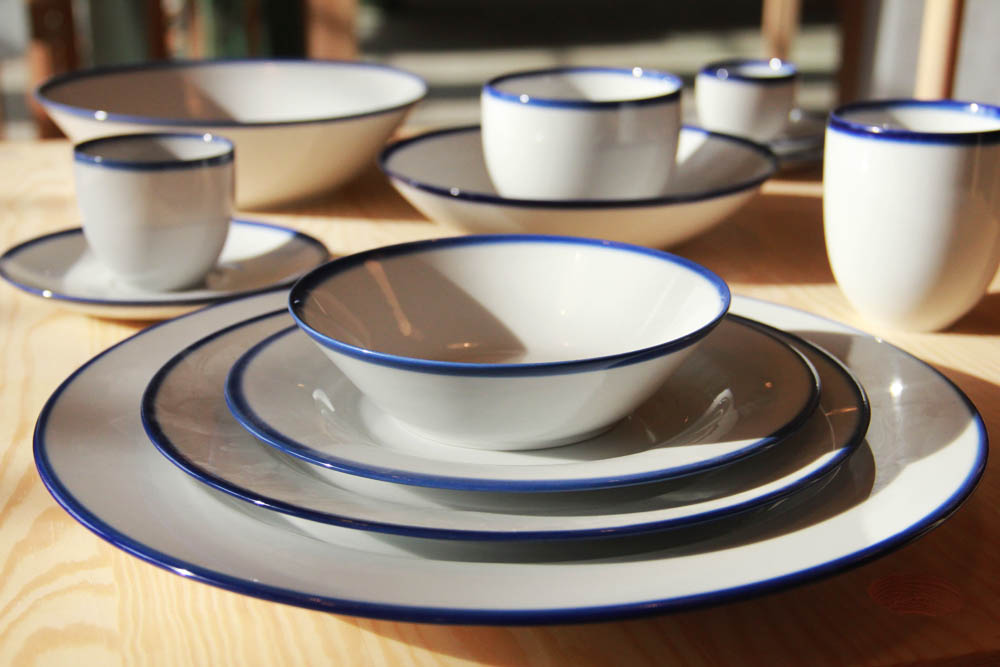 Marek Cecuła and Daga Rogers "Blue Line", 2013, photo: Modus Design
The "Blue Line" is one of the last chinaware sets made by the world famous ceramics artist Marek Cecuła and Daga Rogers. The hand drawn blue line decorating dishes, bowls and mugs is reminiscent of the popular porcelite "Społem" chinaware from the People's Republic of Poland, but the authors clarify in an interview with culture.pl,
The dinner table isn't a direct reference to any 70ties design. We searched for new possibilities of using the unused and forgotten cobalt salt decorating method for porcelain. We noticed the unintended effect right after taking the dishes out from the oven - this form of decorating conjures up nostalgia of those years straight away.
When will the cobalt border finally be attributed to its author - the sculptor, painter, one of Poland's most famous neo avant-garde installation artist of the 60ties and 70ties Edward Krasiński.
Oranżada
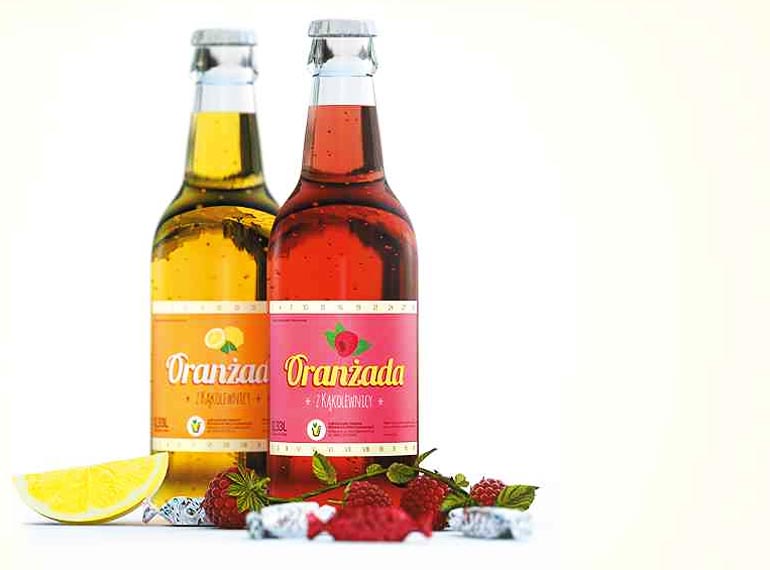 Oranżada from Kąkolewnica, photo: www.oranzadakakolewnica.pl
In the mid XIXth century, oranżada (sparkling bottled lemonade) was served as a patent medicine in Parisian hospitals. Arriving from France to Poland, here it was made of water, sugar and orange juice. Popular before World War II, during the People's Republic of Poland, the refundable glass bottled beverage (no different from a glass beer bottle) was a street vending machine item. It could also be bought in the form of powder or in a small foil bag with a straw. The extra sweet carbonated soft drink was the family reunion, wedding party, Holy Communion must have. The candy coloured, crown cork sealed Oranżada, which exhales gas upon opening, was the Eastern European equivalent of Coca Cola. Twenty years since the fall of communism, the lemonade was inscribed onto the prestigious List of Traditional Products. With an altered retro looking label, the soft drink continues to be produced and loved.
Grained Paper – Mamastudio
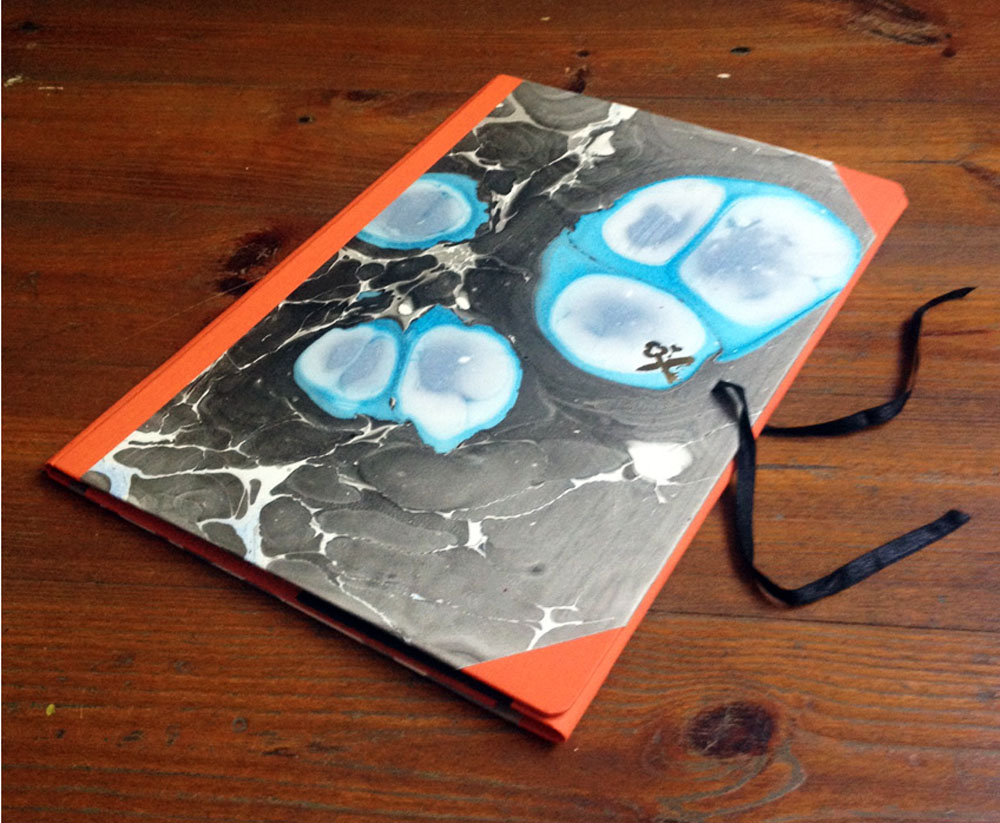 Mamastudio, work from the "Marmury" (Marbles) cycle, photo: Mamastudio
The technique of graining paper dates back to the XVIIIth century while paper with marble-like swirls and veins makes for a characteristic Venice souvenir. In Poland, hand dyed paper reminds of the People's Republic. In every library and many homes you could find a special magazine that was issued once per year (called rocznik) or a collection of magazines bound in multi-coloured grained sheets, available at book-binding shops. In 2012, the designers from Mamastudio created a collection of grained sheets of paper, that they used to bind notebooks, drawing pads and calenders.
Wigry 3 Bicycle – Romet
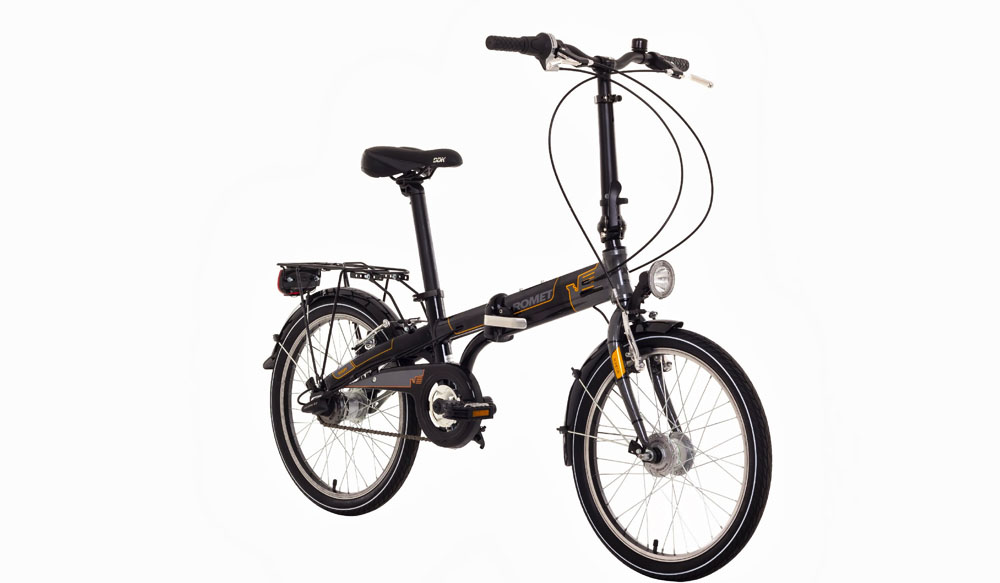 Wigry 7 Bike, project: Romet team, producer: Romet , photo Must Have 2013
Almost every Polish family had one or knew somebody who owned a Wigry 3 bike, usually in a pale greyish shade of green. These same model, made for export was called Universal. It reached its height of popularity in the 70ties and became the desired Holy Communion present (if you weren't more in need of a watch). Because of its folding frame, the legendary folding bike was referred to in Polish as "składak". The transportation solution had a dynamo powered light, a spring seat and underneath it - a small saddlebag for house keys or small treasures. Manufactured in the Romet factory in Bydgoszcz (1948-98), the bike has its present-day version. Sale of the Wigry 3 model and its younger sibling, the Wigry 7, was resumed at the end of 2008. The latter received a Must Have recognition at the Łódź Design Festival 2013.
The Warszawa Car – New Warsaw-Wratislavia – Michał Koziołek
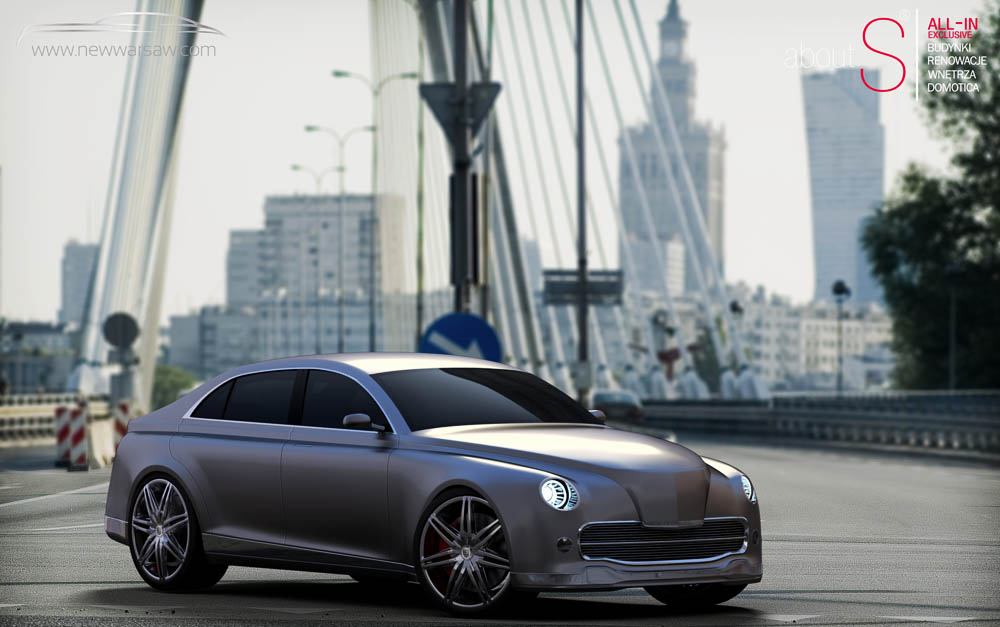 New Warsaw, photo: thanks to the courtesy of Michał Koziołek
The old Warszawa, a crossover between the Soviet passenger car Pobeda and a Chevrolet, grabs the attention of many vintage car collectors. It has characteristic round headlights and a rhinoceros nose shaped hood. The first post-war owners of this first Polish mass produced car (1951-1973) didn't always have good things to say about it. They were inefficient, and often broke down. Leaving for a trip outside of Warsaw meant bringing along a full set of spare parts. Michał Koziołek, an enthousiast and author of the "Syrena Car for the Euro" project (a communist era automobile) revived the Polish motorized legend and created a new, luxury XXIst century car based on the historical model.
In an interview for the natemat.pl website, he said,
There is a precipice between our project and the original Warszawą […], we only extract the most important traits of that car. To be more precise, we take from the last models of the Warszawa - the sedan version.
Only 11 New Warsaw cars will be created in the Spring 2014 limited edition.
Author: Agnieszka Sural, translated by MJJ 19.11.2013