Marek Kazmierski: Before I start with the questions I have prepared for you, is there perhaps something you always wish someone would ask you but they never ever do?
Breyten Breytenbach: It would be wonderful if someone were to say – you know, let's forget about the masks, the games, we're all in this terrible thing called life, which is the only boat we know about. I don't know where we are going, I don't know what the destination is, I don't even know which port we sailed from, not sure there will be a place we will actually arrive at... let us share some experience of that.
In terms of getting to know one another, and these names we carry around with us – can you tell us about your name and what it signifies?
I never even thought about it until someone pointed it out. It's a name of Germanic origin, obviously, the way the name is written with an ‘n’ in the middle, which suggests something fell away over time. ‘Breyten bach’ literally means ‘broad stream’, and the first name is actually my real first name, but it was given to me the way Salvador Dali got his.
There is this sad little story about Dali. He had an elder brother who died before he was born, and his mother and his father gave their next born son the same name as the dead boy to remember him by, and so the great painter always lived as if he was the imitation of someone else. My aunt was married to a Scotsman, they had a child, whom they lost quite early. His name was Breyten Campbell, because she wanted to retain something of her father's name. And so then she asked my parents to give me the name of the dead boy, so something of him too would live on in me. But in South African customs, as in most patriarchal societies, the first boy has the first name of the paternal grandfather and the second the name of the maternal grandfather. In my case, my father had the same name as the paternal grandfather, so they couldn't give me his name, it was already taken.
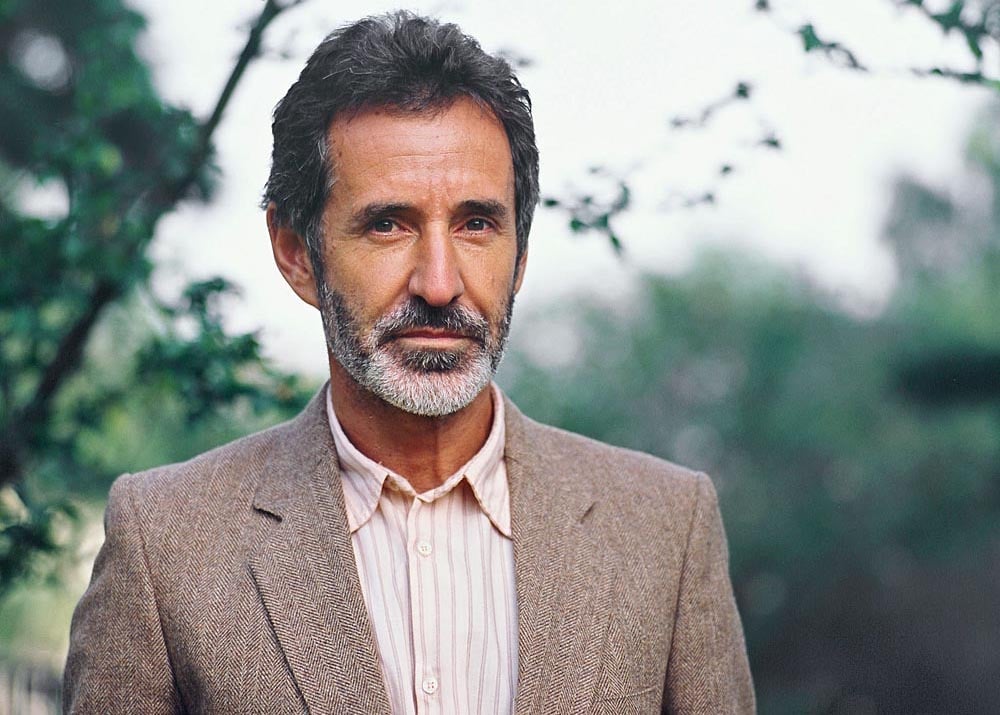
Breyten Breytenbach, 1985, photo: Forum
Have any of your books ever been translated into Polish? Where would one begin?
I would say the best place to start is the books which were originally written in English. To bring across the complexity of these experiences, which are in some way all of our stories, there is the trilogy A Season in Paradise, where I revisit my own country, then I spend time in prison, then I once again return to South Africa once in it is in transition from apartheid to democracy.
I was also talking to Jerzy Koch recently about us working on a book for Ryszard Krynicki's publishing house. He asked me to select 60 or 70 poems or pages and then we will see where we go from there. He is the only one who does translating from Afrikaans very, very well indeed. He teaches the language in Poznan and is a very sensitive translator.
The question Polish people always want to know, and are scared of asking: tell us about your visit to Poland. Are you enjoying it, and is it your first?
No, I was in Krakow last year, for the first time for the Miłosz Festival, a very strange ambiguous experience. I didn't know what to expect. I have of course been reading the Polish literary world, the Polish way of seeing the world, of coming to terms with the indignities and the heroism and the courage. I'm talking about the writers I mentioned last night, from Conrad to Schulz, Gombrowicz, Szymborska, Miłosz, that part was always there for me and I didn't really realise how strong it was. But it didn't indicate for me a picture of the kind of Poland I was going to find. So in a way I came here without really knowing anything.
Kraków is a beautiful town, though it feels artificial, somehow. One has the sense of people inhabiting a place where the original inhabitants died, are gone, and people now living there are their distant descendants, having (for one reason or another) forgotten that past. They are the inheritors of a totalitarian state, which is no longer there, but they are conditioned by that state. I also made the mistake of joining a tour of the Auschwitz and Birkenau museum. And I shouldn't have done that, because it provides the sense of something being there just behind a wall – maybe the past, maybe the present, maybe eternity – but it's too horrible to look at.
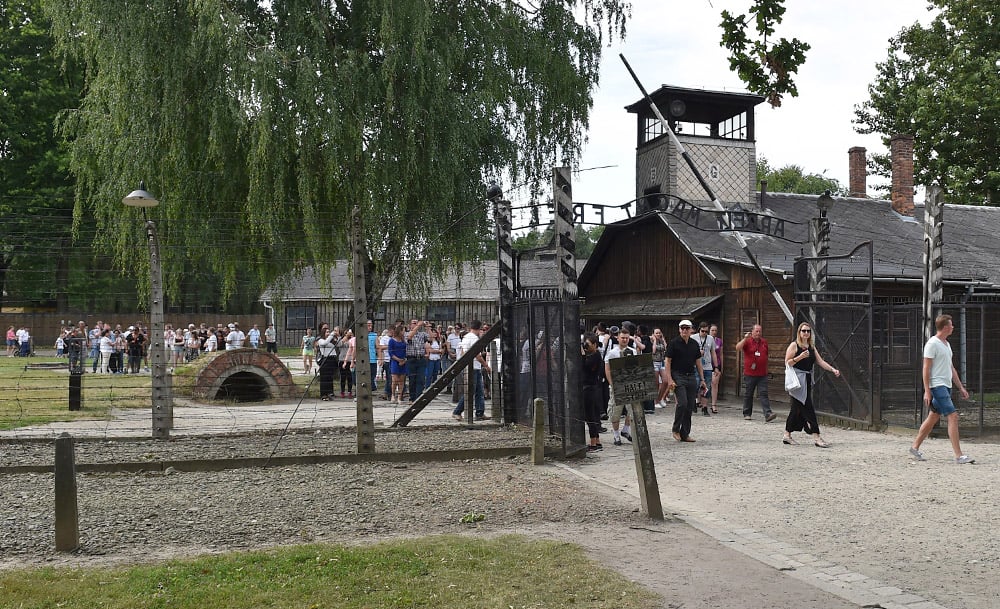
Tourists visiting the site of the Nazi German concentration camp Auschwitz-Birkenau, photo: Jacek Bednarczyk/PAP
It's not a moral judgement, not a political statement, it's not saying who is responsible, who is to blame, but what is happening to it today is horrible – people streaming through, being shown round by a guide, a young woman who spoke beautiful English without understanding a word of what she saying. She wore dark glasses, and was repeating things like a parrot, and I thought how strange that she would no longer look, no longer allow herself to make eye contact with people, because she was doing the tour again and again. The emptying of the horror. What do you do with the horror? How do you react? There is some kind of deadening, when you walk by a cell filled with shoes, or suitcases, or things like that...
But the festival was a great occasion, it was wonderful to listen to the poetry, together with Michael Ondaatje, a wonderful, wonderful person. We went together to see some museums, and especially the Wajda exhibition, which was on, beautiful stuff. I had the great honour of meeting the man himself, he came for one of the last events. Zagajewski was there too, of course.
Still, it was a very confusing, very difficult. I realised that Poland lives within a very complex, self-enclosed world, to some extent. Obviously, so many Polish people live in exile, they move around the world, living in different places, working, making new homes, but they still have a sense of living in an enclosed world.
So, this is my second time visiting Poland. It's good, you know, but perhaps a bit much. I remember Tolstoy refused to listen to classical music being played, in his late age, because it moved him too much. I don't want to take on new complexities now.
Having translated a number of poets who both did and did not survive the Holocaust, I know exactly what you mean. However, you mentioned at the award ceremony yesterday that it sometimes seems like ‘poetry is a strange and useless discipline’. And then you also said that ‘lucidity is a curse’, which is another line from your poems. Is this related to the idea that actually as a poet you're born without skin, and that you have to be very careful how much trauma you try to process in your work?
That's true. Last night, I was warned beforehand that Ryszard Krynicki is difficult, or rather shy, and we were standing on the staircase, looking at one another, and you don't want to give the sense of communicating when you don't really know the other person, don't know if you can trust them enough. But I had a feeling with him that we knew that we are both without skin, that we are both surviving. So yes, I think that is a very astute remark – how to protect oneself and how to make sure this protection doesn't become opaque, doesn't prevent you from communicating. The notion of the skin is particularly interesting.

Cover of A Season in Paradise by Breyten Breytenbach, photo: press materials
When I was starting out as an artist, I met a wise old Afrikaans writer not many people remember now, Jan Rabie, who wrote wonderfully short surrealist stories. We got to know each other well, and one day he said to me: ‘You are without skin... you don't have enough skin.’ I was only 20-22 years old, and I thought to myself ‘What the f... is he talking about? That I can only imitate a lot of other people?’ and then of course, in time, you learn the truth of it more and more.
I was sitting in the park this morning, with a young journalist, and all of sudden she asked ‘But is there no hope for us? What is it like to be a poet today? Starting out?’ and all of a sudden I wanted to say: Of course there are solutions. The mere fact of trying, of continuing, you learn in the process that there is no way out, but you have to keep trying. It's a bit like Beckett – I can't go on, I must go on. I must fail better – and that's fine, that's the human condition. That in itself has a great sense of agency.
We have a lovely story in Afrikaans about the high plateau, far above sea level, in the interior where we have a lot of electric storms in the summer. And the story is about a man who was walking across this plain and was struck down by lightning. And when he got up, he looked at the sky, shook his fist and said: ‘Now, it is bull against bull! Toro contra toro!’ Basically saying to God – don't do that to me again! The human agency is, in a sense, standing up against Fate, which is a human-made thing – the fate of being human.
I myself was exiled from Poland in the communist 1980s, and then worked for many years in prisons, hospitals, refugee centres. Now that I am once again living in Poland, after 30 years in the UK, I realise that what you said – we must have the courage to fail better – is not something Polish people, Polish artists, are keen to do. Coming from a twin European and yet African background, how do you feel, do you represent Africa itself or some other perspective?
If we assume that Africa is totally culturally, historically, even in terms of identity and even in terms of moral values is totally f..... up, then I totally feel African. The difference may be that most Africans who survive will not admit this fact to themselves.
I want to read a quote I picked up this morning – we celebrated Africa Day yesterday, 21st of May, and right now we have a huge power struggle in South Africa, the vice-president is a very rich person, and yesterday he made a statement: ‘We are the writers of Africa. We are inevitably the writers of Africa's future. We're not Africans because we're born in Africa, we're African because Africa is born in us.’
It sounds great, but it doesn't mean anything. I don't know who he was talking to. He is a very rich man, he's going to be the next president of the country. It's just a move to try and get support. It sounds wonderful, because it sounds like you're saying something, but you're not saying anything at all. Africa is a continent where all the lies are true and all the truths become lies. But once you're in there, the sheer vitality and sheer beauty, the fact that everything is upside down, people able to make from left overs anything they like, wins you over.
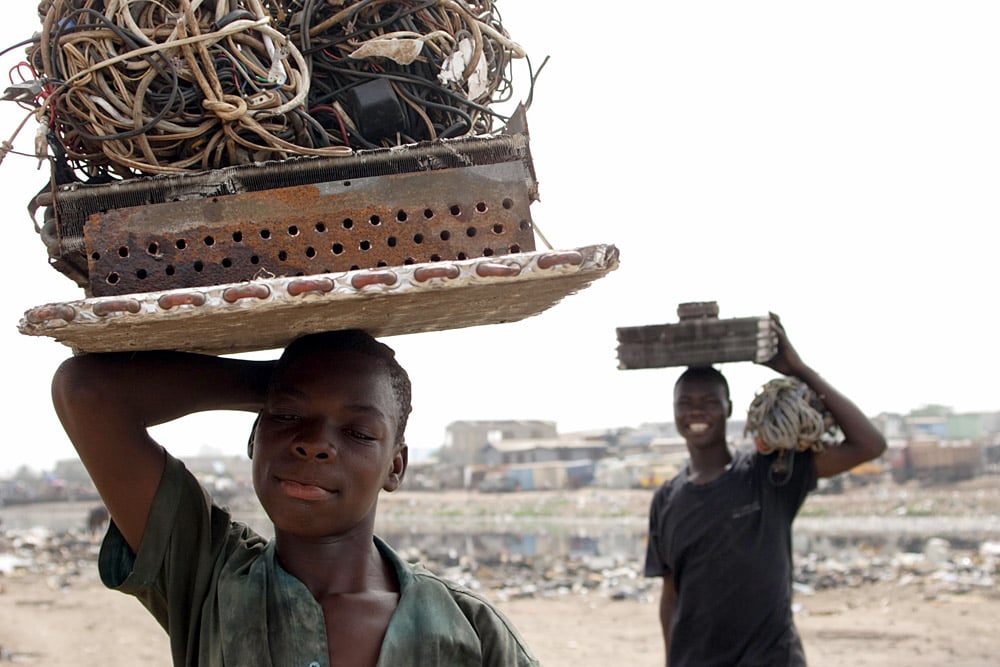
Boys carrying electronic cables from which they will extract the copper wiring by burning off the plastic in a small fire, Ghana, photo: Kate Davison/East News
In Ghana, near Akkra, there's a huge depot where all the world's dead computers and dead cell phones end up. You're not supposed to keep them, but the people who live on that landfill are able to extract everything, the tiniest bit of tin, and they die in the process, yet they are able to transform that scrap into anything. Bicycles, helicopters, robots. What can be more artistic than that? Indicative of the true capacity of human nature? To transform even the most useless things to beauty?
It's the spirit of alchemy, and something Poles know all about. Talking about this contrast and tension between truth and beauty, Polish people tend to love the idea of Africa and visit it much more often than my British friends – which is interesting from the colonial experience. When you left Africa, as a young man, you didn't go to the US or England, you went to France, where you became a Zen Communist. Tell us about this combination of value systems and what happened next, when you returned home to Africa and ended up in jail. Seven years of being imprisoned, and two of those in solitary confinement.
By the time I got to that point, I was not so young any more, and I had been involved in political activity in all sorts of romantic and superficial ways, like people in France did in those days. I'm talking about May 1968, when you believed yourself to be an internationalist and felt involved in ways against imperialism, because you demonstrated and you tried to help and read and write. In France particularly, where a writer is always assumed to have authority.
In France, an intellectual is never without an answer. You can wake them up in the middle of the night and ask them the hardest questions, and they will never say: ‘I don't know...’ They breed them this way – just look at Macron! There's a kind of bravura stance, like the state idea, the revolutionary idea. So by the time I went back to South Africa, it was a totally different identity, profoundly ambiguous, because I came home as an Afrikaner, as I was also a writer which gave me a truly privileged position.
Afrikaner cultural identity is a literal identity, made by the language. It's a way of being able to live with this incredible dichotomy of living with the knowledge that more than half of the people who use Afrikaans are not Europeans, they are Creole people, from the east, indigenous people, but they're not European. You’re brothers and sisters and you share this strange language – the only language on the continent calling itself African. No other language does this sort of nonsense, but in any case there it is, and I know in the prison I was being treated differently, both in a good way and a bad way, being an Afrikaner myself, because they looked at me – the police, the judge, the prison warders, the other prisoners even – when they heard me speak, they'd say ‘You're one of us’. There is a sense of complicity.
We don't even need to remember that the British tried to kill us, that we were in a freedom war, in which the Poles came to help. At the end of the 19th century, there were Poles, there were Germans, Russians, Filipinos, Americans, it was like the whole world joining the international brigade, as happened in the Spanish Civil War later. So we fought this war against the British, but we don't even need to mention this – we are part of the same land.
But then they realise that I am against the apartheid regime and say to me ‘You support the opposition? How could you be so much like us and not be one of us?’ You are forced into this strange position of being the intimate enemy from within. I wrote a book about writing called Intimate Stranger, which comes from a phrase someone once used: ‘Writing is like communicating with an intimate stranger.’ And in a sense that is the experience I've had. It made it worse, because I didn't know how to handle it, and what we do as human beings, if we don't understand something, we kill it, get it out of the way, forget about it. We cry, we grieve, but at least we don't have to worry about it later.
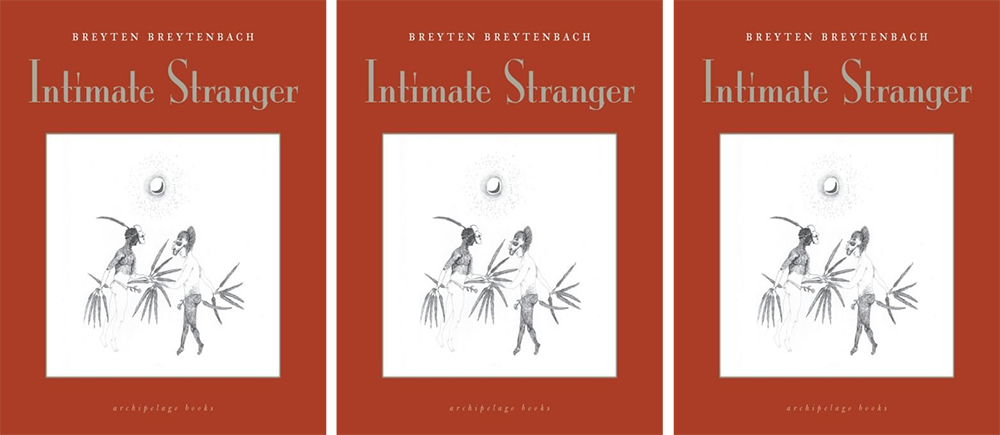
Book cover of Intimate Stranger by Breyten Breytenbach, photo: press materials
And what about the Zen communist identity?
Well, that is just an easy formula – both of these things are based on arbitrary freedoms, without relying on prophets, on truth things, on blind belief. It is something which you have to keep on questioning, at the same time remembering that the entity doing the questioning is a very faulty entity, and that this entity will stain the very quest itself, and you have to unthink that... It is very complicated when I talk about it, but it's not as complicated when you're doing it.
That's OK, Polish people don't mind discussing complicated ideas.
As for communism, that doesn't exist for me. You know, Regis Debray said something interesting: ‘I'll be a communist until my party comes into power, and at that point I'll immediately become an anti-communist,’ and that is the way I feel. It's a little bit like Victor Serge, and a little later in his life Aleksander Wat – you never lose the essential reasons why you feel a deep sense of fraternity with people, but you hate the immediate appearance of corruption that comes with the acquisition of power. The stultification, the crystallisation of privilege, this elitism that comes with it, as if they are the legitimate spokespeople of this sense of fraternity.
And that is why I will keep fighting the ANC. It is an inherently corrupt organisation at the moment. Right now, today, they are having a national executive commission meeting, the top six people have to make the president go, because he's totally, utterly, completely corrupt. He couldn't give a damn about anything – not about the revolution, not about equality, not about justice, not about progress, not about the nation, not about reconciliation, not about wisdom – nothing about it. It's just: Eat, eat, eat! He was created by the Stasi, he's a security agent, a Putin, in a way, though not as sophisticated as Putin. He doesn't know how to walk like a sailor.

Former glory days: the ANC's historic election victory in April 1994, Johannesburg, South Africa, photo: Paul Weinberg / Anzenberger / Forum
Has poetry, or any of the other genres you write in – plays, prose, memoir – been useful in helping resolve conflicts?
I remember writing a series of open letters to Nelson Mandela, before he became president, once he was out of prison. Some of those letters are reproduced in a book called Endpapers and another in Notes from A Middle World, published in America. And as I read them today, I realise I could see the dream of freedom was too fragile. If we could have kept alive our diversity, the richest wealth, in Africa, everyone being so different from each other, how we could meet, how we can recuperate, and transform into something else – if we could somehow give it the right resonance, there would be no need in South Africa to have this hegemonic one-party, one-thought state.
My wife is much wiser than I. She is from Vietnam, a tiny country which has fought many wars, and won all of them, ultimately. They kept the Chinese away, the Japanese, and after that the French and then the Americans. But they don't want to talk about it, boast about it, very gentle people. My wife often says: ‘Calm down, calm down. Nothing lasts forever. Look at apartheid. I told you at the time – nothing lasts forever.’ It's a human construct. It's human beings doing horrid things to each other, but it's not solid, it won't last, the whole thing will fall apart. Just be patient. It doesn't mean you have the right to do nothing, but you can't be despairing, can't be pessimistic. She says the same thing to me about the ANC today. They are stupid, they are going to self-destruct with their corruption. They are going to kill one another. Already they are doing so now. It didn't work in the past, and it's not going to work in the future.
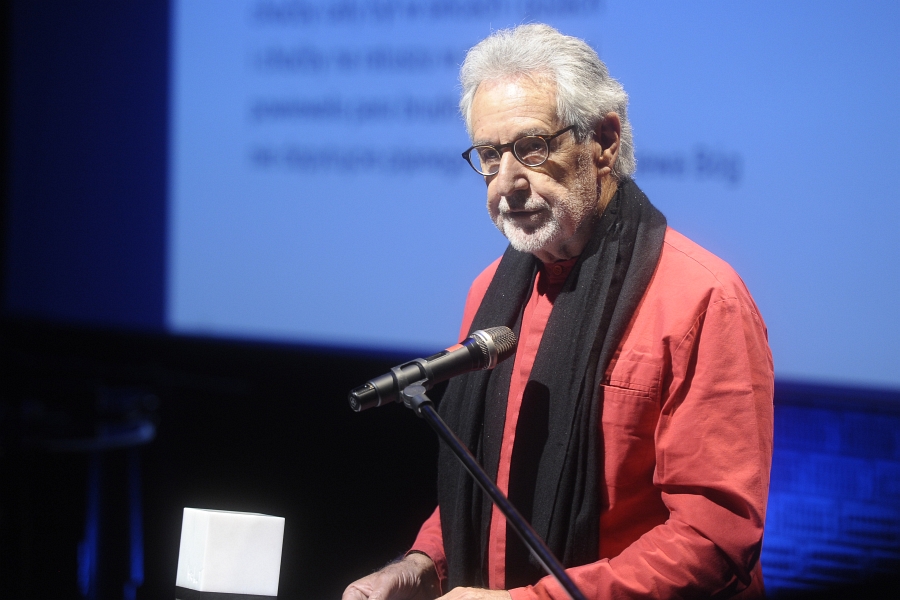
Breyten Breytenbach at the Zbigniew Herbert Literary Award 2017 ceremony, 25th May 2017, photo: Niemiec/AKPA
How do you feel teaching a new generation of students, in New York, Senegal...
Well, I'm involved in a pan-African institute, and on the 21st of June we're celebrating the 30th anniversary of the first wonderful meeting which took place in Dakar, Senegal. We wanted it to take place in Africa, though it would have been easier for it to happen in Paris or Moscow or Hanoi, or maybe Cuba, or New York.
The first meeting between the liberation movement, which was in exile, totally banned, but good people, at that time very good people, including many of my writer friends and actor friends, musician friends and others, and 60 other influential civic community, church, trade union and business community leaders from inside South Africa travelled together outside – in fact, I was involved in organising it. We got off the plane at Heathrow Airport, and when they arrived I was there to meet them and none of them knew where they were going. These were very, very important people, heads of this and that and the other organisation. I had to tell them: ‘We're going to Dakar to meet with the ANC. Are you still happy? You can turn back now.’ And one of them ended up crying, he asked if he could call his wife! Anyway, we got on the plane and went to Dakar and it was the beginning of the whole negotiating process. It was a failed process, because we didn't go deep enough. We should still be involved in reconciliation now.
Perhaps that is true of Poland today? The Left and the Right, the progressives and the conservatives still divided, even though the country as a whole is doing ever so well.
You can't resolve centuries of differences and exploitation and failed dreams in two or three years’ time. People wanted to get back to normal. We said OK, let's have a Truth and Reconciliation Commission and finish. But it all ended too early. Out of all that grew the Goree Institute, on Goree Island, a former slave island in the Bay of Dakar, and I was involved in making it happen, as its executive director.
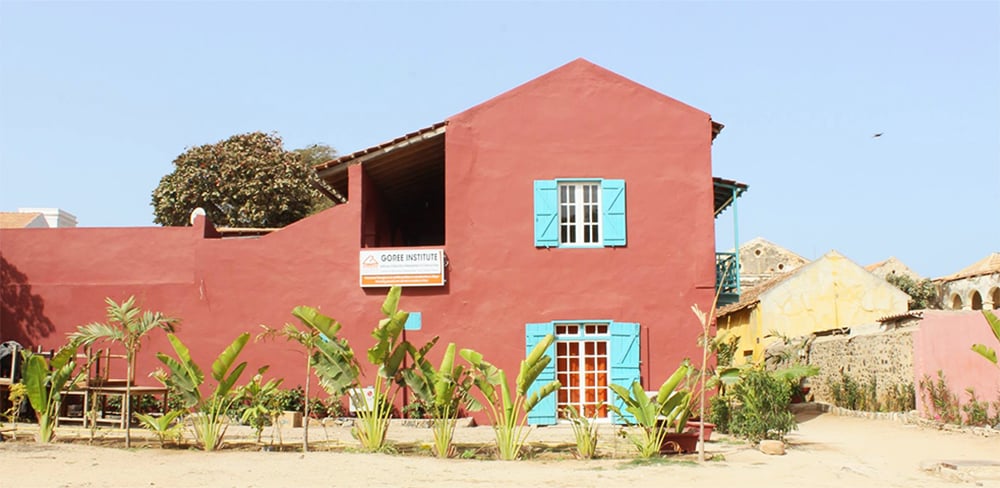
Goree Institute, photo: press materials
I still don't know what the political convictions of my colleagues are. We come from many different backgrounds, but we believe passionately in one thing – the courage of transmitting the need to take responsibility for your own life. And to start doing things. It's no use complaining about the alienated elite. We know they're alienated. Forget about. What are we going to do about our lives? And that involves training, teaching and all the rest of it, acquiring skills. How do we get out of the jam of being dependent as victims of history? And become full agents of our fate?
And it's an essential question for us here and now, because having translated hundreds of poems by almost a hundred Polish singers and writers, alive and dead, the present reality in Poland today is in some way shaped by ‘engaged artists’, those who fought for the Polish nation to retain its identity. But the current generation don't know how to follow in those footsteps. The post-communist reality in Polish letters was very much a self-centred conversation, and now that so much is changing within Europe and beyond, challenges to a calm status quo, Polish poets don't know how to respond.
I have noticed that! And yet you have been so instrumental and exemplary in showing us the vital things. I'm talking about the theatre of people like Grotowski, the films of Wajda, the thinking of Miłosz and for that matter Herbert.
Kapuściński writing about Africa.
Exactly. I had a wonderfully moving experience last night. I met a lady and she said to me: ‘You won't remember this, but I met you when I was with Kapuściński, I think it was in New York or Paris. And Ryszard recommended that I should be reading this book of yours called A Season in Paradise,’ which was lovely.
So yes, thinking back to the likes of Kapuściński, from Polish experience, if only you could get the confidence of engaging, instead of once again thinking that Poland is being given a tough deal by people making decisions elsewhere, making decisions you don't want – then we could all move on.

Zbigniew Herbert, Creative Work House of Polish Writers' Union, 1972, photo: Erazm Ciołek / Forum
Did you ever meet Herbert?
I think I probably did. I'm reminded that I organised an event in 1965, 1966 maybe, an evening of reading in Rotterdam as part of Poetry International Festival. And I was asked to organise an event of engaged poets from complicated parts of the world you know, Africa and Palestine, and what I see now is that he was one of the poets there that night, although we were never really introduced.
It is like a password among poets, people who have a real passion for poetry, always ask: ‘Have you read Herbert? You should really read Herbert.’
Yes, as a translator when I work on Herbert's poetry, I have the sense of swimming in a really powerful river, that I can really get my back into it, use some powerful strokes.
Somebody wrote to me this morning, a wonderful person from South Africa, who watched the live feed from the awards ceremony last night. Someone very close to me too. He comes from an Afrikaner background, and now lives in total isolation, but he asked: ‘Please, what was the line from Herbert, about a person swimming against a stream?’ And of course I can't recall, because I was engaged in reading, but if you have the reference for the quote, I will send it to him...
You must always swim towards the source, against the current. The only thing which floats downstream is rubbish.
- Zbigniew Herbert
Interview conducted by Marek Kazmierski on 26th May 2017 in Warsaw.
