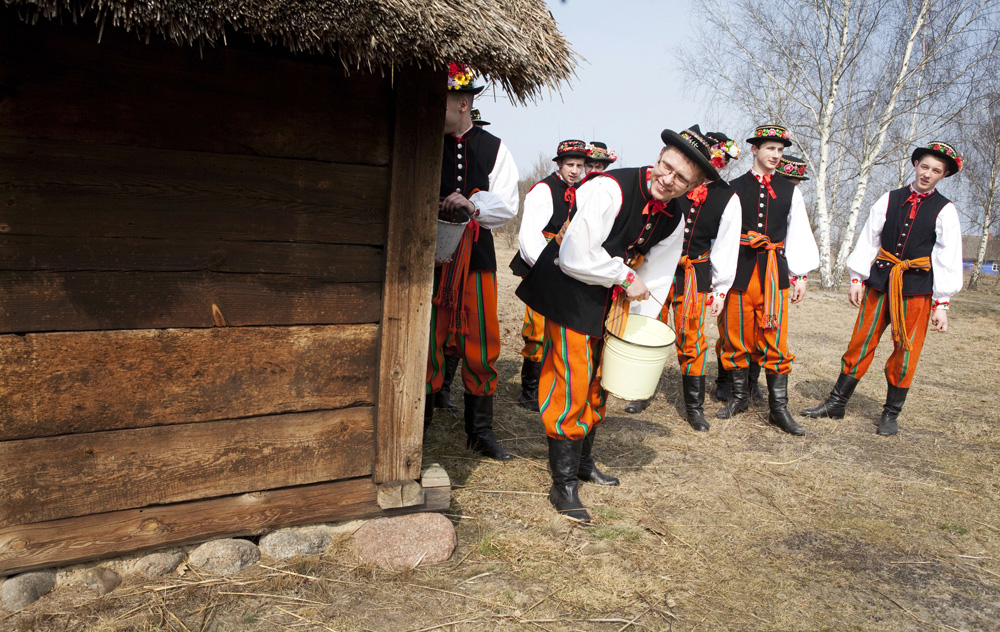
As it turns out, Śmigus and Dyngus were originally two separate customs. There are many different ideas, however, of what they looked like and exactly where they came from. Most commonly, Śmigus was known to involve the symbolic whacking of people’s legs with palm fronds or willows and drenching them in cold water. This was meant to cleanse them of dirt and diseases, and later of sin.
Dyngus, however, was supposedly a chance to save yourself from being drenched a second time by bribing the ‘drencher’ with a decorated egg. Another idea is associated with ancient Slavic wandering practices – people went around visiting relatives and friends, sharing refreshments and joy. Processions of boys stomped through villages, going door to door, reciting poems and demanding gifts.
Yet another idea suggests that Śmigus was the time for whacking willows, while Dyngus was the time for throwing water. While others believe the custom is related to the Baptism of Poland, the personal baptism of Mieszko I, the first ruler of the future Polish state, along with much of his court.
Now Śmigus-Dyngus is a natural part of Easter festivities in Poland. Funnily enough, the first mention of the custom in Poland comes from 1420, when the archdiocese of Poznań issued an edict named ‘Dingus Prohibetur’ – which warned people about the sinful acts committed by taking part in Śmigus-Dyngus.
Water fight!
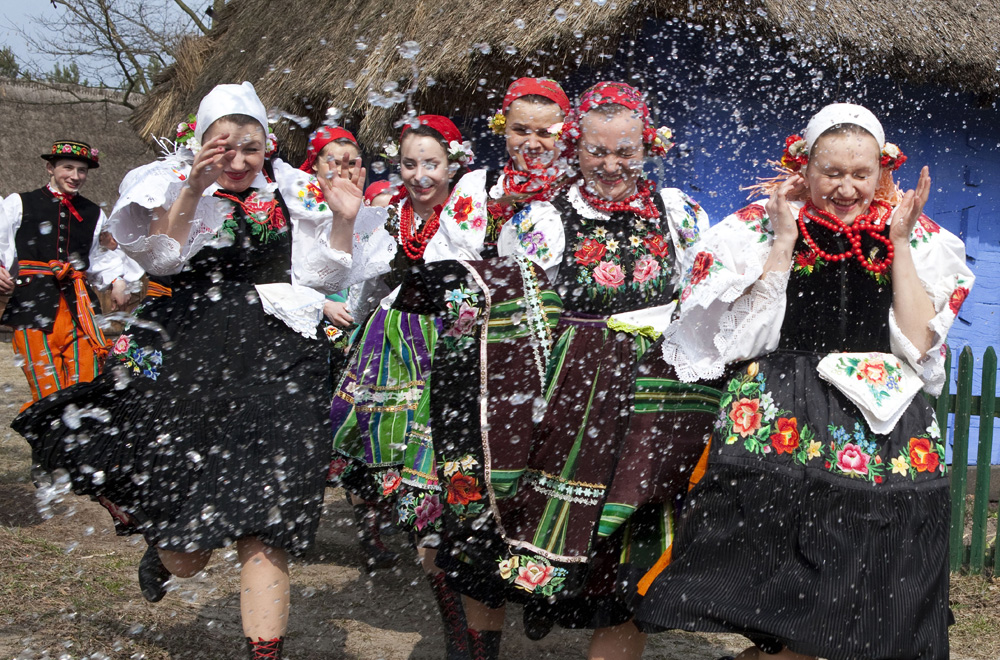
Photo: Marian Zubrzycki / Forum