1. Tadeusz Kantor
Theatre legend Tadeusz Kantor is in the top spot this year, nudging out Mirosław Bałka as the world prepares to celebrate the 100th anniversary of his birth in 2015. Not only known as one of the great theatre directors in history, he was also a major figure on the Kraków art scene. The value of his works continues to rise, currently set at about €72,000.
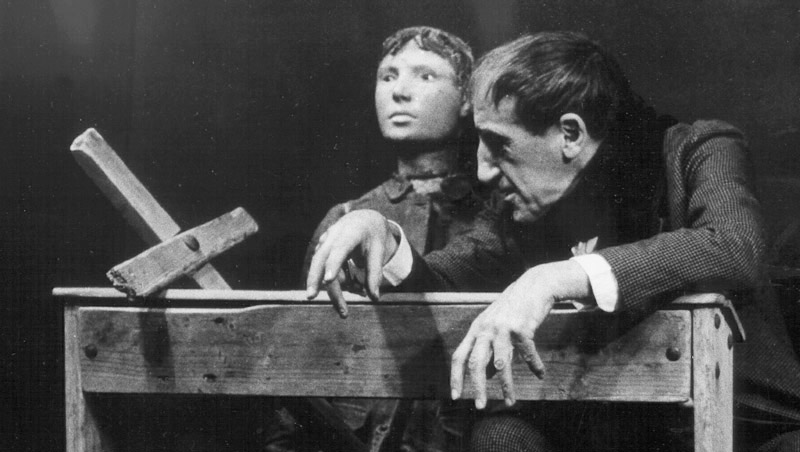 Tadeusz Kantor directing "The Dead Class", Kraków, 20 January 1988. Photo: Włodzimierz Wasyluk
2. Mirosław Bałka
After ranking #1 for three years in a row, Mirosław Bałka has slipped down a notch. His works draw on a personal history shaped by political and religious constraint, but also by symbolic representation, captivating abroad audience at home and abroad. His 2009 work How It Is at the Tate Modern in London was seen by over 3 million people. His works are valued at tens of thousands of Euros.
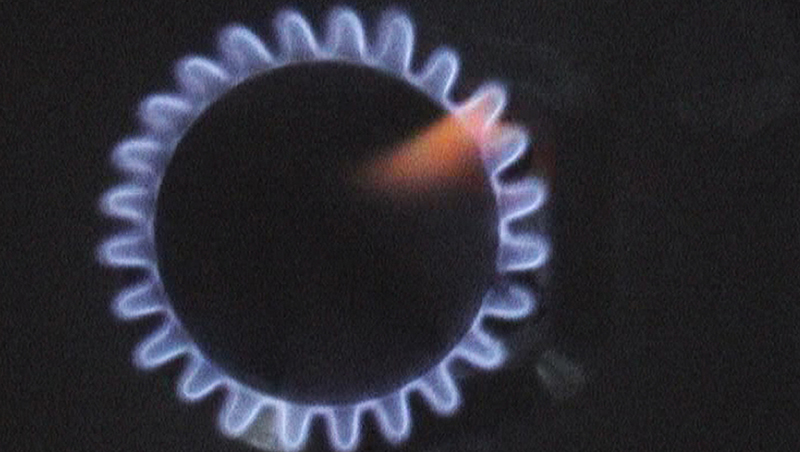 Mirosław Bałka, "BlueGasEyes", 2004, photo courtesy of Gladstone Gallery NY and Brussels, CCA Warsaw
3. Alina Szapocznikow
As one of the most original woman sculptors in contemporary art, Alina Szapocznikow created her own lexicon for tracing the evolution of the human body. Her works have traveled the world's most important museums and galleries in recent years, including the WIELS centre in Brussels, the Hammer Museum in Los Angeles, MoMA New York and the Centre Pompidou in Paris.
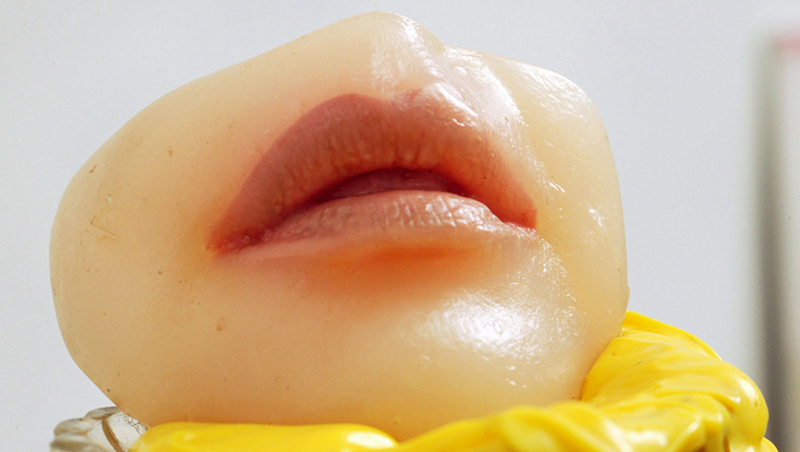 Alina Szapocznikow, "Dessert I", 1970-1971, assemblage: polyester, glass plate. From the collection of Piotr Stanisławski
4. Jerzy Nowosielski
Among Jerzy Nowosielski's earliest works are early-1940s representations of female figures, described as emotional, Modigliani-like nudes. He often spoke of his masculine fascination with the female body, his dreams and fantasies - he called his art "erotic figuration". His art is not only based on that motif but is also built around a conscious "language" with which the motif is depicted. A language that has evolved, starting with the figurative paintings and drawings from the late 1940s, evolving into greater abstraction in later years. Interest in his works has been rising since the 1980s, with Woman at a Boat sold at auction for more than €100,000.
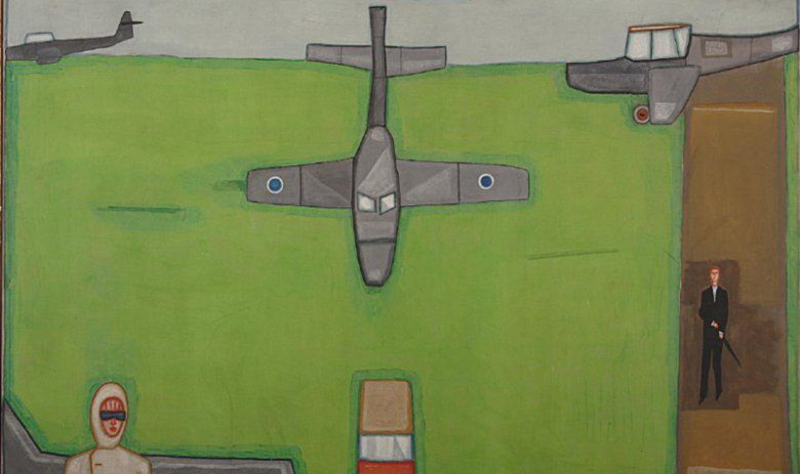 Jerzy Nowosielski, "Great Airport", 1966, oil on canvas, photo: Tomasz Szemalikowski, courtesy of the Muzeum Górnośląskie in Bytom
5. Roman Opałka
Roman Opałka pursued his particular artistic style over many years, gathering diverse experiences and experimenting in painting and conceptual ideas. In 2010 an unknown buyer purchased three of his Details at Sotheby’s in London for £713, 250 - the highest price fetched for the work of a Polish artist to date.
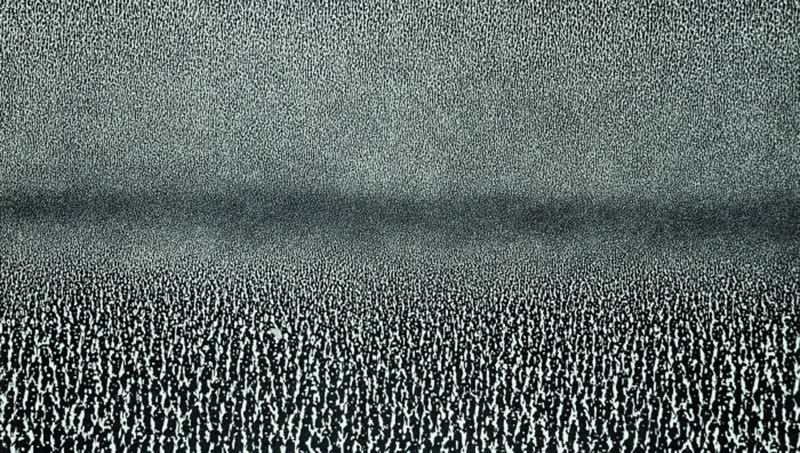 Roman Opałka, "Ziemia", 1969, kwasoryt, papier, fragment obrazu, w zbiorach Muzeum Narodowego we Wrocławiu, fot. pracownia fotograficzna MNWr
6. Magdalena Abakanowicz
Her Abakans have become a household name in the field of sculpture. Magdalena Abakanowicz has taken the softness and pliability of fabric and transformed it into unnerving, larger-than-life figures that seem to have a life of their own. Most recently, Walking Figures took the streets of New York City in 2012, and Crowd (22 Standing Figures) sold at auction for over $440,000 at Sotheby's.
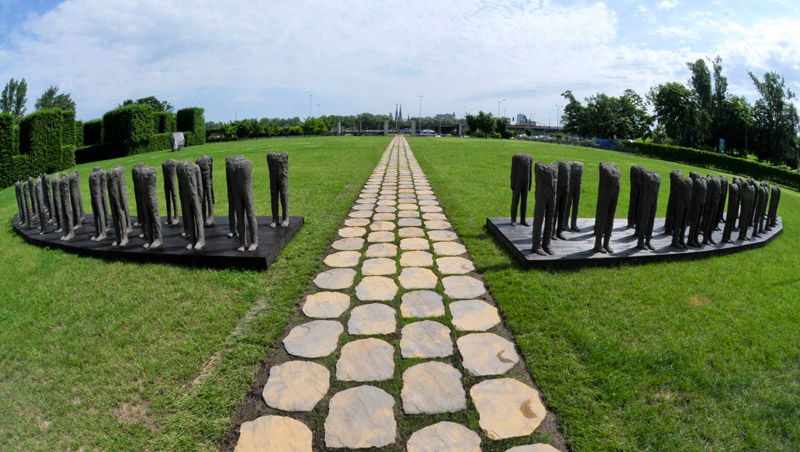 Magdalena Abakanowicz, "Bambini", installation, photo: Włodzimierz Wasyluk
7. Andrzej Wróblewski
Andrzej Wróblewski interpreted the style of socialist realism after 1949 in his own way, with legible art that would respond to the problems of reality, such as his brutal Executions series. He created dramatic, visceral works that delved deep into circumstances of a post-war Poland afflicted with new injustices brought on by the communist authorities. He created a series of canvases that provide an acute observation of war-time trauma. In 2010 the Van Abbemuseum held a broad retrospective of his works, followed by an even bigger show of known and lesser-known works at the National Museum in Kraków.
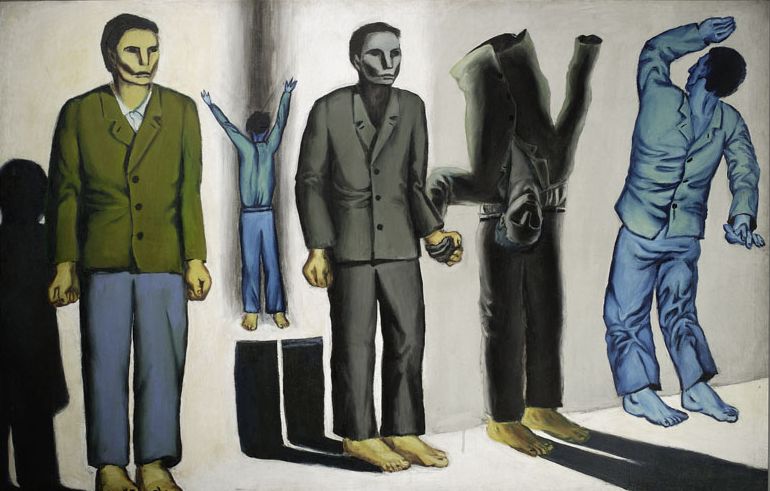 Andrzej Wróblewski, "Surrealist Execution" (VIII), oil on canvas, 1949, photo courtesy of the National Museum in Warsaw
8. Wojciech Fangor
When in 1949 government authorities instated socialist realism as the only legitimate form of art, Wojciech Fangor began painting his signature "characters" of contemporary Polish society. His transition from impressionism and abstraction into realism was relatively smooth, his work rather different from typical images of Socio-realism of the time.
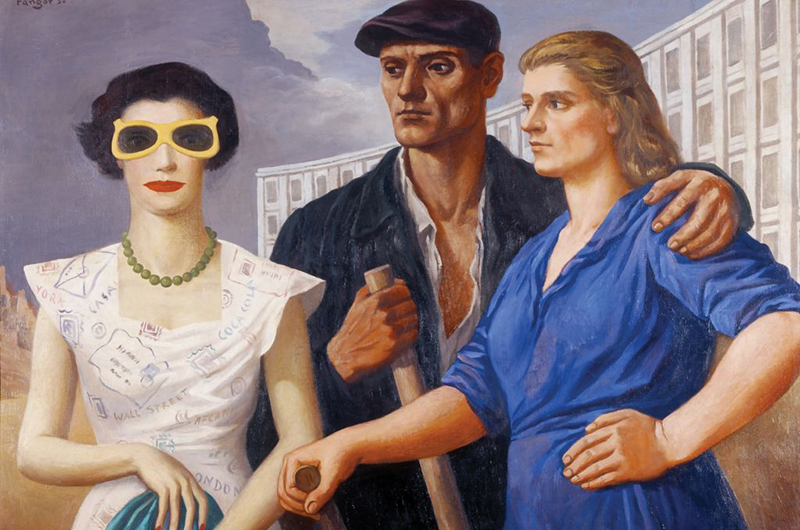 Wojciech Fangor, "Characters", 1950, oil on canvas (fragment), from the collection of the Łódź Art Museum. Photo: MSŁ
9. Władysław Strzemiński
Władysław Strzemiński is an iconic figure, one of the most radical artists connected with the interwar avant-garde movement in Poland. The multilayered activities of this artist are aimed not only at transforming so-called high art, but also at transforming the broadly understood realm of design. He is most recognised for his "After-images", an expression of different perspectives on seeing.
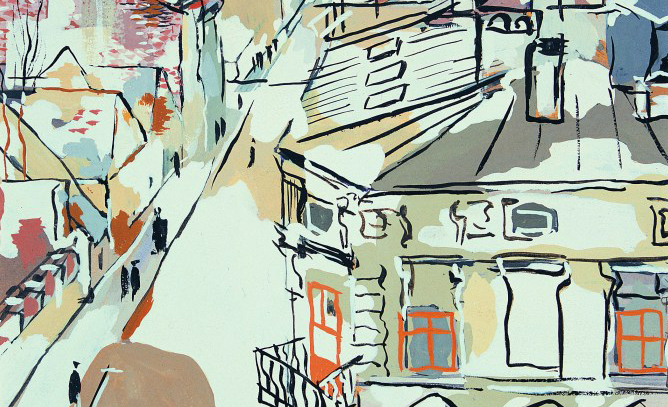 Władysław Strzemiński, "Łódź Landscape, 1932, tempera, cardboard (fragment). Photo courtesy of Muzeum Regionalnego w Stalowej Woli
10. Wilhelm Sasnal
One of the most recognisable names on the international art scene, Wilhelm Sasnal has continued to evolve as an artist, shifting from remarkably expressive paintings that join together traditional techniques with pop-art concepts drawn from everyday life, to contemplative works of video art. His works are shown at major galleries across the world, most recently at the Anton Kern gallery in New York City, the Whitechapel Gallery in London and the Centre Pompidou in Paris. His triptych Burning Girls was sold for $465,000 in 2008.
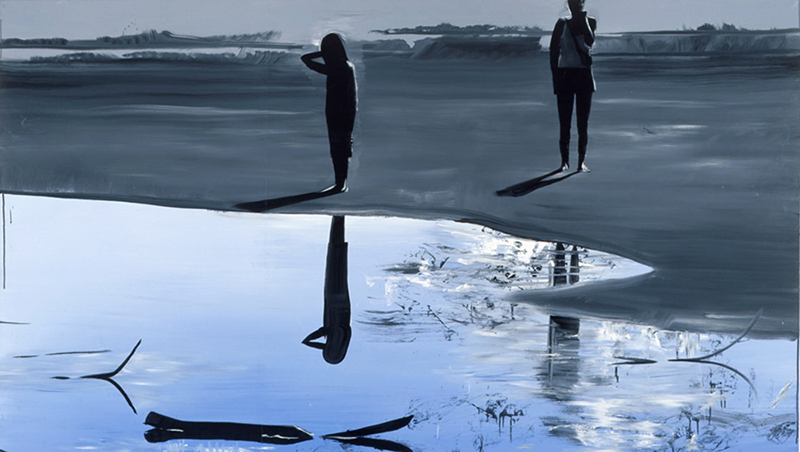
Wilhelm Sasnal, "Kacper and Anka", 2009, oil on canvas. Private collection, photo courtesy of the Whitechapel Gallery in London
The Art Compass 2013 (Kompas Sztuki 2013) was released by the newspaper Rzeczpospolita in early May 2013, based on individual rankings and expert opinions provided by representatives of Poland's most significant galleries and art institutions. The total list numbers 266, which are to be subsequently released later this year.
See the full ranking at www.kompassztuki.pl
Editor: Agnieszka Le Nart
Source: Rzeczpospolita, own sources
10.05.2013