At the peak of its success in the 1950s, Detroit was home to 1.85 million people. Today, just 700,000 remain. In the second half of the 20th century, in the 70s and 80s, Łódź was the second biggest city in Poland with over 850,000 inhabitants. Today, there are 135,000 fewer – it’s as if a city the size of Savannah, Georgia, or the entire population of the Isle of Wight, just disappeared off the map. Although separated by thousands of kilometres, both are prime examples of deindustrialization in action.
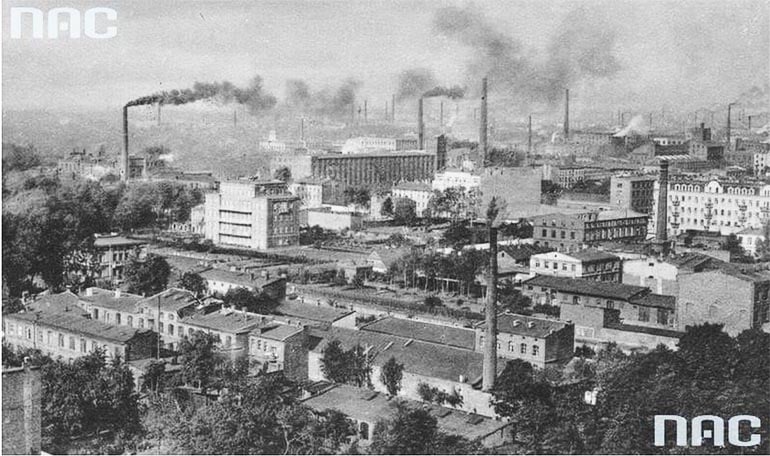
Łodz Panorama, 1930's, photo NAC
In their time, both the American car production capital and the Polish textile capital were seen as perfect examples of affluent, dynamic and productive centres. Today, they have to deal with depopulation, social problems and abandonment. In June 2013, to protect itself from debtors, Detroit filed for bankruptcy; Łódź is in a better financial situation - cities cannot go bankrupt in Poland as there are always government subsidies available (today they cover 27% of the city's budget).
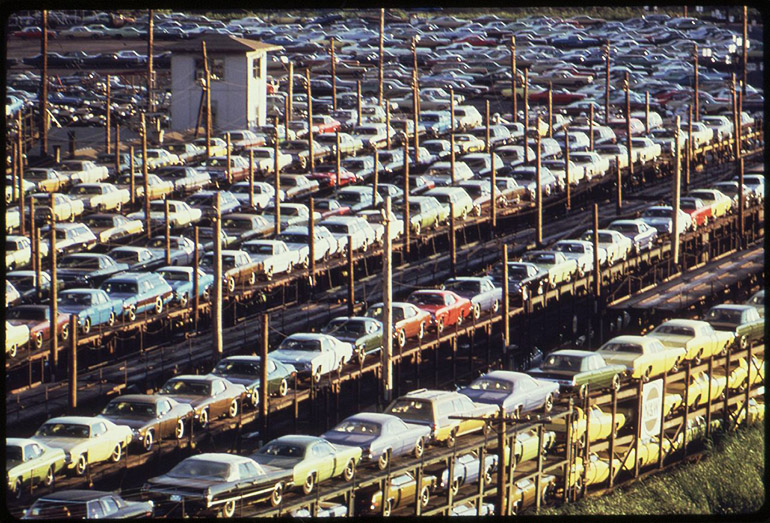
Car production in Detroit, 1970's, photo Joe Clark
In the second half of the 19th century, Łódź had one of the biggest textile industries in Europe. From 1820, when the city became a designated industrial town, more and more factories and housing estates began appearing. In just 100 years, the number of inhabitants grew from four thousand to half a million. Apart from the big Poznan, Scheibler, Grohman and Biedermann factories, the city housed many smaller facilities that cooperated with the larger spinning, dyeing and weaving giants. According to the 1921 labour inspections, there were 677 factories associated with the textile industry and over 200 others dealing with chemicals, food production and metalwork.
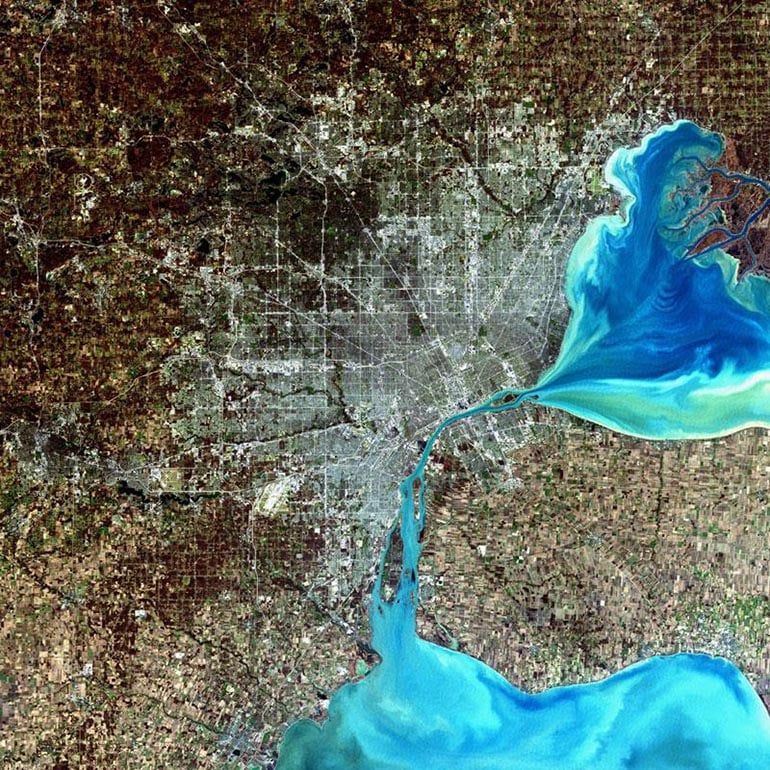
Satellite picture of Detroit, December 2001, photo NASA
Only half a century ago, Detroit was the second richest city in the USA. Its industry was dominated by the “Big Three” car manufacturers - Chrysler, Ford and General Motors. These three companies, as well as a handful of smaller industries, employed most of the city’s workers. The post-war boom and a domestic policy aimed at increasing consumption turned the American car industry into an industrial powerhouse. The industry grew throughout the 50s and 60s as manufacturers had no problems selling their cars. Perhaps the best indicator of the city’s wealth was that the local art gallery was able to purchase works by Michaelangelo, Titian, and Rembrandt
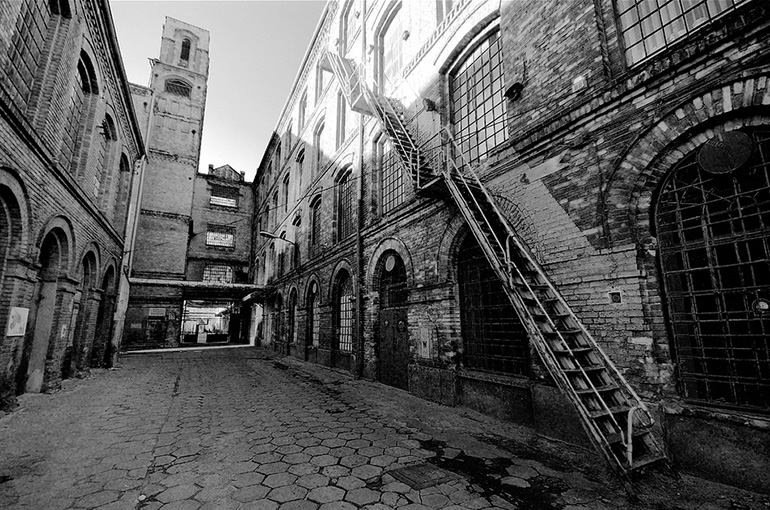
Ramisch factory in Łodz, photo free resources
Łódź’s crisis began in the 1990s. While the communist government was still in power in Poland, the factories exported products to the USSR. However, with the fall of the Soviet Union came the rise of the Asian Tigers. Cheaper materials made in China flooded the European market and pushed out the old factories in Łódź. Today, Łódź has a 13% unemployment rate, while other cities in Poland usually have around 4%. Urban depopulation is another major problem – richer inhabitants leave the ruined city centre in search of safer, cleaner and more spacious homes on the periphery. Shops and services lose their markets and follow the middle class out. What’s left is a city riddled with social problems.
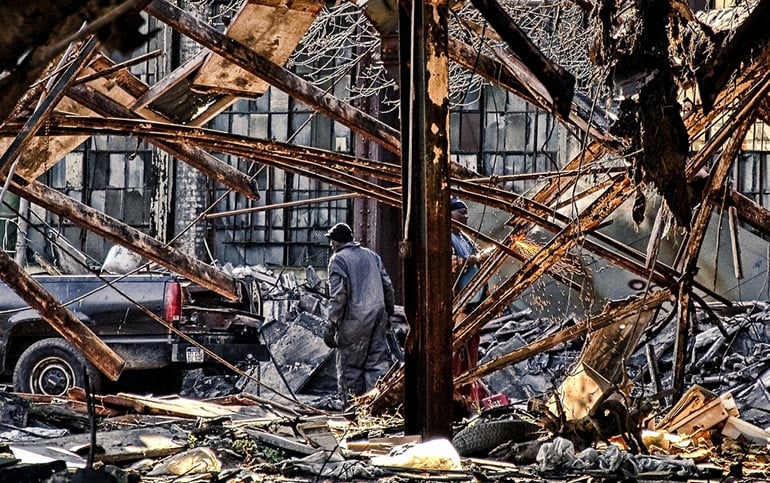
Detroit, photo Bob Jagendorf
In this sense, Detroit is very similar. Everything changed when American markets were flooded with cars from Asia, particularly Japan. Cars made in Japan were cheaper to produce, of higher quality and more efficient than their American counterparts. Furthermore, the UAW (United Automobile Workers union) blocked any attempts by the Big Three to reform the inefficient manufacturing system in Detroit. Eventually, the Big Three moved away from Detroit to countries like Mexico, where it was cheaper to produce cars and workers’ unions were illegal. Thus began Detroit's decline, which was only accelerated by the stock market crash. Until Detroit filed for bankruptcy, the city wasn’t even able to pay to light its streets or maintain its public parks.
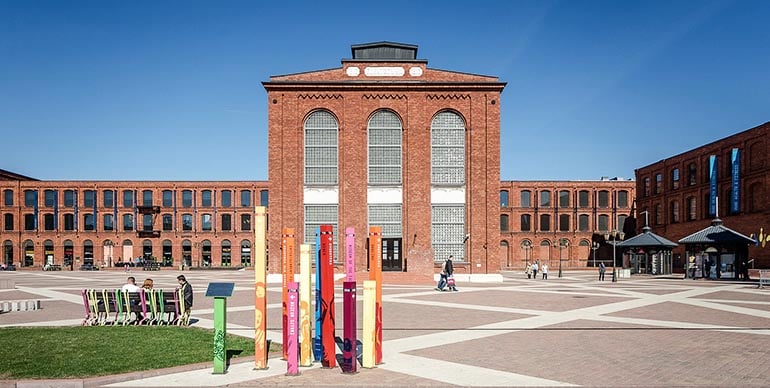
Manufacturing Centre in Łodz, photo Maciej Lulko
Łódź is attempting to save itself with the help of new investments. Local authorities, with the help of government subsidies and EU funding, have started a programme to revitalise the city. In place of the old Łódź Fabryczna train station will be a modern station with underground platforms; a nearby abandoned power plant is being turned into a cultural centre with galleries, workshops, film studios, a science centre and laboratories. The Art Museum and the Art-Incubator, located in the old Sheibler factory, are also being further developed.
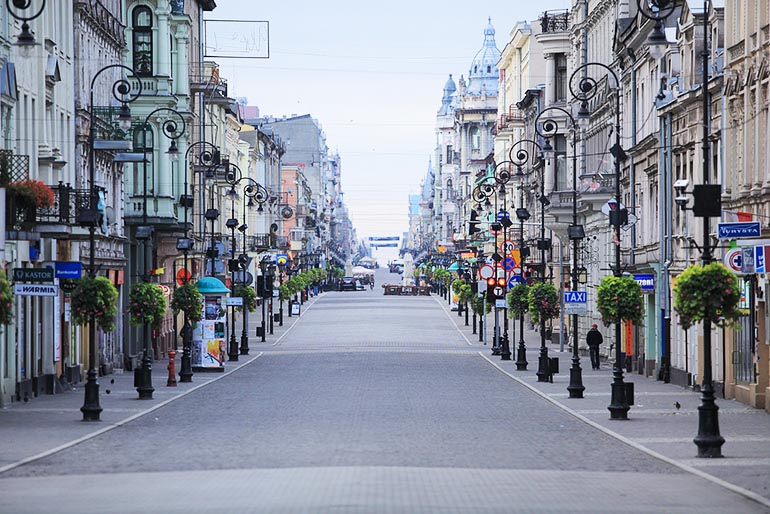
Piotrkowska Street in Łodz, 2012, photo Ministry of Foreign Affairs
Over the next seven years, 7 billion Polish zlotys will be spent on the city’s revitalisation. One of the most important projects is Mia100kamienic, an attempt to renovate and modernise a ruined building in the city centre. By returning old buildings to pristine condition, the city council hopes to deal with Łódź’s social issues. The city council’s description of the programme reads:
“Revitalisation is a process of social, spatial and economic change in an area that is in crisis – like the centre of Łódź. Its aim is to bring degraded parts of the city back to life and give them a new function. Simply put, we want these areas to be easy to stay in, live in and work in. Redoing the old buildings and modernizing the streets and pavements are only a part of the revitalization process. Fixing the urban space must go hand and hand with improving quality of life, which is done by expanding our social, cultural, educational and economic activities to all aspects of urban life”.
In Detroit, the situation is much tougher. In the spring of 2014, the city authorities admitted that of 80,000 abandoned buildings, over half should be demolished. Although the process of demolishing abandoned building should limit the amount of crime in the city, the cost of this operation would be enormous. However, this cost is necessary; Detroit is one of the three most crime-ridden cities in the US and has the highest number of murders and a growing narcotics industry. The crisis in Detroit also caused intense racial problems, after the “White Flight”, when the rich white population left the city for the suburbs, completely isolating themselves from the poor and the unemployed, who were most often of other ethnicities.
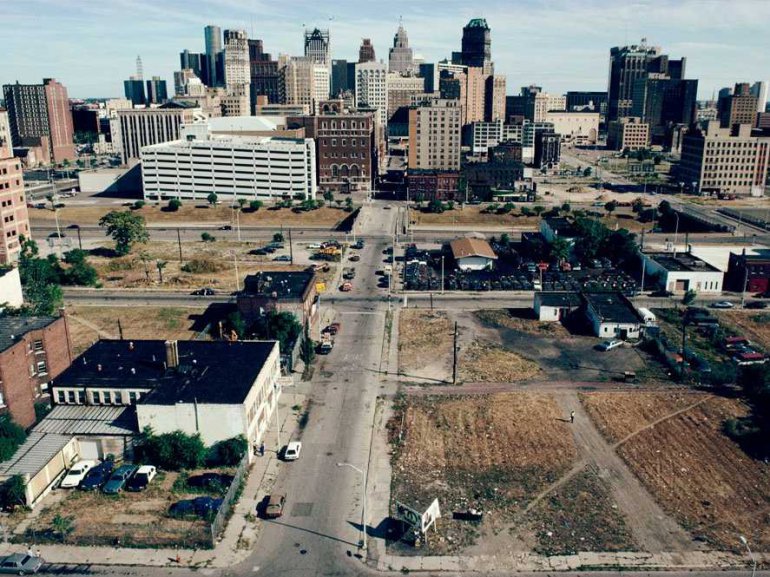
Detroit, 2013, photo: free resources
The process of urban depopulation and the resulting urban sprawl is a problem that many American cities face. However, in Detroit this problem can be seen particularly clearly. Richer inhabitants travel from the skyscrapers in the centre to the suburbs, bypassing the abandoned downtown, where deserted factories are used as shelters for criminals and gangs.
In January 2011, Michał Gruda, an inhabitant of Łódź, contacted the American director Philip Laurium, who had previously produced a film about the inhabitants of Detroit. Gruda found that Łódź’s problems were similar to those of Detroit, and offered the director a trip to Łódź. Thus, the documentary After the Factory came to be. Using the unlikely comparison of Łódź and Detroit, it attempts to address the problem of deindustrialization in the modern world. “In both cases, the crisis was caused by industrial monoculture and globalization. Łódź is also an example of the decline of urban space in a place where there was no free market”. – says economist Bogusław Grabowski, the author of the programme to restructure Łódź and a former member of Monetary Policy Council, to Gazeta Wyborcza. It seems that although the two cities have many differences, they must both accept their loss of population and instead work on keeping the remaining people by offering them work and safety.
Originally written in Polish, translated by AS, July 2014