Marta Jaszczuk: 19th century Warsaw was a dynamically developing city, a true melting pot of social classes, religions and nationalities. How did its inhabitants celebrate Christmas?
Prof. M. Karpińska: By the end of the 18th century Warsaw was a real city with a rapidly growing number of inhabitants. So, on the one hand there were a lot of different people and a fast and buzzing lifestyle, but on the other hand, cities are a specific type of space that influences the way of in which people celebrate holidays. I’m talking about the living spaces, for example. Instead of a rural house or a nobleman’s mansion, there are flats, often tiny and crowded, located in multistorey tenement buildings.
MJ: In the countryside, there were a lot of Christmas traditions to be celebrated outside of the house. These were connected to country animals, the field, the orchard. There was a custom of bringing sheaves into the house. Where do you find a sheaf in the city?
MK: You could easily find one. It has to be said that Warsaw was a city shaped by a very broad trench which was created in 1770 and is known as Lubomirski’s trench. This gave the city a mixed, rural-urban character. Outside of the Old Town and the New Town, as well as the axis of Krakowskie Przedmieście and Nowy Świat, there were wooden houses with gardens and sometimes even crop fields. Therefore, buying a sheaf was not a problem, but placing it in a small room, in a tiny flat in one of the tenement buildings, was indeed a problem. People who came to the city usually lived in a cramped style in in various lodgings offered for rent.
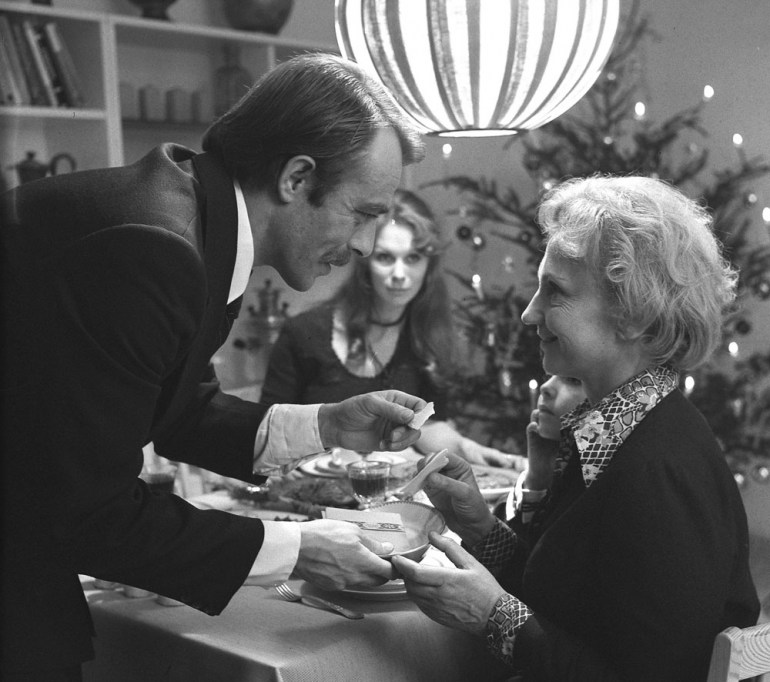
Still from the film 'Zofia, directed by Ryszard Czekała, 1976, photo: Studio Filmowe Kadr / East News