Otwock for Architecture
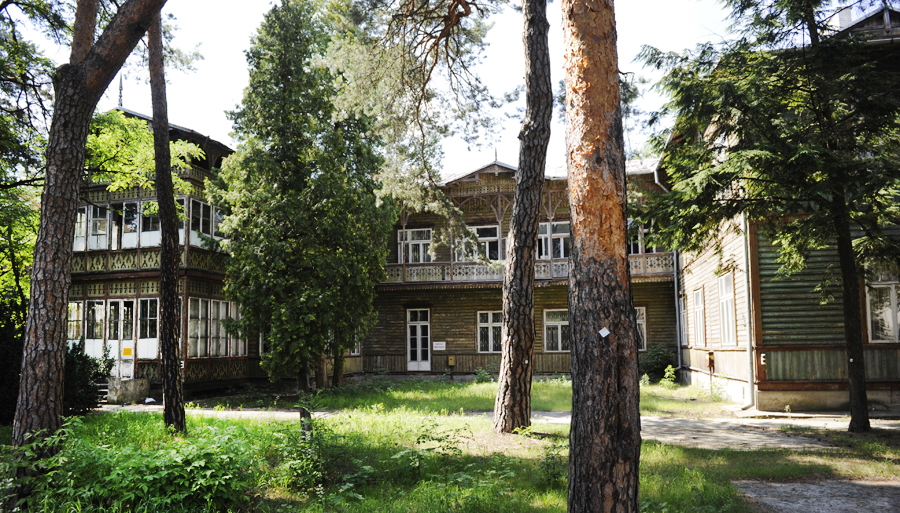
Abram Gurewicz’s Sanatorium, Otwock, photo: Dagmara Nemerow
Southeast of Warsaw, you will find the town of Otwock, a former health resort and vacation hot spot with stunning wooden villas that give you a glimpse into Poland’s pre-war past. Many of the villas are unique as they combine Polish wooden manor architecture with elements of Alpine lodges.
The unique architectural style, called świdermajer, was invented by Polish illustrator and painter Michał Elwiro Andriolli, who first designed such villa for himself. Soon, his neighbours wanted one just like his, and by the turn of the last century, Otwock had several hundred villas in the same style. One of the buildings – Uzdrowisko Gurewicza (editor’s translation: Gurewicz’s Health Resort) at 6 Armii Krajowej Street – is actually one of the biggest wooden structures in Poland.
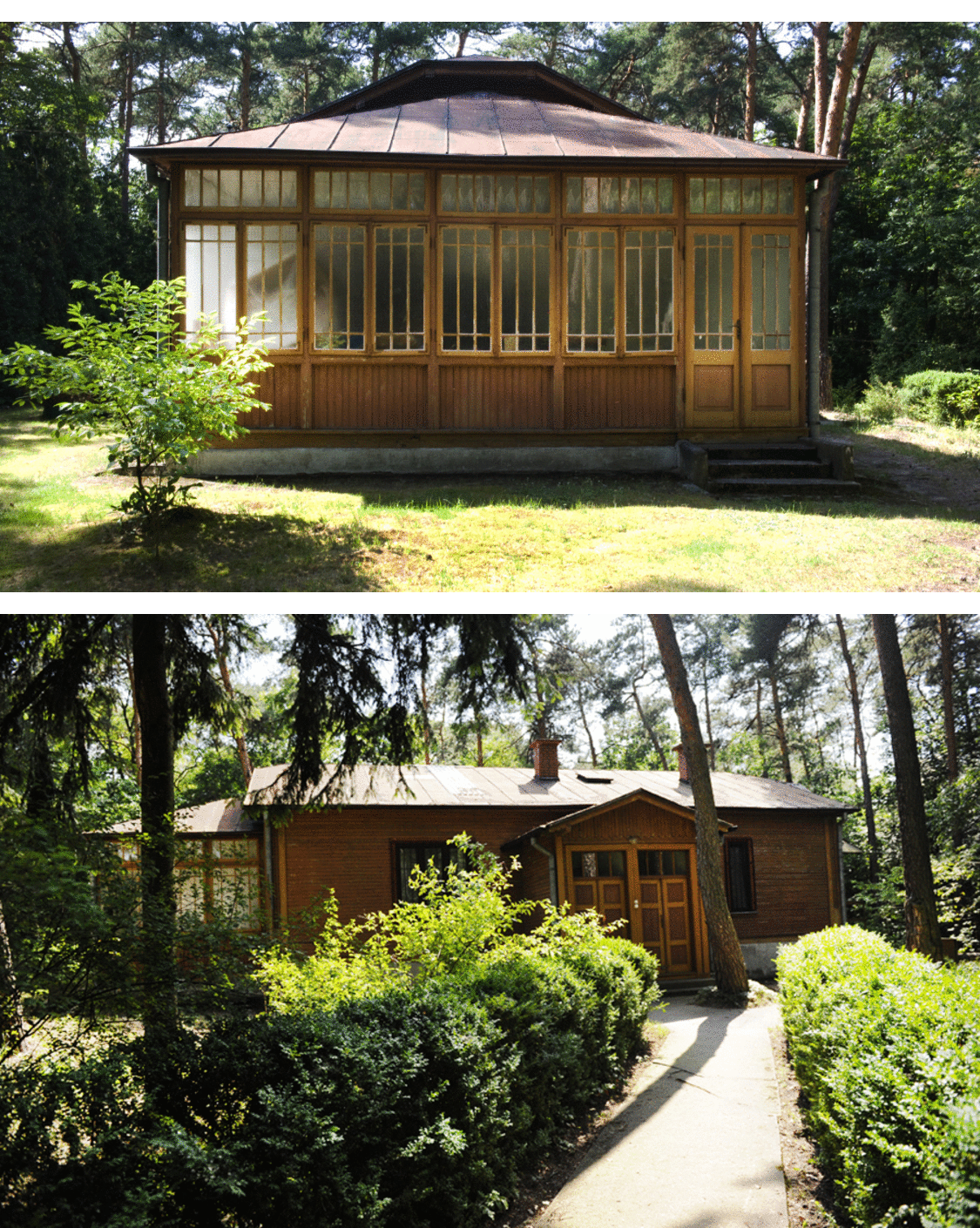
7 Prusa street, Otwock, photo: Dagmara Nemerow
During the summers of the interwar period, Otwock was visited by 2,000 patients seeking its spas and healthy climate.
Otwock was the hometown of Irena Sendler, the Polish humanitarian who saved thousands of Jewish children during World War II, as well as the place where Nobel prize-winning Polish author Władysław Reymont lived and worked. During the war, Nazis established a euthanasia program for the Jewish psychiatric patients of the Zofiówka Sanatorium in Otwock. The building of the sanatorium is still standing and is also worth seeing.
Otwock borders the Masovia Landscape Park (Mazowiecki Park Krajobrazowy), which makes for a nice nature walk to round out this day trip.

The Wisła near Otwock, photo: Dariusz Borowicz / Agencja Gazeta
Suggested itinerary: From the train station, walk toward Gurewicz Sanatorium at 8 Armii Krajowej Street to check out Poland’s biggest wooden building. Then, cross the train tracks to the other side of the town and marvel at villas of different size on Kościelna Street. Grab lunch at the train station. That’s right – Café Lokomotywa offers a great selection of food and unique vintage decor. Head to Museum of the Land of Otwock (Muzeum Ziemi Otwockiej at 2 Narutowicza Street) to learn more about Otwock’s history, then take a stroll among the pine trees of the peaceful Mazowiecki Park Krajobrazowy. Check out our Guide to the Wooden Villas of Otwock for more information on specific houses.
How to get there: Drive (33 minutes) or take a 40-minute direct train to Otwock.
Żyrardów for History
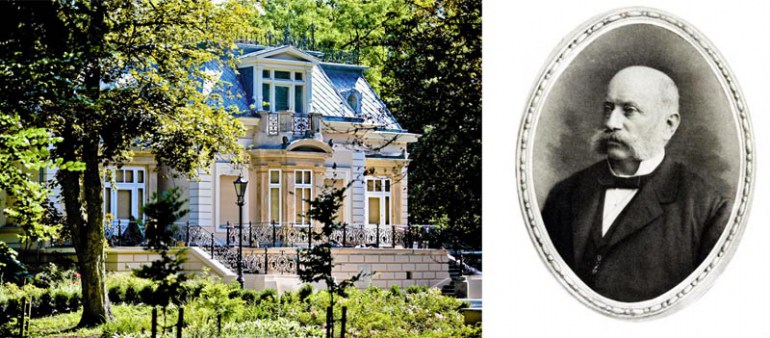
Neo-Renaissance palace of Karol August Dittrich and his portrait, photo Adam Kozak/AG, www.zyrardow.pl
Żyrardów is a unique factory town that is one of the least known and most worthwhile destinations near Warsaw. Located 50 km from Warsaw (or a 30-minute train ride), it’s the only preserved industrial town in Europe from the turn of the 20th century.
Back in the 19th century, Żyrardów was a very international place, where you could encounter not just Poles and Jews, but also Germans, Czechs, Englishmen, Scots and Irishmen. In fact, even the town’s name is international. Żyrardów was named after Philip de Girard, a Frenchman who invented the mechanised linen spinning machine and was the first director of the linen factory built there. The town really came into its own in the second half of the 19th century, when two German entrepreneurs – Karl August Dittrich (you’ll see his name a lot throughout the town) and Karl Hielle – expanded the factory into an idealised industrial town, together with worker tenement buildings, manager villas, churches for both Catholics and Protestants, a hospital, schools and a kindergarten that has functioned since 1875 to today.
The red brick town survived both wars almost entirely intact and offers a glimpse into the height of Europe’s industrial past. If you enjoy urban design and old buildings in different states of disrepair, Żyrardów is the place for you.
Suggested itinerary: Walk or bike the tree-lined streets of the town’s residential half with brick tenement houses, the oldest of which dates back to 1867. The tenements come with extensive garden plots and wooden sheds and are still occupied today. You will also find three-story villas in the French Renaissance style that housed the factory directors and managers.
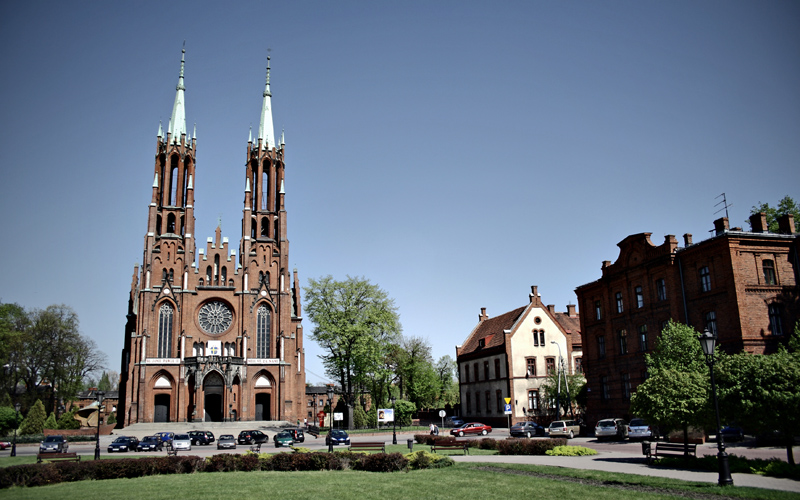
Żyrardów, John Paul II Square, photo: Krzysztof Zuczkowski/Forum
Make your way toward the impressive hospital, built in 1894 and based on the advanced Dresden hospital with electricity, heating and sewerage. Then, make your way toward Plac Jana Pawła II, Żyrardów’s main square. In 1883, this was the site of the spoon weavers’ strike, the first general strike in the Polish Kingdom. Take a break in the cool of the neo-gothic Holy Mother of Consolation Parish Church, modelled on the Koln Basilica and built using 3 billion bricks donated by Dittrich. On the opposite side of the spacious square, you’ll see the new spinning plant, the factory’s largest building, which was recently converted into a mixed-use project with loft apartments, a hotel (which offers a great view of the town), shops and restaurants.
Grab lunch at Telegraf Bistro & Café. Then circle the spinning plant, passing the old bath and laundry house, used through the 1980s, and the abandoned Stella stocking factory, which was one of the largest stocking factories in the Russian Empire. After all the brick, don’t be surprised by the grandiose Tyrolese House, built in the 1860s in the Tyrolese style for an Austrian merchant (be sure to check out the wooden summer house in the back).
Across the street, stroll through Karl A. Dittrich’s Park centred around his gleaming neo-Renaissance villa. The villa is now the Western Mazovia Museum, and in the summer, you can catch a concert in the adjacent amphitheatre. Stroll through the surrounding park, planned by the gardener from the Warsaw Botanic Garden. It’s beautifully landscaped with benches and pedestrian bridges along Pisia River.
More information: https://www.zyrardow.pl/
How to get there: Drive for 45 minutes or take a 30-minute train ride from Warsaw Central Station in the direction of Łódź, Wrocław or Bielsko-Biala.
Żelazowa Wola for Music
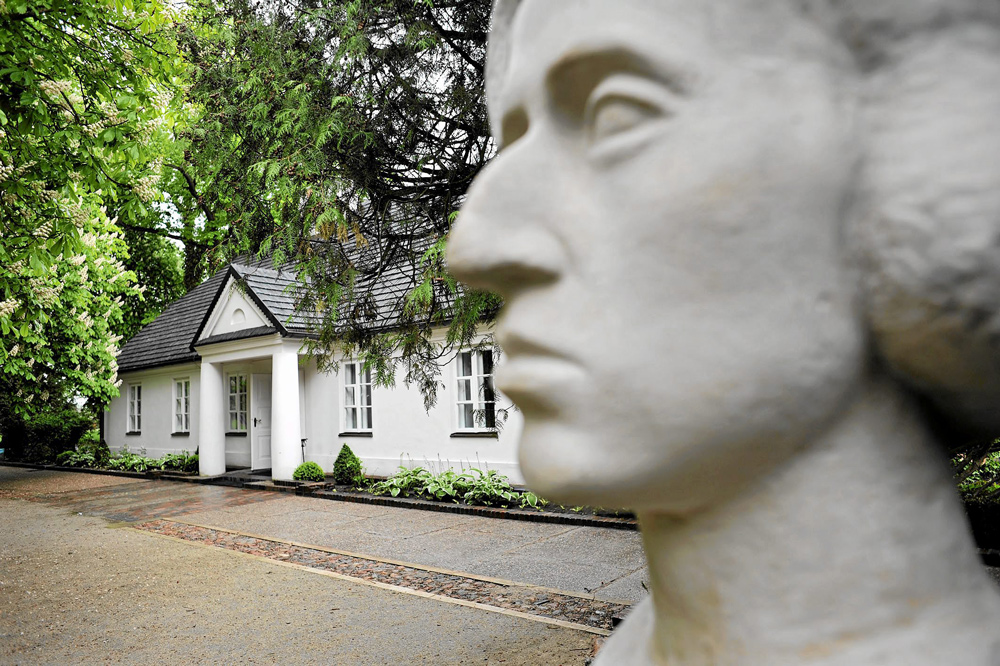
Fryderyk Chopin's Museum in Żelazowa Wola. Photo: Franciszek Mazur/Agencja Gazeta
Chopin is perhaps Warsaw’s biggest cultural hero. There is a Chopin Museum. There are Chopin-playing benches entertaining visitors in the city centre. There is the Chopin statue in Łazienki Park, where big crowds gather every Sunday in the summer to hear pianists from around the world perform Chopin’s music. There is Chopin’s heart entombed in Warsaw’s Holy Cross Church. And then, there is, of course, the Chopin Airport.
So, it’s no wonder that even the composer’s birthplace – located in Żelazowa Wola, about 40 minutes west of the city – has been made into a destination for visitors. The Birthplace of Fryderyk Chopin features the manor house where he was born in 1810 and a beautifully landscaped park, where speakers hidden in the bushes emanate the composer’s music. During the weekends, visitors can also listen to live piano concerts.
Efforts to commemorate Chopin’s birthplace started in the 1890s, but weren’t realised until 1928, when the house and the surrounding land were purchased thanks in large part to donations from the public. Yet despite its long history, if you want to learn Chopin’s full history, don’t go to the Birthplace with high expectations. Born to a French tutor and a Polish housekeeper who worked for the Skarbek family, Chopin spent less than a year in that house before the family moved to Warsaw. Even though he often returned to visit the Skarbek family in Żelazowa Wola and even gave private concerts there, your tour of the carefully restored manor house will take no more than 20 minutes. However, the surrounding musical park is a very pleasant way to spend the day. If you want to learn more about the composer, combine this trip with a visit to the Fryderyk Chopin Museum in Warsaw.
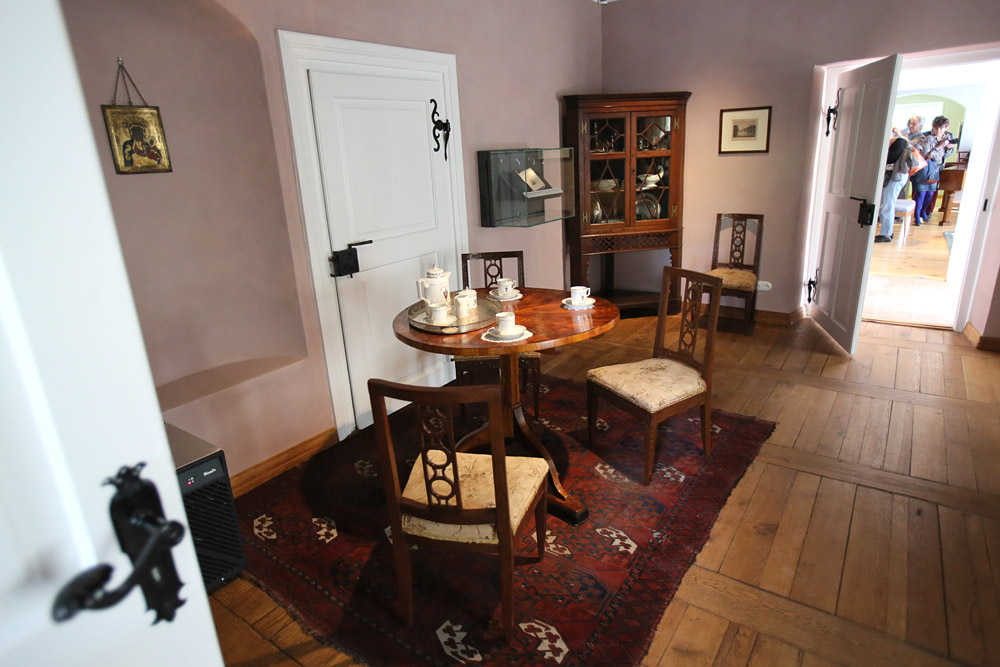
Museum in Żelazowa Wola, photo: Leszek Szymański/PAP
Suggested itinerary: Tour the house museum, then spread out a blanket and lounge on the shady banks overlooking Utrata River that lazes through the grounds, from where you can listen to Chopin’s music. Walk by the 1894 monument of Chopin, built on the initiative of Russian composer and big Chopin fan Mily Balakirev. Then, grab lunch at the Chopin Restaurant, then head over back to the house to listen to the live concert.
More information: http://chopin.museum/en/information/visitors/id/430
Opening hours: April 1 – September 30, 9:00 – 19:00 (from May 1 to August 31, the park stays open until 20:00); October 1 – March 31, 9:00 – 17:00. Closed on Mondays.
Admission: 23pln for park and museum, 7pln for just the park. Free on Wednesdays.
How to get there: The best way to get there is by car. Take the train to Sochaczew (about 40 minutes), then catch bus number 6 from the station or hop in a taxi (30pln). You can also take a 1-hour mini-bus in front of the SAWA Shopping Centre on ul. Marszałkowska (10pln). The bus schedule can be found here. You can also get there with a ChopinPASS tour.
Orońsko for Art
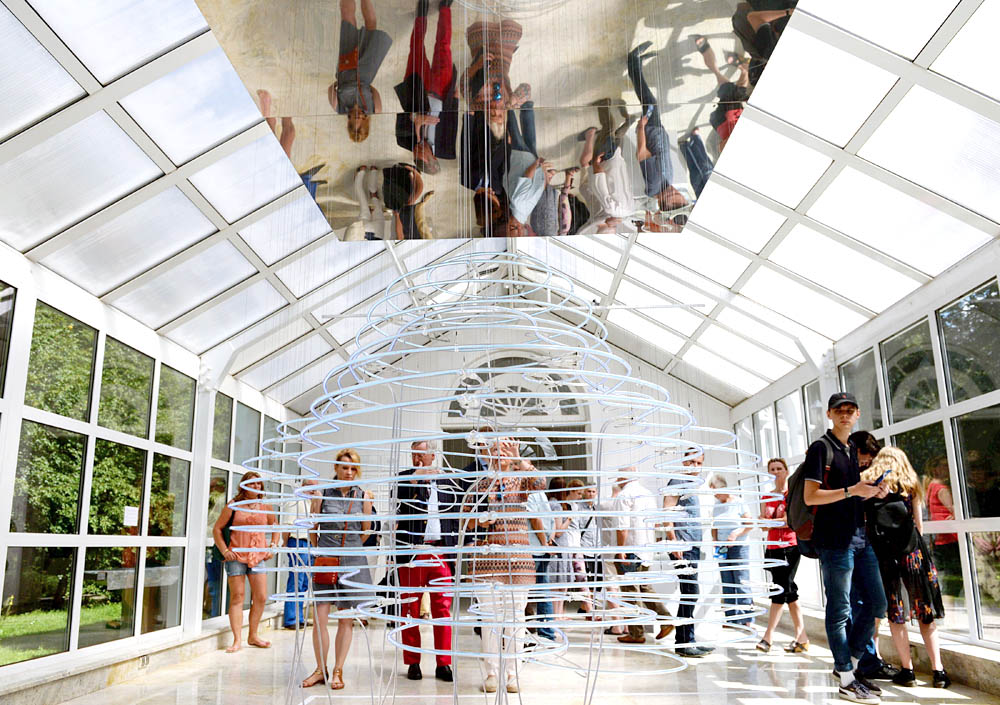
A piece by Berlin-based artist Thorsten Goldberg at the Centre of Polish sculpture in Orońsko, photo: Piotr Polak/PAP
Located 1.5 hours south of Warsaw, the Centre of Polish Sculpture in Orońsko is an impressive, ever-evolving museum complex where you can see examples of Polish sculpture from the second half of the 20thcentury as well as some earlier pieces, displayed in the centre’s main museum, separate galleries and park.
The history of Orońsko goes back to the 19th-century Polish painter Józef Brandt, who often visited his family estate there and brought along young artists and art students, creating the first semblance of a Polish artist colony. Yet Orońsko didn’t become an official sculpture centre until the 1960s when the park hosted the first open air sculpture exhibition. Every year, over 200 Polish and foreign artists come here to use the sculpting studios and create new work.
Suggested itinerary: Start at the Museum of Contemporary Sculpture, which provides a historical overview of Polish sculpture, with some pieces dating to the early 20th century and inter-war period. Then, walk over to the Orangery Gallery, a gorgeous space with glass walls and roof, to see a current exhibit. Outside, in the Contemporary Sculpture Garden, you can stroll by over a hundred works by Polish and foreign artists in a variety of materials like bronze, steel, wood, ceramics and even land art.
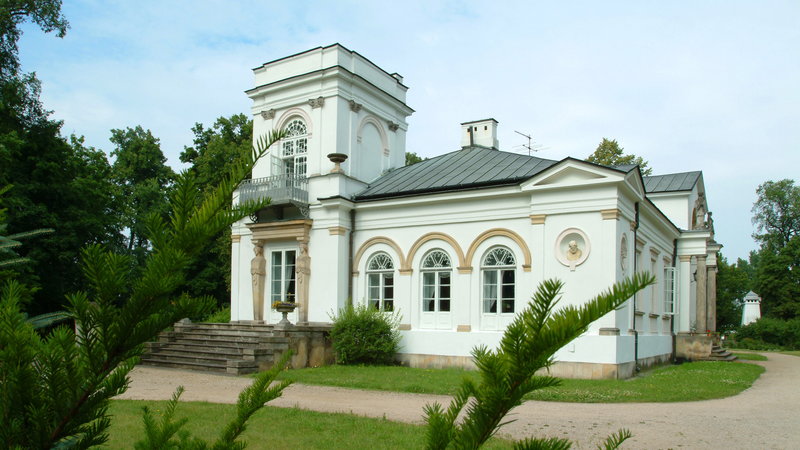
The Centre for Polish Sculpture in Orońsko, photo: promo materials
For a break from all that modernity, step inside the Józef Brandt Palace, a picturesque 18th-century neoclassical Italian villa. Though all the furnishings have been reconstructed and are not original, you can still get a good feel for the era by walking the palace rooms. Afterward, don’t miss the small Chapel Gallery, located, as the name suggests, in an old chapel. Here, you will find works by artists interested in spiritual space or commemorative exhibits of late artists.
More information: http://www.rzezba-oronsko.pl/
Opening hours: April 1 - October 31: 10:00 - 17.00, Weekend: 10.00 - 18.00m November 1 - March 31: 10.00 - 16.00, Weekend: 10.00 - 16.00. Closed on Mondays.
Admission: 7 PLN
How to get there: Topolowa 1, Orońsko. The park is located 1.5-hour drive south of Warsaw and can easily be reached by car. Check here for a possible detour due to construction nearby. You can also take a PolskiBus to Radom and then hop on a shuttle bus to Orońsko, which you can catch from W. Beliny-Prażmowski Street – departure from the car park opposite the bus station, in the direction of Szydłowiec and Skarżysko-Kamienna.
Radom bus schedule: www.radom.rozkladyjazdy.pl/busy
Written by Sasha Vasilyuk