Is Lara a real person?
Wojciech Jagielski: Yes, she is. Everything described in the book is real. Lara comes from a Chechnyan group based in the Pankisi Gorge. It is a small valley, forgotten by people and God, known for its many volunteers fighting for Islamic State in Syria.
The fatalism of Lara's story is touching. Throughout her life, she did everything possible to run away from wars and save her sons, but it turns out that every step she took brought them all to a tragic end.
There’s nothing lofty about war for Lara – it’s simply a devastating force that leaves only ruins in its wake. Lara believes she’s behaving rationally by running away with her children from Grozne to the valley she grew up in right after beginning of the First Chechen War. When the war comes to Pankisi too, she makes the biggest sacrifice a mother can possibly make. To save her children, she sends them to their father, already living in Switzerland at that time. I think Lara knew that she may never see them again. Europe becomes a symbol of peace and wealth for her, a paradise. But directly from this place, this paradise, her sons go off to fight in Syria, to die under a caliphate, rejecting everything their mother wanted to give them. In fact, every decision Lara makes to protect them, brings them one step closer to death.
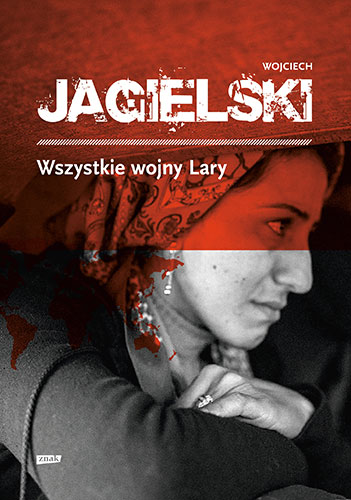
Wszystkie Wojny Lary by Wojciech Jagielski – book cover
Wszystkie Wojny Lary is one of those rare books showing the human side of mujahideens. Lara's sons, Shamil and Rashid, arouse sympathy and respect. They are idealists, leaving a life of comfort for the truth they believe in.
I’ve always been aware of the falseness of that kind of perception of the world where you have faceless enemies with no human traits. Even our most hated enemies are in some ways similar to us, they’re also human beings. I wanted to show Lara's sons’ path, to understand what motivated them. Every mujahideen coming to Syria to join Islamic State, whether it’s from Algiers, Khartoum, London or Moscow, has a face, a family, emotions and feelings. They have their reasons. They were not suddenly filled with madness and a desire to kill.
It can be hard to understand from our point of view.
But unless we try to consider them the people just like us, we won't be able to understand them and we will worsen our situation. It's not about accepting what they do, nor applauding their suicidal terrorist attacks. If we don't know what drives them, we will never be safe.
Then what made Shamil and Rashid, refugees from Chechnya settled in Switzerland, people with their lives organised, with jobs, wives and children, to become volunteers in the ISIS army?
I think it's a desire to experience something big, a need to give life some sort of meaning. It may have been clean, wealthy and safe in Switzerland but Shamil and Rashid didn't feel at home. After year’s of no contact, they found their mother on Skype, saying "at our place, in Europe”, but they very quickly started using the word “they” when referring to people from the West. I don't think it's always like this among refugees, but that’s how it was for them.
But what was their problem with Switzerland, the place that gave them shelter and stability?
It was a low level of stability. Maybe for someone who has left everything behind in Georgia or Chechnya, life in Switzerland might seem like a paradise, but Shamil and Rashid, since they had legally become Europeans, they expected the same opportunities as them. In fact, they felt there was a glass ceiling above them that made it impossible for them to fully integrate, that they had to take work that was below their ambitions and expectations. It wasn't a matter of discrimination, but since the 1970s, when Europe took thousands of immigrants into the workforce, times have changed. We needed immigrants as drivers, cleaners and carers, but recently even these jobs have become less available, not only for immigrants, but also natives.
Some Muslim immigrants may not feel perfect in Europe, that they might experience difficulties, especially with work and the social ladder – but aren't these obstacles part of an emigrant's fate?
These economic problems are overlapped with the international situation, with the conflict between the West and the Middle East. Fundamentalists keep listing the litany of damage the Western world has caused Muslims – from not reacting to the tragedies for Muslims in Bosnia during the Yugoslavian War, to the situations in Chechnya, Kashmir and Palestine. Their theories fall on fertile ground: young people disappointed with their fate as immigrants. Lara, who has told me this whole story, is from our world. She doesn't understand either what happened in her sons' minds that would make them go fight in Syria.
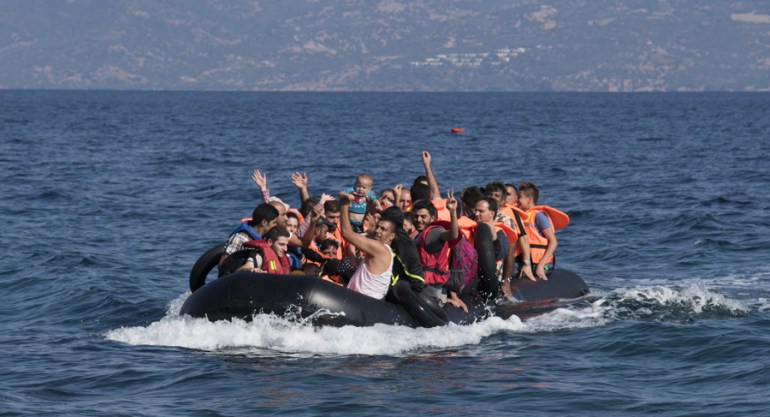
Refugees from Syria , photo: Nikolas Georgiou / Zuma Press / Forum
Wszystkie Wojny Lary has been published at a time when refugees, mostly Muslims, are pouring across European borders. The story of Lara's sons does not lead to optimistic conclusions for those who want to accept them.
I've described the story of just three people – a mother and her two sons. You cannot make generalisations based on three people. If Lara's sons, being Muslims, decided to fight under any European army and fight against jihadists in Syria or Africa, I would also write about it. It's obvious that there are several thousands of ISIS volunteers from Europe, but there are several dozens of millions of Muslim immigrants living, working and paying taxes in Europe. How can anybody build a general picture of emigrants based on the handful of jihadists? It's misleading and unfair.
Whatever we think of these waves of refugees coming to Europe, there’s no way of turning them back.
At the beginning of the 21st century, Kapuściński predicted there would be more mass migration, just like there had been already several times over the centuries. When an oasis dries up, its inhabitants do not think about whether they’ll be welcome guests somewhere else. They need to find another place in order to survive. Refugees are standing at our door because they want to live. You cannot stop them. Asserting that we should invite everyone and that, out of gratitude and appreciation for our nobleness, they will become perfect citizens is just as naïve as saying that we should put all our efforts into saving ourselves from them because they might include thieves, murderers or fundamentalists. Both these attitudes are disastrous.