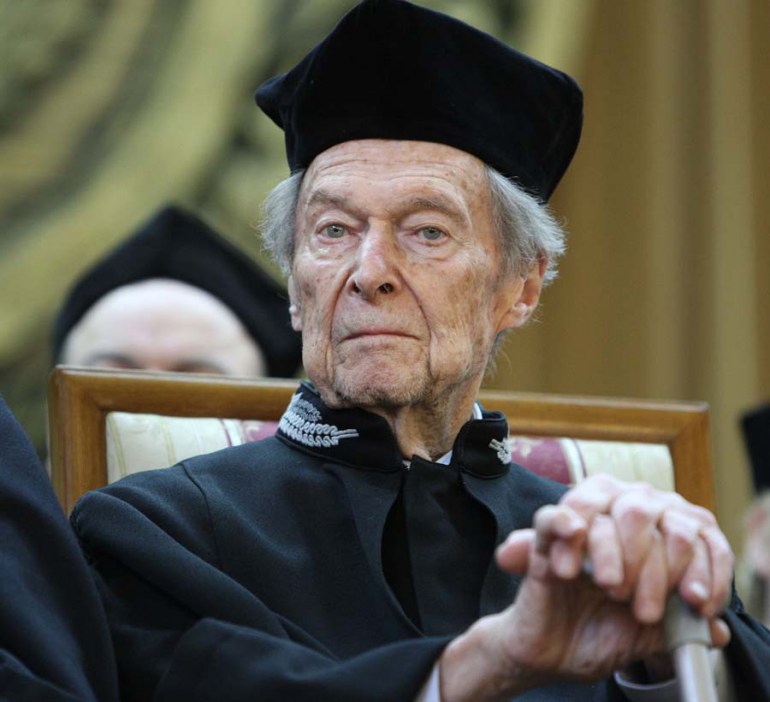
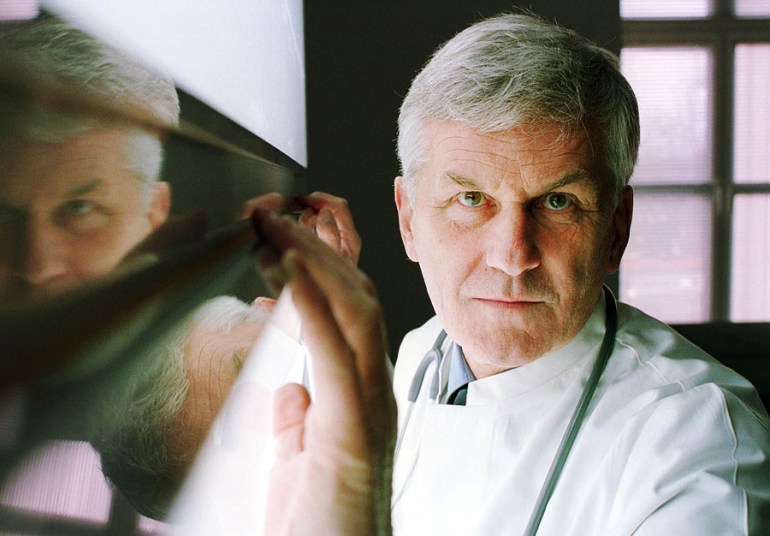
It is worth noting that Kazimierz Funk was recently portrayed in a highly colourful, if not historically accurate, manner in the film Hiszpanka/ Influence, which is worth watching for its breathtaking visual reconstructions of the interwar period alone.
Later, in 1933, Polish chemist Prof. Tadeusz Reichstein succeeded Dr. Funk with his discovery of the principal industrial chemical process in synthesizing vitamin C for market use. This process has been known ever since as the “Reichstein process,” and is used by major pharmaceutical companies such as Roche of Switzerland, where Reichstein also lived and worked. Together with American chemists Edward Kendall and Phillip Hench, he was awarded the Nobel Prize in Physiology or Medicine in 1950 for their work on the cortisone hormone.
Religa: Polish God and Chairman
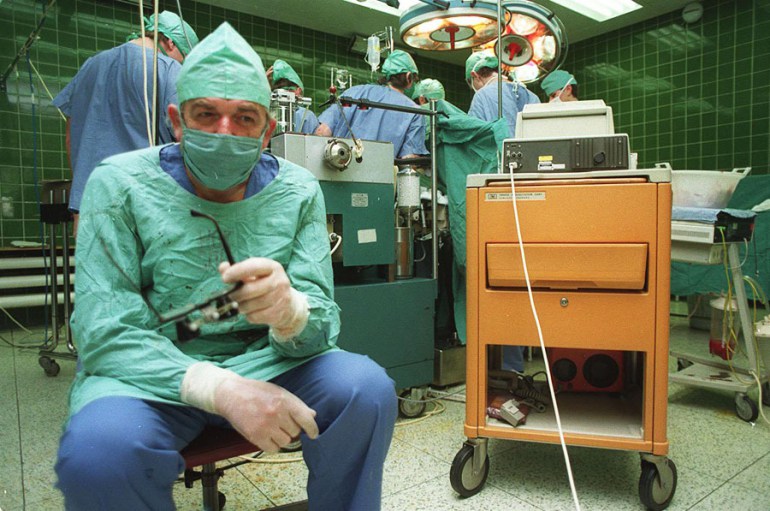
Dr. Zbigniew Religa, 1991, Zabrze, photo: Krzysztof Miller / AG
Transplant surgery is among the hardest medical challenges. It not only deals with the meticulous replacing of organs from one body into another, but also incorporates a most powerful sense of delivering new life to a person. The latter seems to be the reason why Łukasz Palkowski’s internationally praised biopic on the Polish cardiac surgeon Prof. Zbigniew Religa was titled Gods / Bogowie (2014). Prof. Religa gained international fame when in 1987, the National Geographic featured James Stanfield’s picture of Religa sitting by his patient on the operating table after a successful heart transplant at the Silesian Centre for Heart Diseases in Zabrze near Katowice. As the image was ranked among the 100 most important photos in history, on the table lay the 19th patient whom Religa successfully saved since his first failed attempt in 1985, which was also the first of its kind in Communist Poland.
Parallel to his work as a physician, Prof. Religa was closely engaged in politics, serving as the Minister of Health between 2005-2007, and as a member of the Polish Sejm for the following two years. Spanning the centre and centre-right of Polish politics, Religa was the founding member and chairman of various parties between 1993-2004, and a member of the Polish Senate for two terms (in 1993–1997 and 2001–2005). Religa’s position as Minister of Health was succeeded between the years 2007-2011 by Ewa Kopacz, who is now also the current Polish Prime Minister. A graduate of the Medical University of Lublin, a paediatrician and specialist in family medicine, Kopacz gained international recognition in 2009 for her decline of pharmaceutical companies’ attempts to sell the Polish government the controversial swine flu vaccine.
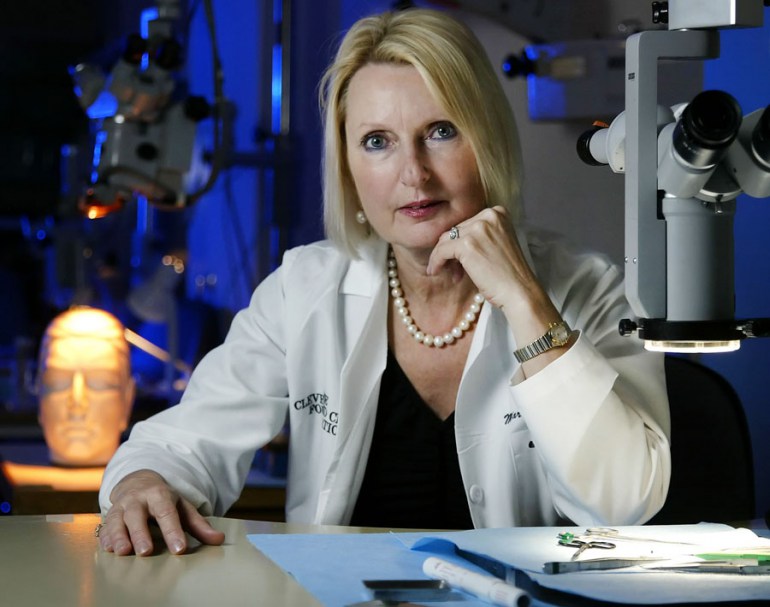
M.D. Ph.D. Maria Siemionow, director of plastic surgery research in the microsurgery lab of the Cleveland Clinic, photo: Jay Laprete / Polaris / East News
Among surgeries, the most controversial to date remains face transplants. M.D. Ph.D. Maria Siemionow is the key figure in American face transplant surgery. A graduate of the Poznan Medical Academy, Siemionow led the medical team at the Cleveland Clinic in Ohio in 2008 to perform the first face transplant in American medical history. Poland is listed among France, Spain, Turkey and U.S as the top countries that allow and carry out face transplants. The Maria Skłodowska-Curie Institute of Oncology branch in the southern city of Gliwice remains Poland’s major face transplant hub, as recently in 2013 it hosted Poland’s first emergency-case full face transplant, followed by another full face operation that same year. Unlike in America, the surgical costs in Poland are covered by the national health service.
Rajchman: The Father of UNICEF’s Children
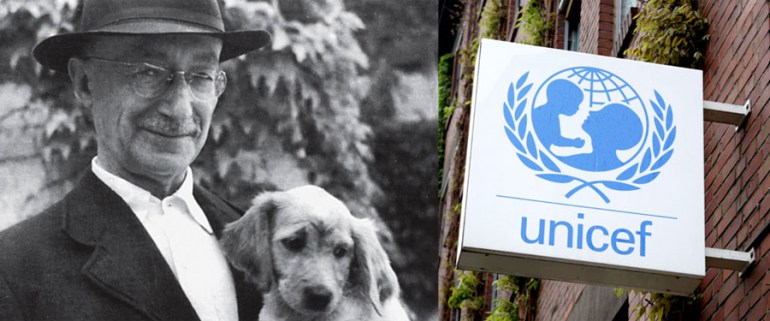
Dr. Ludwik J. Rajchman and Exterior view of UNICEF Germany, the United Nations Children's Fund in Cologne, photo: Joern Wolter / vario images / Forum
Polish physicians and researchers who also became art collectors or Nobel laureates and who were active politicians remain prominent figures in medicine on a global scale. Our last story involves Polish bacteriologist Dr. Ludwik J. Rajchman, the founding director of UNICEF. The United Nations Relief and Rehabilitation Administration (UNRRA) established in 1943 by the allies of World War II did not yet include a particular agenda for children. At a UNRRA meeting in Geneva, Polish delegate Dr. Ludwik Rajchman was noticeably vocal in protesting on behalf of Europe's children. Once the proposal for the UN International Children's Emergency Fund was accepted in 1946, Rajchman was regarded its founder, and served as its first chairman from 1946 to 1950.
Polish medical doctors and researchers feature names with wide-ranging interest not only in medicine, but also in politics, the humanities and arts. They have done much for culture, as they have for medicine worldwide. Most recently, this January, UNICEF launched its biggest ever appeal - the $3.1 billion Humanitarian Action for Children in 2015 - aiming to reach 62 million children at risk in 71 countries around the world from increasingly complex and destructive conflicts such as natural disasters, wars and other threats, including the recent Ebola epidemic. Meanwhile, back in October 2014, a team of Polish surgeons led by Dr. Pawel Tabakow of the Department of Neurosurgery at the Wroclaw Medical University, in collaboration with the UK-based research team led by Prof. Geoff Raisman at the University College London's Institute of Neurology, announced the first ever recovery of a paralyzed man via stem-cell research.
At each step, cleansing the body by medicine and the soul by art remains a most delicate human endeavour, while comprising recognition for the sake of saving thousands of lives illuminates how politics, culture and science always go hand in hand.
Read more about Polish inventions