Agnieszka Wolny-Hamkało's Moja Córka Komunistka

In January, Grupa Wydawnicza Foksal welcomes a new addition into its Archipelagi series: the novel Moja Córka Komunistka by Agnieszka Wolny-Hamkało (editor’s translation: My Communist Daughter), currently one of the most distinctive authors in Poland.
Wolny-Hamkało is a poet, an author of children's books, journalist and performer. Her latest novel is the story of Anna, a carefree little girl, who as a teenager turns into a punk, and later into a doctor with an artistic soul. This coming-of-age story is, at the same time, a story about the Polish transformation post-1989.
Kornel Filipowicz's Romans Prowincjonalny i Inne Historie
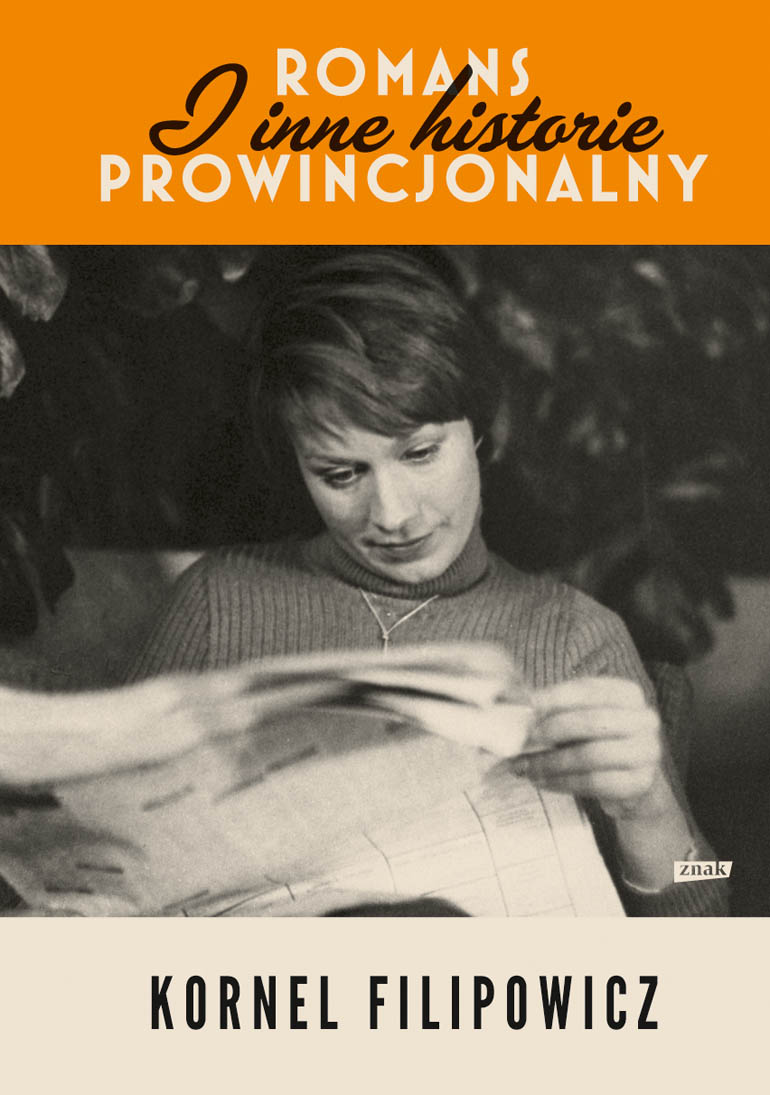
In February, a new novel by Kornel Filipowicz comes out – Romans Prowincjonalny i Inne Historie (A Provincial Romance and Other Stories). This is the author’s third book published by the Znak publishing house in recent years.
Kornel Filipowicz is an unrivalled master of the written word. His prose is articulate, concise and full of sympathy for human beings and their world. Filipowicz discovers hidden meanings behind banal events, turning on their inner light.
In his latest book, the author weaves stories of intimacy, longing, failures, encounters and separations into a multicolour, glimmering landscape of human emotions. The compilation of stories, handpicked by the poet & journalist Wojciech Bonowicz, includes two 'micro novels', a genre created by Filipowicz himself.
Mikołaj Grynberg's Księga Wyjścia
The year 2018 marks the 50th anniversary of the events of March 1968 in Poland. The Czarne publishing house will commemorate the anniversary by releasing Mikołaj Grynberg's Księga Wyjścia (Book of Exodus) on 7th March 2018.
In March 1968, in light of the Six-Day War in Israel and political turmoil in Poland, many Jews were forced to decide whether to emigrate or to stay. Grynberg’s new book is a compilation of 80 interviews, conducted with those who faced this difficult decision. The conversations are intimate and very straightforward.
Grynberg, a photographer and psychologist by education, has authored outstanding books in the past, including Rejwach (Fuss) in 2016, as well as two compilations of interviews: Ocaleni z XX Wieku (20th-Century Survivors), published in 2012, and I Blame Auschwitz (2014).
Małgorzata Szejnert's Wyspa Węży
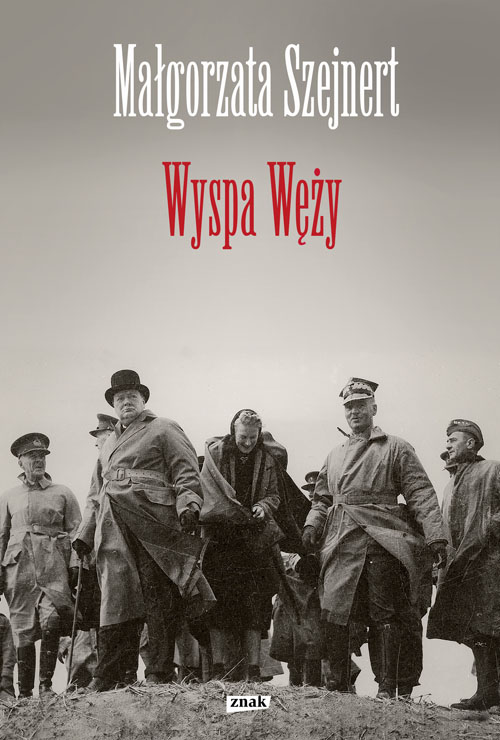
March sees the release of Wyspa Węży (Snake Island), a new book by Małgorzata Szejnert.
When skimming over old letters, the author stumbled upon a family intrigue. In May 1943, her uncle Ignacy Raczkowski was laid to rest at Rothesay Cemetery on the Isle of Bute. Why was it never mentioned by the family? Was it cause for deep shame? Szejnert rushes to rifle through London archives and travels to Scotland to uncover her uncle’s darkest secrets.
Cezary Łazarewicz's Koronkowa Robota
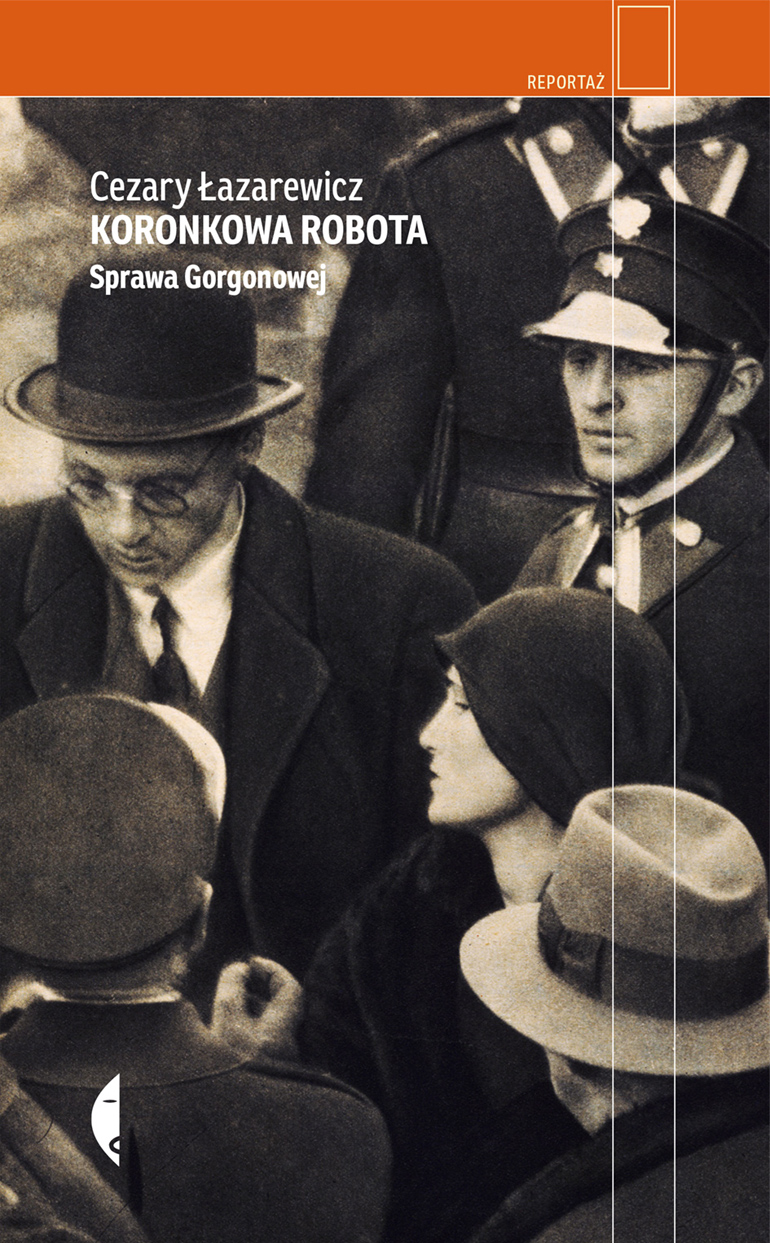
Cezary Łazarewicz returns with Koronkowa Robota: Sprawa Gorgonowej (Meticulous Job). His harrowing Żeby Nie Było Śladów (Leave No Trace) depicting the case of the political murder of Grzegorz Przemyk earned Łazarewicz one of Poland’s most important literary awards, the Nike Literary Award in 2017.
This time, the author focuses on the case of Rita Gorgonova, a cause célèbre of the interwar period in Poland. Gorgonova was accused of a brutal murder of a 17-year-old girl called Lusia that she had allegedly committed on New Year’s Eve in 1931. Soon afterwards, she was declared Poland’s ultimate villain. Rightfully so? We shall find out in March.
Justyna Kopińska's Z Nienawiści do Kobiet (Polska Odwraca Oczy II)

Justyna Kopińska, photo: Jakub Pleśniarski, courtesy of the author
Świat Książki publishing house promises another compilation of Justyna Kopińska’s unabashed reportages: Z Nienawiści do Kobiet (Polska Odwraca Oczy cz.2) (Out of Hatred for Women [Poland Turns Away Its Eyes, Vol. 2]).
Always on the trail of evil, Kopińska, who had dreamt of being a police officer, presents a new set of stories of both perpetrators and their victims. The great success of her previous books shows that her resounding voice is needed more than ever. It forces us to acknowledge the harm that is being done and ascribe responsibility.
Olga Tokarczuk's Opowiadania Bizarne
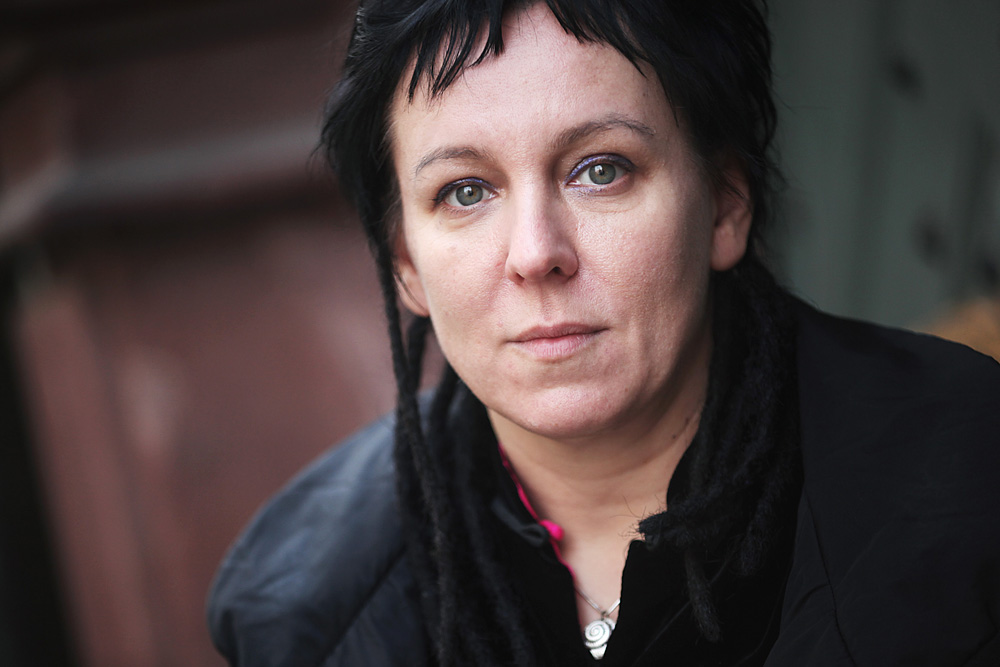
Olga Tokarczuk, photo: Tomasz Wiech/AG
This spring will see the publication of Opowiadania Bizarne (Bizzarish Tales) by highly-acclaimed Polish author Olga Tokarczuk by Wydawnictwo Literackie. In her newest book, Tokarczuk proves she is a master in short literary forms. Tokarczuk relentlessly seeks new ways of expression, defying her readership’s expectations. Critics predict that her new prose will surprise both Tokarczuk’s devotees and adversaries. It’s a brand new Olga Tokarczuk.
Magdalena Grzebałkowska's Krzysztof Komeda biography
A biography of Krzysztof Komeda, one of the most acclaimed Polish jazzmen, penned by Magdalena Grzebałkowska will be published in April. Komeda was perhaps best known for his memorable film scores – he wrote many for Roman Polański’s films, including Knife in the Water (1962) and Rosemary’s Baby (1968). Komeda's album Astigmatic (1965) is widely regarded as one of the most important European jazz albums of the 20th century.
Milena Kindziuk's Jerzy Popiełuszko biography
A biography of Jerzy Popiełuszko, the Polish Roman Catholic priest that became the chaplin of the Solidarity movement, will be out in bookshops in April. Published by Znak, it was written by Milena Kindziuk, known for interviewing Polish poet Jan Twardowski for his 1999 book Jedynie Miłość Ocaleje (Only Love Will Survive).
Andrzej Franaszek's Zbigniew Herbert biographies
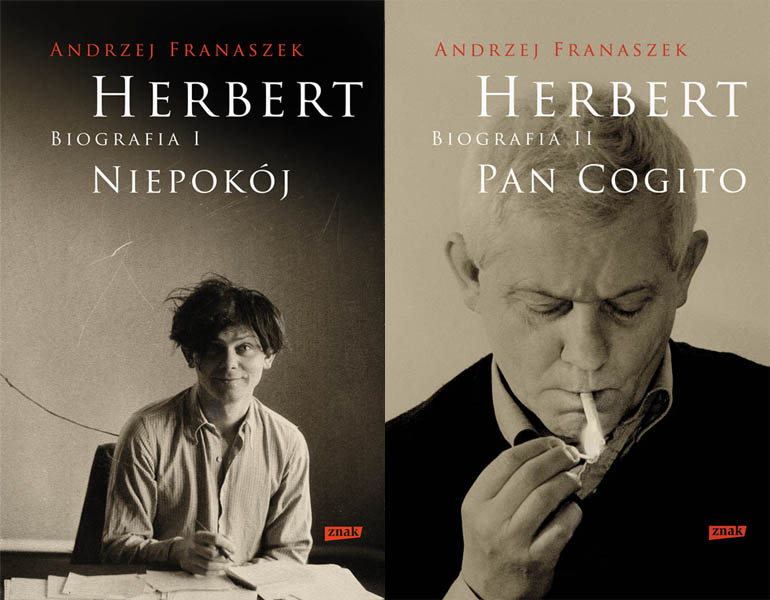
Two volumes of Zbigniew Herbert’s biography by A. Franaszek, photo: Znak publishing house materials
Znak publishing house is celebrating the Year of Zbigniew Herbert by publishing the poet’s biography, authored by Andrzej Franaszek. In May 2018, two volumes are being released: Herbert: Biografia I. Niepokój (Unrest) and Herbert: Biografia II. Pan Cogito (Mr. Cogito).
Franaszek is a literary critic and the secretary of the jury of the Zbigniew Herbert International Literary Award. It is worth mentioning that in 2011 Franaszek published Miłosz: Biografia, a monumental biography of Czesław Miłosz. Franaszek is renowned for his precision and conscientiousness. His works are always original, evocative and draw on multiple sources.
Simultaneously, a new edition of Franaszek’s previous work on Herbert, Ciemne Źródło: Esej o Cierpieniu w Twórczości Zbigniewa Herberta (Dark Source: An Essay on Suffering in Herbert’s Works) is under consideration. It will be an updated version, written from today’s perspective, with a new chapter added. It will focus on the reception of Herbert’s poetry and include more details from his biography.
Patrycja Pustkowiak's Maszkaron
In May, the Znak Literanova publishing house is releasing a new book by Patrycja Pustkowiak titled Maszkaron (Mascaron). Her promising debut Nocne Zwierzęta (Nocturnal Animals) from 2013 caused a stir. It was about a heroine in her thirties, still young but already devoid of illusions, who decided to reach the limits of human experience by indulging in alcohol, drugs and porn. Frequently discussed, the novel divided the readers: some were extremely enthusiastic while others were very critical of the debut. The former underlined Pustkowiak's knack for satirical depictions of gruesome modernity, in which – be it against our will or not – we become more and more enveloped.
Jerzy Pilch's Żywego Ducha
In the summer, Polish readers will have the opportunity to get acquainted with a completely different side of Jerzy Pilch. In his latest novel, Żywego Ducha (Not A Living Soul), the acclaimed author drastically changes his narrative rhythm, dabbling for the first time with science fiction. This time round he is inviting the reader to enter a post-apocalyptic, if not dystopian, world.
A new novel by Dorota Masłowska
The new book by the Queen Midas of Polish literature Dorota Masłowska will be out for this year’s Warsaw’s Book Fair in May. Currently, the book is still shrouded in mystery. The editors say:
Sounds mysterious and we mean to keep it that way for some time.
Coming soon: Polish Books in Translation – what to expect in 2018!
Originally written in Polish, Jan 2018, translated by MS, Jan 2018