Today, łazanki are made with pickled or fresh cabbage, fresh mushrooms, sausage, bacon and are often topped with lard. There are probably as many recipes as there are cooks, each one claiming to be the best. Although one can buy łazanki made in a factory, home-made ones tend to taste better. The pasta itself often finds its way into Christmas Eve soup with mushroom or fish. The dish can also be sweetened with poppy seeds.
200 years ago, łazanki were made a little differently. Instead of mixing the pasta with extra ingredients and baking it, łazanki were placed in layers over the ingredients, exactly like lasagne today. This method of preparation was used in the early 20th century by the famous culinary author Maria Ochorowicz–Monatowa, who described recipes with mushrooms, cabbage and cottage cheese.
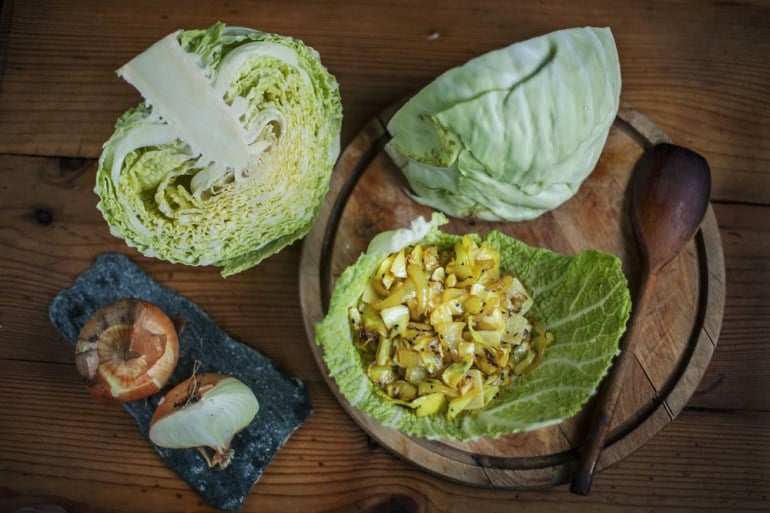
Łazanki, photo: Grażyna Makara
Lviv cookbooks from the early nineteenth century describe recipes for łazanki baked in a pastry with ham, butter and cream; the dish was called "pate with ham." Another recipe from Lviv at that time was for potato łazanki. They were cut and dried like wheat pasta, cooked in water, broth or milk. Melted butter or parmesan cheese was added, sometimes with a pinch of saffron, and it was put into an oven. Łazanki can also be eaten with stockfish or with more sophisticated ingredients such as rabbit meat, deer, lamb, pheasant or partridge, and even with oysters and truffles, red wine and cayenne pepper. Other dishes included łazanki with crayfish: the pasta was baked with crayfish butter, crayfish tails and cream. Łazanki with ham could also be stuffed with pork before being cooked on the grill. Parmesan cheese, home-made cheese and cottage cheese would often be used to cover the casserole of pasta or crumble.
Łazanki can also be sweet: apples, pears, raspberries, currants, blueberries, cherries, plums, apricots, sour cherries, almonds, vanilla, spices were all tasty options, especially with a glass of good wine such as sweet Hungarian or Malaga. No amount of sugar should be spared!
What recipes for łazanki do you know?
Magdalena Kasprzyk-Chevriaux , July 2014
Translated by Alexander Sikorski, July 2014
