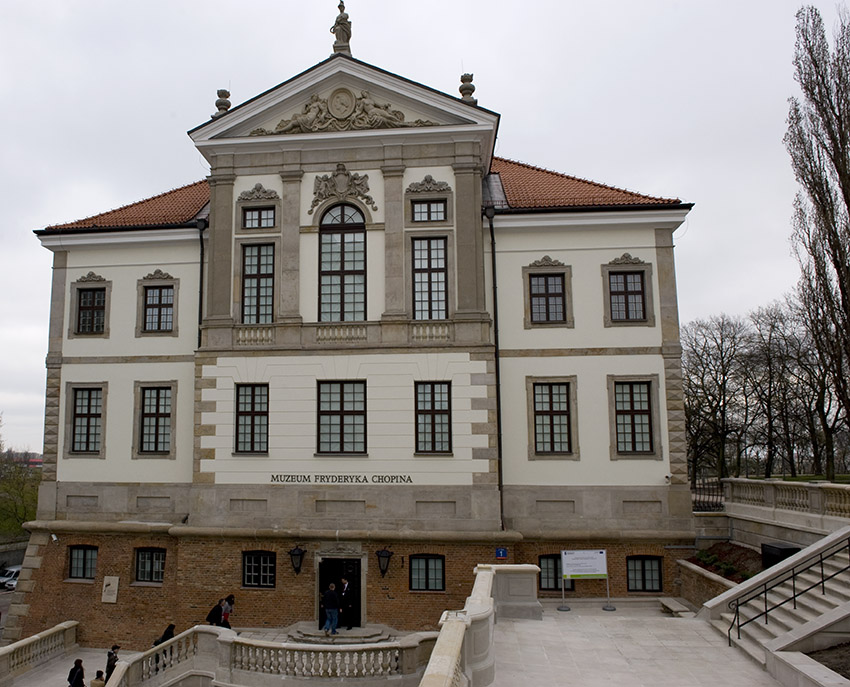
The Museum of Fryderyk Chopin in Ostrogski Palace, photo: Marek Dusza
Reopened in 2010 to celebrate the Year of Chopin, The Fryderyk Chopin Museum is Poland’s most important institution dedicated to commemorate Fryderyk Chopin, and at the same time, the most innovative biographic museum in Europe.
The mission of the museum is to cultivate the name of the great composer and to share information about his life and work with a wide circle of recipients. The museum has the world’s largest collection of chopinianas. The innovative form of museum sightseeing is based on interaction with visitors and on reaction to individual needs of the guests.
The palace: history of the venue
History of the palace, in which The Fryderyk Chopin Museum is located, takes us back to the beginning of the 17th century and the foundation of Prince Janusz Ostrogski. In 1680s a Treasurer of the Crown Court Jan Gniński commissioned Tylman van Gameren, an architect, to design a palatial residence. The architect prepared sketches of an extensive palace complex, however the project has never been realised. The present-day palace is located in an area previously dedicated to kitchen buildings. In the 18th and 19th centuries it fulfilled various functions. In 1859 it was a site of the Music Institute, in 1919 renamed to Conservatory. Those institutions followed the activity of the Music Department by the Faculty of Fine Arts of the Royal University of Warsaw, which Fryderyk Chopin has graduated. The palace was destroyed in 1944 and rebuilt in 1949-54 according to Mieczysław Kuzma’s project. Post-war re-creators attempted to reconstruct the palace according to the shape it exhibited at the end of the 17th century, by basing on Tylman van Gameren’s sketches, on drawings of Zygmunt Vogel and on Canaletto’s paintings.
The museum’s collection: paintings, photographs and dried flowers
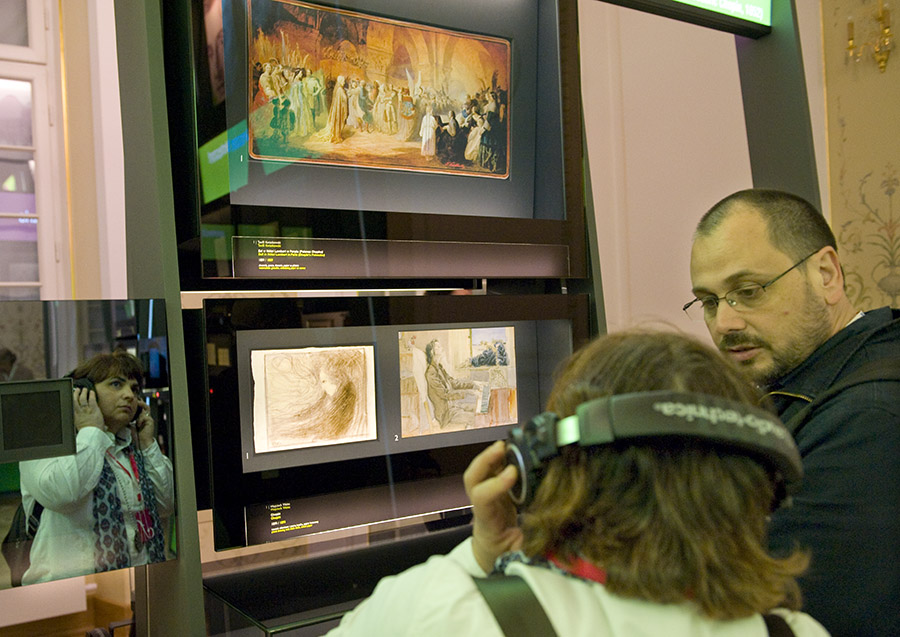
Visitors at The Fryderyk Chopin Museum, photo: Marek Dusza
Early exhibits of the museum come from the pre-war days, from the Fryderyk Chopin Institute established in 1934. Before the World War II the collection consisted of thirteen musical autographs and letters; today there are over five thousand objects: autographs, first printings of Chopin’s compositions, his correspondence, souvenirs, documents, important editions of the composer’s and fellow composers’ works, paintings, graphics and sculptures.
The museum at the Ostrogski Palace was opened in 1953 as The Fryderyk Chopin Society, and two years later it became a site for exhibitions. At the same time the museum extended its collection and – in fact – it still does, by prospecting antiquarian markets and auctions.
Deposits of The Fryderyk Chopin Society form a core of the collection, which is managed by The Fryderyk Chopin Institute since 2005. The remaining exhibits of the museum are possessions of the Institute, State Treasury, other institutions and private persons. Some autographs stored in the museum and assembled in the National Library of Poland have become a part of UNESCO’s Memory of the World Register in 1999.
The Special Collection Area consists of manuscripts (ca 800), prints (ca 300), iconographic collections and souvenirs (ca 4000). The collection is complemented with framed photocopies and facsimiles (ca 150) and sepia and black and white photographs (13 collections sets). The most valued group of the manuscripts are the Fryderyk Chopin’s autographs, including sketches, partly completed and completed works, letters, notes and drawings in pocket calendars, signatures in books and in his passport. The iconographic collection comprises of watercolour and oil paintings, drawings, portrait miniatures, sculptures, bas-reliefs, medals, medalions and plaques, graphics, photographs, photocopies, artistic and seasonal prints in limited editions, as well as posters.
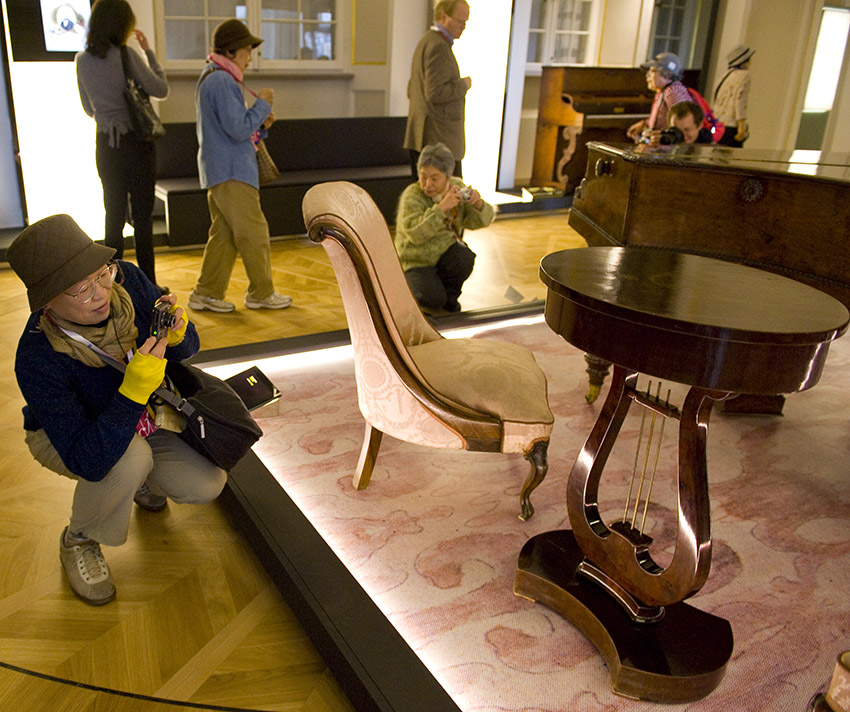
The Fryderyk Chopin Museum, photo: Marek Dusza
The most valuable exhibits are the portraits of Chopin painting during his lifetime, among others: the first known and dated portrait of the composer painted by Eliza Radziwiłłówna, a medal with Chopin’s image painted by J.-F. Bovy, a 1847 drawing of Franz Xaver Winterhalter, works of Teofil Kwiatkowski and sculptures of Jean-Baptiste Auguste Clésinger (a bust and an obituary mask). The museum owns fine copies of the famous portraits of Chopin painted by Eugène Delacroix and Ary Scheffer, and works of later artists, including Xawery Dunikowski, Ludwika Nitschowa, Konstanty Laszczka, Tomek Sikora, Wojciech Weiss and Leon Wyczółkowski. Souvenirs include Chopin’s personal belongings – a piano, a golden watch, calendars, notepads, a pencil, a key ring, cufflinks, a candy box, a handkerchief with a cipher, but also a flock of hair and dried flowers from his deathbed.
Majority of the objects, besides having an artistic value, also possess an imporant documentary value, above all the medals, photographs, posters (collected on occasions such as Chopin’s anniversaries, festivals, exhibitions, concerts and the International Fryderyk Chopin Piano Competition). Apart from the Chopin-related collection, the museum also stores documents related to his surroundings – his students, pianists, friends, and the époque he lived and worked in.
Independent sightseeing
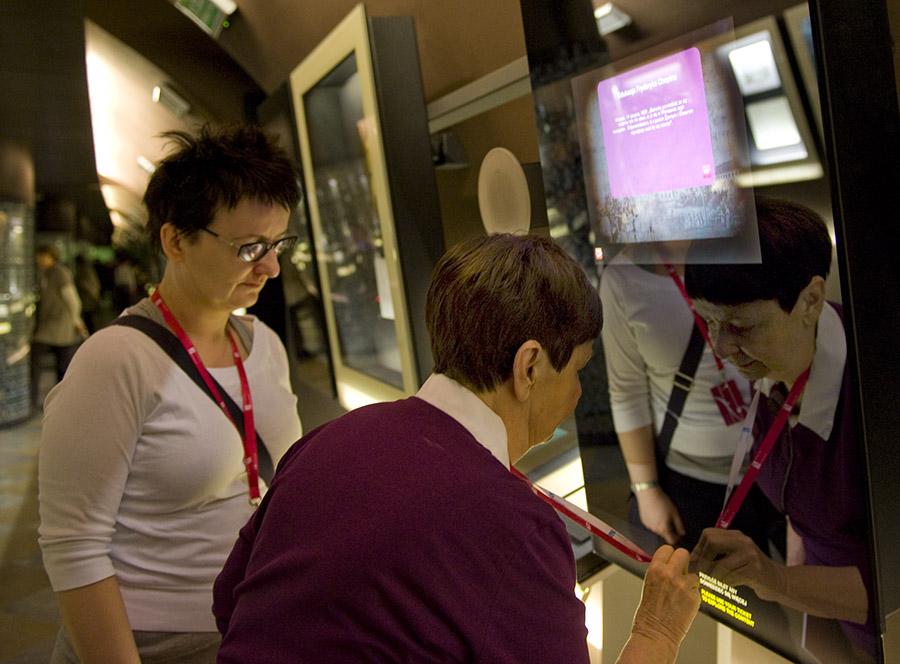
Visitors at The Fryderyk Chopin Museum, photo: Marek Dusza
After few years of reconstruction, a new exhibition at the museum was opened on 1st March 2010, exactly on the 200th anniversary of Fryderyk Chopin’s birthday. The exhibition was acknowledged as one of Europe’s most innovative museum objects. The project by Migliore+Servetto team from Milan assumed an innovative approach towards the museum’s exhibits based in historical surroundings. First of all it fulfils the assumption of an “open museum”, where the guests can individually experience Chopin – get a broader understanding of his creative process, by choosing independent sightseeing paths. It also assumes an adjustment to visitor’s age and preferences.
The ticket is an electronic card supplied with RFID technology. This enables the visitors to launch multimedia independently of other guests. The audio-visual materials are divided into four narration levels: basic, advanced, for children and for visually impaired guests (each available in eight language versions).
A place to suit your interests
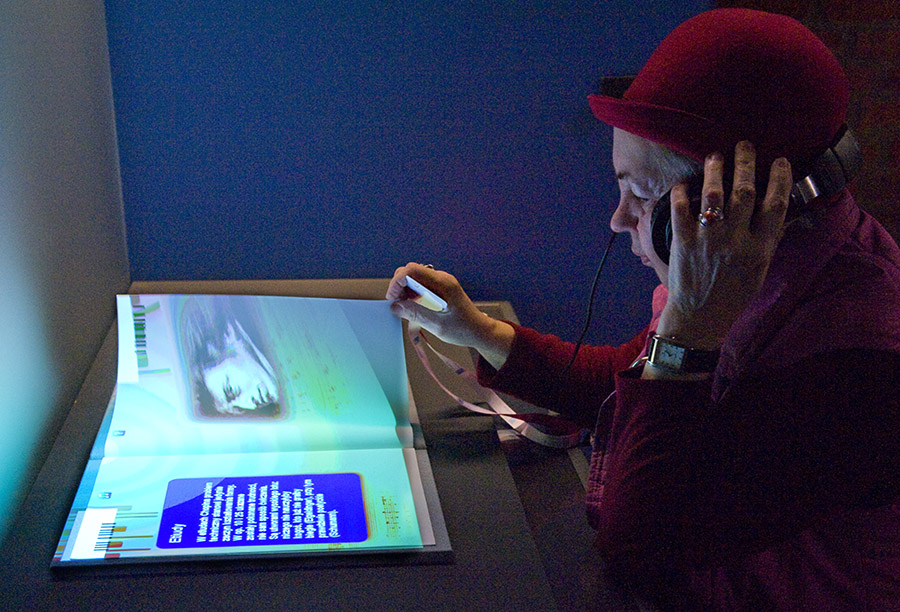
A visitor at The Fryderyk Chopin Museum, photo: Marek Dusza
The exhibition is arranged upon four floors of the Ostrogski Palace, including the basement. Each floor presents a set of diversely profiled information about Chopin’s life and work, for example from the Warsaw period or his activity in Paris. The museum’s music, images, aroma and light invigorate different senses. Many of the applied solutions also assume an interaction with the visitors (e.g. sliding out of a case turns the music on). Each element of the exhibition was constructed so that every visitor: schoolchildren, artists, students seeking to broaden their knowledge, people fascinated by Chopin’s époque, can find something to suit their interests. A separate room for children, near the main entry, is an educational space for the youngest guests.
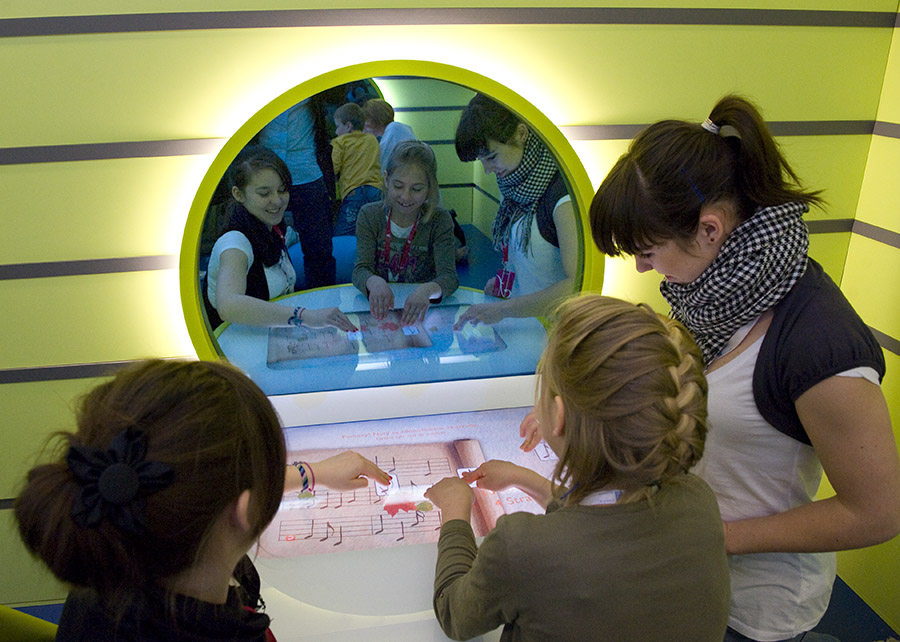
Children at The Fryderyk Chopin Museum, photo: Marek Dusza
Apart from the conservatory and exhibitory activities, the museum also publishes catalogues and other scientific publications about the collection and undertakes popularising actions. The exhibits are made available for scientists and academics.
The Fryderyk Chopin Museum has two other branches: the Birthplace of Fryderyk Chopin in Żelazowa Wola and The Chopin Family Drawing-Room in Krasiński Palace in Warsaw.
The Fryderyk Chopin Museum
Pałac Ostrogskich
ul. Okólnik 1
00-368 Warszawa
Tel: (+48) 22 44 16 274, 22 44 16 251-252
WWW: www.chopin.museum
Email: muzeum@nifc.pl
Author: Anna Iwanicka-Nijakowska, March 2011, transl. Agata Dudek, 11/03/15.
