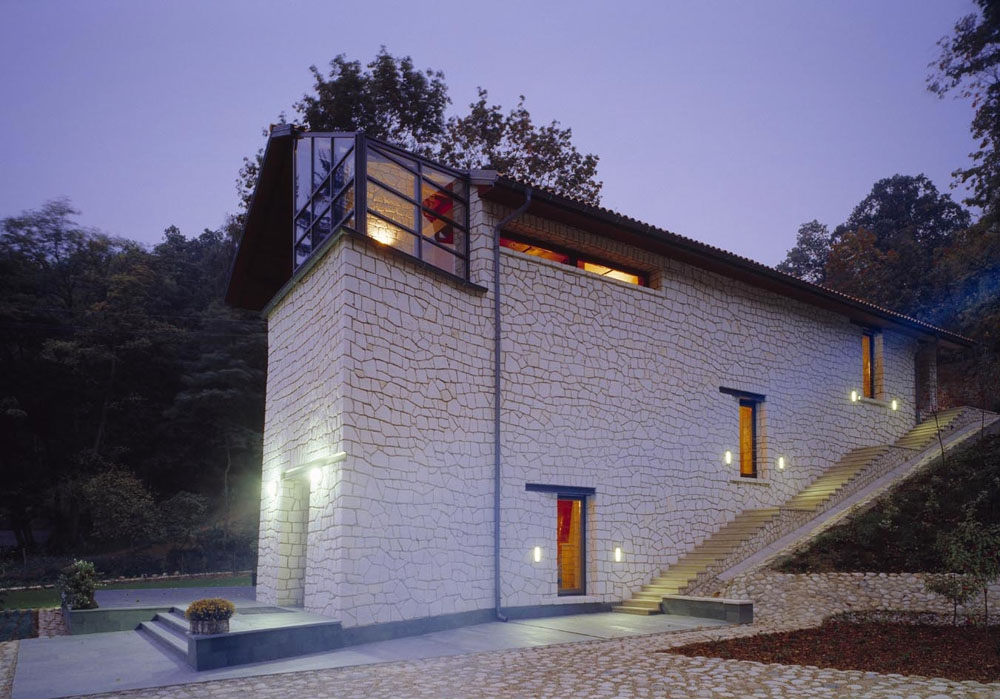
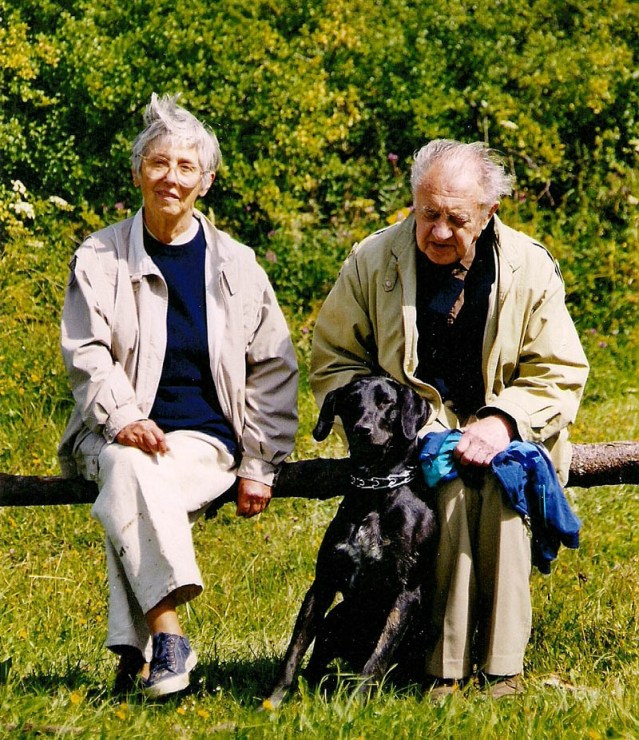
Starting in the mid-1960s, the Piechotkas conducted research on the industrialsation of residential n construction, but it is their work on the history of architecture, particularly as reflected in Jewish heritage, that is better known. Their books Wooden Synagogues (1957), Heaven’s Gates: Wooden Synagogues in the Territories of the Former Polish-Lithuanian Commonwealth (1996) and Heaven’s Gates: Brick and Stone Synagogues (1999) rescued many synagogues from oblivion.
Helena and Szymon Syrkus
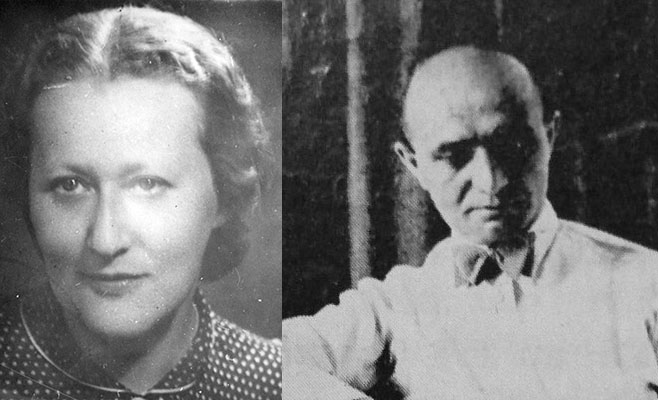
Helena Syrkus, photo: from the collection of Marta Leśniakowska; Szymon Syrkus, photo: from Awangarda Polska Architektura Urbanistyka 1918-1939, PAI Interpress 1981
Helena (1900-1982) and Szymon (1893-1964) Syrkus worked together in designing and in creating an architectural theory in which they postulated the industrialisation of residential construction. This theory was put into practice in the buildings of the Warsaw Residential Cooperative in Rakowiec (1934-1938) and in homes in Łódź, Marysin and Grudziądz. They were constructed from repeating segments with bedrooms on the mezzanine level. Their façades were made of prefabricated materials and wood, which created an attractive visual effect at low cost.
They conducted their experiments in novel construction primarily for private clients. Examples include: a house built on a steel base on Jasiowa Street in Konstancin (Skolimów) in 1930, the villa at 26 Katowicka Street in Warsaw (1936), a villa in Sosnowka near Pińsk (1937), the houses at 12 Walecznych and 8 Estońska (1938). They used an iron-concrete construction for the residential buildings on Jaworzyńska Street in Warsaw (1936-1937). The tenement houses they built were modestly appointed from mass-produced elements, but with great attention to details and aesthetics.
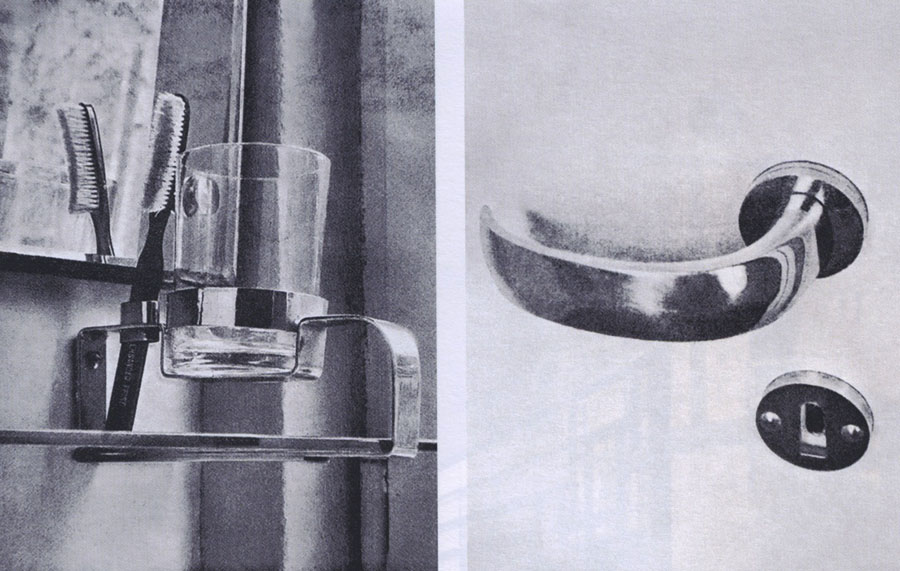
Helena Syrkus, Szymon Syrkus, interior of their home in Skolimów, 1932-1933, photo: reproduced from Wnętrze magazine, 1933-1934.
After the war, they worked in the Capital Reconstruction Office, soon returning to the theme of industrialization of residential architecture and developing apartments for high-rise apartments of concrete slab construction. In this, they encountered many problems stemming from decisions of the authorities, economic and material limitations and poorly developed technology. Their residential colonies in Warsaw’s Kolo and Praga were among the first examples of post-war architecture inscribed in the landmark registry.
Sources: sztetl.org.pl, bryla.pl, culture.pl, compiled by AS, 18 Feb 2017, translated by YJR, Aug 2017