Did the political and social transition after 1989 influence the manner, speed and quality of the recovery of works lost as a result of the Second World War? Could you shed more light on the differences between the early post-war period, the People's Republic of Poland and recovery in contemporary realities?
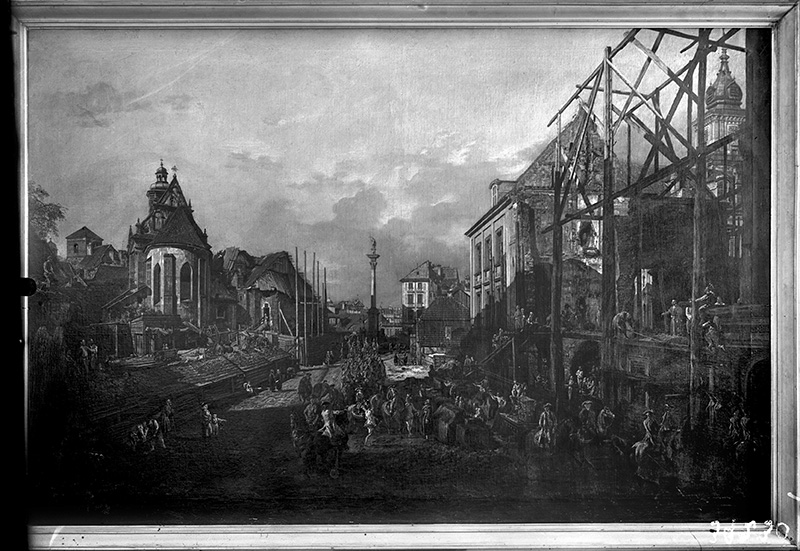
As soon as the war ended, in May 1945, the Office of Claims and Compensations was set up. It fell under the General Directorate of the Museum and Protection of Monuments of the Ministry of Culture. Among the most important recovered objects at that time were the Wawel arrasses, a collection of landscapes of Warsaw by Canaletto, the treasury of the Poznań and Gniezno cathedrals, and finally Leonardo da Vinci's Lady with an Ermine.
Thanks to government-sponsored negotiations, the USSR returned 12 thousand works of art, transported in two stages, one in 1946, the other in 1956. Among them were collections of paintings from the National Museums in Warsaw and Poznań, Hans Memling's The Last Judgement and a collection of antique vases from Gołuchów.
The Office of Claims and Compensations was dissolved in the early 50s. The government was no longer interested in restitution. In 1961, one of the world's biggest collections of 136 tapestries, Polish coronation insignia, priceless artefacts of gold, silver, ceremonial maces and a weapons collection – all looted from Wawel castle – was recovered and brought from Canada to Poland. But that was the last of the revindication process in the post-war period.
And nothing changed till 1989?
In the early 90s, the government created a new position – the Government Plenipotentiary for Polish Cultural Heritage Abroad. Wartime losses were again being catalogued. Some artworks were found and procedures were put in motion to reclaim them. Back in wartime Poland, museum workers had risked their lives to gather and send to London information about art that was being looted.
In the early 90s, that information was verified and supplemented with the help of museums and regional research centres responsible for the protection of the cultural environment, as well as a group of collaborators. This is how the catalogue of wartime losses reached 63 thousand artworks. The majority of them are yet to be recovered. Work is ongoing.
How many wartime losses were retrieved from Russia, how many from Germany?
Russia and Germany are not the only two countries which have restituted Polish wartime losses. Artworks are scattered all around the world. They resurface in the United States, Switzerland, France, Austria, Great Britain, Turkmenistan. In recent years, we've recovered 30 artworks. Out of these, only seven came back from Germany. We managed to retrieve one painting, Pompeo Batoni's Apollo and Two muses in the early 90s. The Russians have yet to react to 20 restitution requests that we've put forward.