From Cassettes to VR: How Poland Became a Potentate of the Video Game Industry
When the video game business kicked off in 1980s Poland, when the country was under the communist regime, the odds were stacked against its survival.
The technology embargo from the West condemned the country to backwardness, and the national economy was much too unstable to sustain such a niche industry. And yet Polish game development managed to grow into one of the biggest players of the modern international market.
Picture display
standardowy (864px desktop)
Still from ‘The Witcher’, photo: producer’s press materials
Picture image
wiedzmin1.jpg
In the Palace of Culture in Warsaw, there is a room that may seem like a cabinet of curiosities to people under the age of 30. It’s full of computers, although they have nothing in common with the sleek tablets we own these days. There’s an old-school Atari and a 1990s Amiga, to name just the less obscure models, and they’re among the last computers to run the first Polish video games. The room is part of the Warsaw Museum of Technology and Industry, and it was especially popular this January – when the Palace hosted the exhibition Digital Dreamers, a presentation of the accomplishments of Polish game development.
To some, the exhibition might have been a trip down memory lane. (‘Remember that one? Sure, I used to play that all the time!‘) To others it might have been more of an archaeological experience. (‘Why would anyone play a game that has only one colour?‘) Nevertheless, Digital Dreamers also had something universal to offer. It presented the history of the video game industry in Poland in an accessible manner, with artefacts and custom-made films. It is a thrilling underdog story: Poland is now amongst the five biggest video-game manufacturers in the world.
Picture display
standardowy (864px desktop)
Still from ‘Dying Light’, photo: producer’s press materials
Picture image
dyinglight2.jpg
The exhibit allowed visitors to play many different vintage games on authentic, old-school computers. Obviously, the newest Polish titles like The Witcher 3 or Dying Light were also abundantly featured. Digital Dreamers was on show until 15th March 2016 before moving on to Lithuania, Britain and the US.
Polish game dev was born in 1983, when the first video game worthy of the name was created. It was an 8-bit affair entitled Web Master, compatible with Atari 400 and 800. (The earlier logical and board games for the venerable Polish Odra computers are best left undescribed.) Created in the city of Wrocław by Jerzy Dybski, Piotr Bednawski and Jarosław Wyżgowski, Web Master is a game in which you control a spider. The player has to feed it insects, look after its web and watch out for other spiders.
Even though this was the first true Polish computer game, it wasn’t by any means underdeveloped. On the contrary, it was considered world-class at the time – on account of its different difficulty levels, soundtrack and original graphics. Believe it or not, back then this was enough to secure renown, as the international game biz was still young and rather rudimentary.
Picture display
standardowy (864px desktop)
Still from ‘Web Master’, photo: producer’s press materials
Picture image
web_master_youtube.jpg
Unfortunately, the man who commissioned the game, Stanley M. Hayduke, decided not to release it. This American of Polish origin placed the order for the game, hoping to sell it on the American market. However, he didn’t specify what the theme of the production was meant to be, leaving that up to the programmers. When he finally got to play Web Master, he was appalled by its subject. In Hayduke’s eyes, the outstanding quality of the game did not compensate for the violent subject matter of insect-eating. A very religious man, he decided not to sell the product, acting on the belief that it could lead people to evil. Web Master was therefore in circulation on Polish ground only, where it was copied from cassette to cassette by enthusiasts.
Political turmoil & the advantages of backwardness
Web Master is special not only because it was the first of its kind but also because it was programmed on state-of-the-art equipment – an Atari 400, which Hayduke provided. Back then, sophisticated computers were rare on that side of the Iron Curtain. There was a Western technology embargo, and as a result, computers in the People’s Republic of Poland were severely outdated. The 1980s were also turbulent times from a political standpoint, especially during martial law, from 1981 to 1983. Polish game development started out in adverse to say the least. Yet, thanks to the determination of Polish game creators, it miraculously grew into one of the biggest players on the modern international market.
Picture display
standardowy (864px desktop)
Still from ‘Pandora’s Box’, photo: producer’s press materials
Picture image
puszka_pandory.jpg
Web Master was followed by the 1985 shooting game Magic Keys by Stefan Życzkowski, as well as Marcin Borkowski’s 1986 text adventure Pandora’s Box, both for the ZX Spectrum. Due to the economic policies of the communist regime, there were no official studios at the time, and video games were mostly created by hobbyists. However, the situation changed radically after the fall of communism in 1989. Suddenly, people were allowed to own businesses and the entrepreneurial spirit of the nation was freed. This brought about the creation of game development companies such as LK Avalon, Mirage and ASF. They enjoyed some early-on success thanks to quality products, and also because the average computer in Poland was outdated as result of the aforementioned embargo.
How exactly can technological backwardness be of help, you ask? To put it simply, Western game developers had long stopped making games for the obsolete equipment owned by Polish gamers, so Poles had no competition on the national market. What had once hindered the growth of the Polish game industry became a nurturing factor. Amongst the memorable titles of the period, LK Avalon’s arcade game Robbo and ASF’s fantasy production Swords of Valdgir stand out for their popularity.
In 1991, the embargo ended and state of the art computers became available. This could have brought on the collapse of the Polish game industry, were it not for the outstandingly rapid reaction of Polish game developers, who went from 8-bit to cutting edge in a heartbeat. For example, Janusz Pelz, co-founder of LK Avalon, moved on to create a studio called xLand. In 1992 ,they published the DOS game Electro Man, which instantaneously became a hit in Poland and subsequently got released in the United States.
In 1994, Mirage launched an exciting brawler game for Amiga called Franco: The Crazy Revenge, in which the objective is to confront vicious thugs in the streets of Szczecin. Quite a few of the peole who were active in those years are big names of the industry today. For instance, Adrian Chmielarz and Grzegorz Miechowski, who founded the Metropolis studio in 1992, are key figures of the Polish video games industry today.
Picture display
standardowy (864px desktop)
‘Robbo’, photo: producer’s press materials
Picture image
robbo_1.jpg
The following years were marked by steady development and more and more ambitious creations. Pelz and Miąsik received over $300,000 in funding from Electronic Arts – a mind-boggling budget at the time – for the development of the duo’s new project, an isometric shooter game entitled Fire Fight in which you control a futuristic space ship. The game was published in 1996 both in Poland and abroad and was praised for its outstanding graphics. Three years later, Metropolis completed Gorky 17, a turn-based tactical RPG with a plot involving a former Soviet military base and genetic experiments. It was an international success, mostly because of the inimitable style of its main designer, Adrian Chmielarz.
In the 2000s, Poland really established itself on the international games market as a first-class manufacturer thanks to several exceptional games. In 2004, the first person shooter Painkiller, in which you stand against a string of hellish opponents in order to redeem yourself, was developed by the People Can Fly studio. Shortly after Painkiller appeared, and two of most important Polish studios had their breakthroughs. Techland’s 2006 Western-themed FPS Call of Juarez brought its creators to the attention of gamers across the world, and CD Projekt RED hit the jackpot when The Witcher, a role-playing game set in a fantasy world invented by the acclaimed Polish writer Andrzej Sapkowski, got released in 2007.
Picture display
standardowy (864px desktop)
‘Dying Light’, photo: producer’s press materials
Picture image
dyinglight.jpg
Today, most serious gamers are aware that Polish games stand out from the lot. The Vanishing of Ethan Carter, a 2014 horror adventure about a paranormal detective, designed by Adrian Chmielarz, received a BAFTA award for Best Game Innovation. The Witcher 3, launched by CD Projekt RED, was among the best-selling titles of 2015 and won more than 200 awards. Techland’s zombie killing game Dying Light was also one of 2015’s biggest hits, bringing joy to millions of gamers.
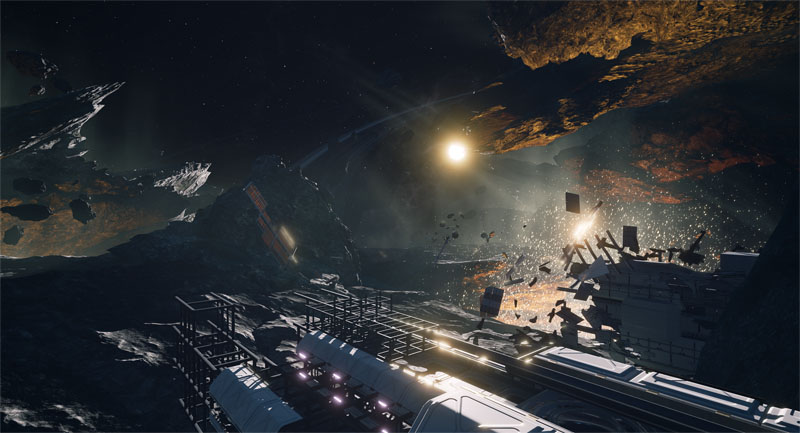
Still from ‘Detatched’, photo: producer’s press materials
Understandably, the success of Polish game development has inspired many Poles to try their own luck in this field. Currently, there are over 200 studios in Poland, some big and established, some small and indie... We can’t wait to see what they’ll come up with next!
Written by Marek Kępa, Jan 2016