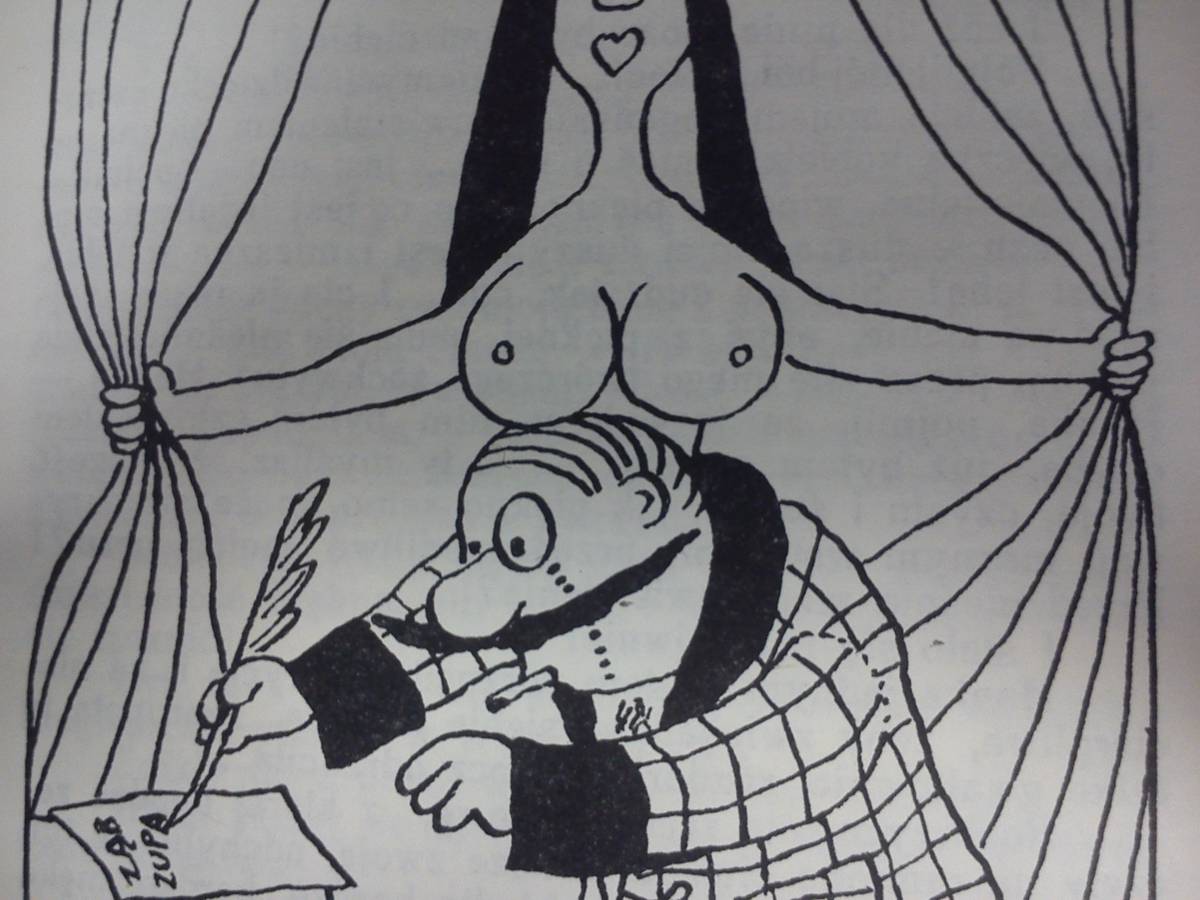
What to Become?
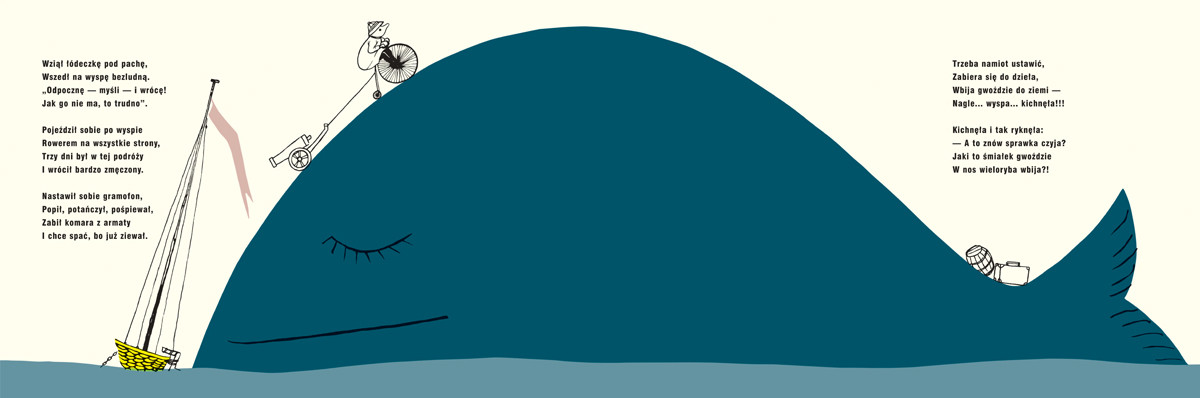 Julian Tuwim's "Pan Maluśkiewicz" illustrations: Bohdan Butenko
Had he pursued his plans to become a pianist or an opera singer, we wouldn't have the unique collection of nearly 250 works he illustrated and/or authored. He illustrated his first book in 1956, only a year after graduating from the Warsaw Academy of Art. Pan Maluśkiewicz i wieloryb / Mister Maluśkiewicz and the Whale is a story by Julian Tuwim which follows the adventures of a tiny little man who travels in a walnut shell and meets an enormous sea creature. The re-edited version of the book was chosen for the White Ravens 2010 of the International Youth Library (Internationale Jugendbibliothek), the largest library of international children's and youth literature in the world.
Ask the Children
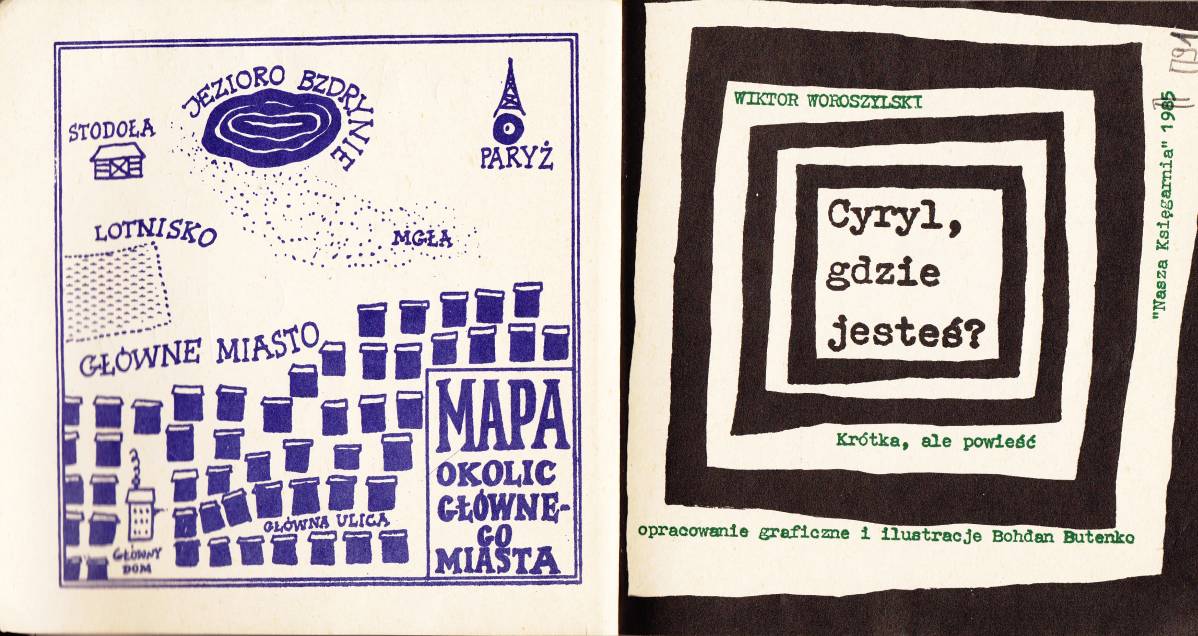 Cover of Woroszylski/Butenko's "Cyryl, gdzie jesteś"
His work surprised and stood out from the crowd from the beginning. The editors of Erich Kästner's book The 35th of May, which he equipped with an innovative set of illustration, were so taken aback that they turned to their clients - children - to ask their opinion. "A representative of the editor took the book, the illustrations and went to a school." Butenko remembers, "She read and showed pictures and looked at the reaction of the children. It turned out that my exuberant imagination is nothing compared to the children's radicalism. After a couple of surveys like that I got the go-ahead."
A year later, Butenko got to illustrate one of his own childhood favourites - Emil and the Detectives.
The Book Architect
Butenko was behind the book revolution in Poland. Instead of concentrating solely on a series of illustrations to different passages of a book, he viewed the book as an entity which requires a unified style. His multi-layered artistic narration includes unified binding, typography, illustrations and photographs. In order to have an acceptable outcome he would alter the chapter titles, the font and size of the page numbers, the table of contents, and the footnotes.
He draws comparisons between making a book and a jumper (see video above). "You have to knit in a way that the whole thing won't come undone". As Butenko clarifies, the method has its setbacks, "When you start from one side and keep on going , you can't take anything out from the middle anymore.
Another characteristic of his style is his literal-mindedness. He fishes out some phrases, takes them apart, treats them literally and plays on their double meanings. Krystyna Boglar's adventure-detective story entirely Klementyna lubi kolor czerwony / Klementyna Likes The Colour Red is entirely drawn out in red.
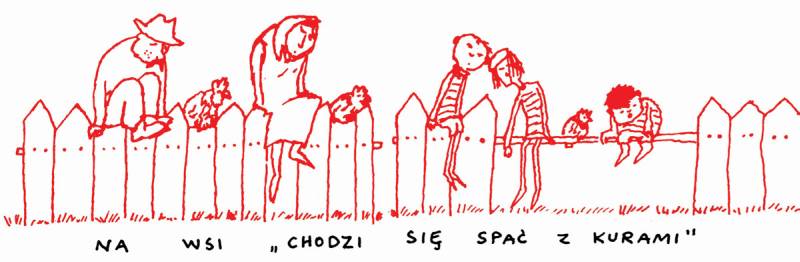
See Retro Illustrations to Children's Books for more examples.
Scribbling Like a Child
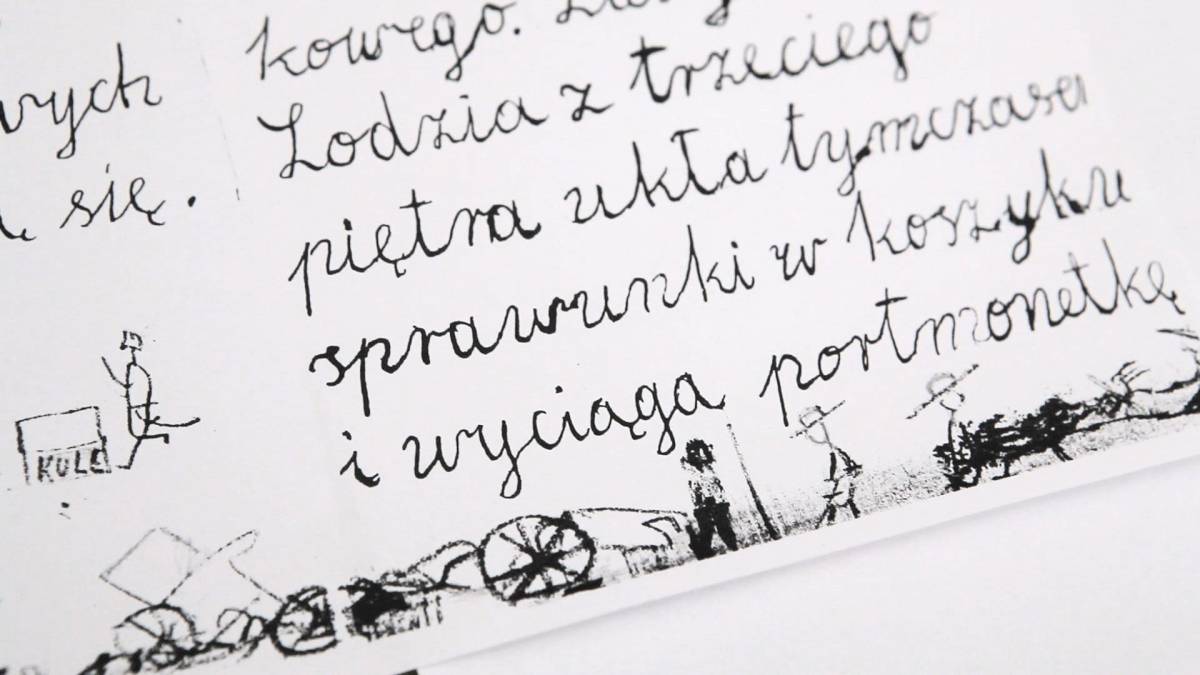 Bohdan Butenko's childhood notebook.
The appeal of Butenko's illustrations lies in their simplicity and candour. Some of his works are inspired by doodles he drew in the margins of his school notebooks, like the little men in the drawing above. The zebra he came up with for Wanda Chotomska's book Tere-fere was a sketch he made as a child.
Standing Out
 What sets Butenko apart from many earlier and contemporary illustrators is his transformation of elaborate passages and descriptions into catchy and comprehensible shortcuts. Butenko doesn't create a whole realistic world. He discards backgrounds and details - an artistic manner which was bold and avant-garde in the 50s. The difference is stark when we juxtapose Butenko with his teacher from the Warsaw Art Academy Jan Marcin Szancer.
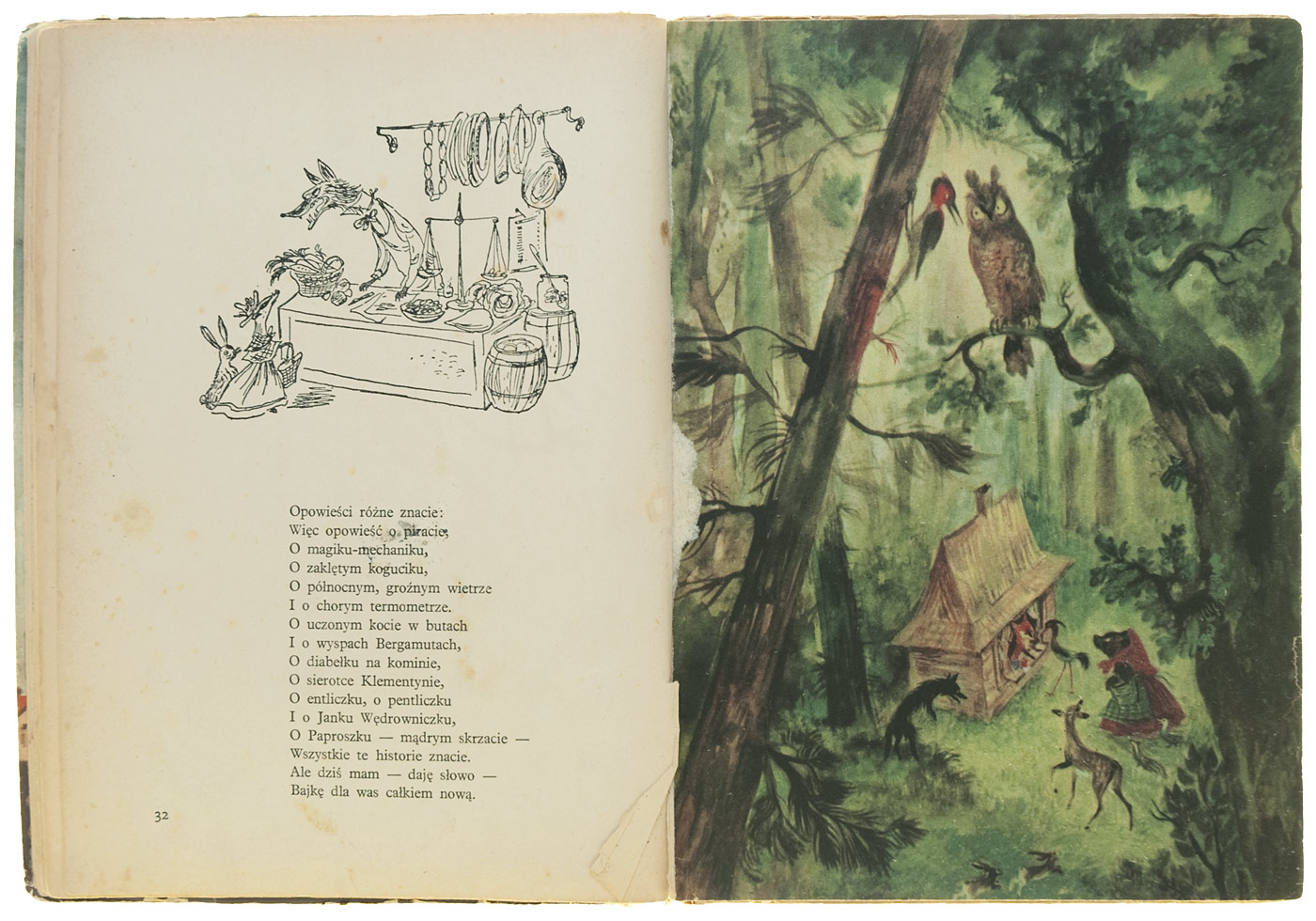 J.M. Szancer was Butenko's teacher at the Warsaw Art Academy. Their style significantly differs. Pictured: Szancer's illustrations to "Brzechwa dzieciom".
Blackboard Book and Keyholes
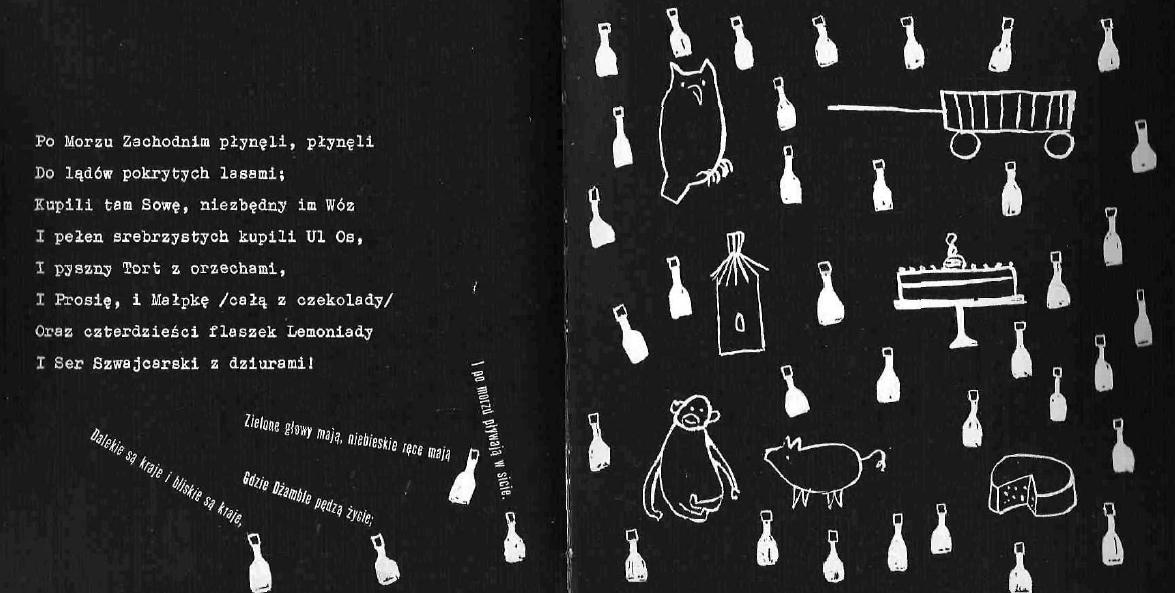 Edward Lear's "The Dong with a Luminous Nose" with illustrations by Butenko
The illustrator doesn't settle for easy solutions and outdated ideas. To illustrate Edward Lear's poems from the The Dong with a Luminous Nose collection, Butenko put together a square (16 x 16 cm) book featuring black pages with white writing which looked like a blackboard with chalk. Getting the pages to be a perfect pitch black wasn't an easy task for the printing house.
For Maria Kossakowska and Janusz Galewicz's book Kanapony he wanted to make holes in the pages in the shape of a key. "There was one person who was tasked with making the holes by hand with a special hole punch" Butenko disclosed, "The holes weren't always in the spot where I had planned them. There was also supposed to be a hole in the cover. I don't know if the cover was too thick or the gentleman was too weak. [...] So I decided to paint a kind of lid on the cover which they used to use to cover keyholes. (from Newsweek).
Brzechwa, Woroszylski, Niziurski, Chotomska...
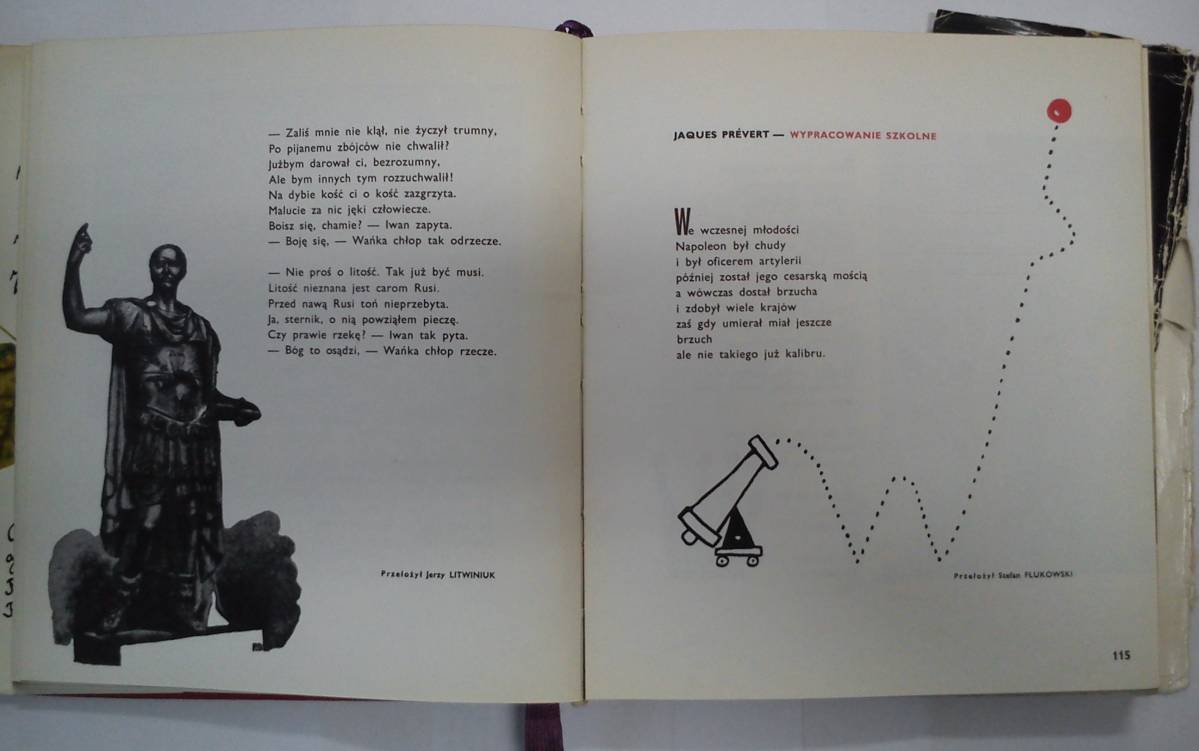 "Nastolatki nie lubią wierszy" - by Wiktor Woroszylski illustrated by Bohdan Butenko
Butenko cooperated with many outstanding Polish writers: Edmund Niziurski (Niewiarygodne przygody Marka Piegusa / The Incredible Adventures of Marek Piegus, Sposób na Alcybiadesa, Kazimierz Brandys (Honorowy łobuz / Honorary Scoundrel), Wanda Chotomska (Panna Kreseczka / Little Miss Squiggle, Cyrk / Circus, Dzień dobry / Good Day) [editor's translations].
He illustrated several of Wiktor Woroszylski's books including I ty zostaniesz Indianinem / You Can Be an Indian Too (1960), Cyryl, gdzie jesteś? / Cyryl, Where are You? (1962), Mniejszy szuka dużego (1971) [editor's translations]. When director Konrad Nałęcki was casting actors for an adaptation of You Can Be an Indian Too and Mniejszy szuka dużego, he chose people who resembled Butenko's illustrations so as not to disappoint the children. Butenko and Woroszylski authored a couple of books together: O Felku, Żbiku i Mamutku / About Felek, Wildcat and Little Mammoth, Czterdzieści szczygłów (1969), and a poetic anthology Nastolatki nie lubią wierszy / Teenagers Don't Like Poems (1967).
Butenko the Set Designer
It was on a set designed by Bohdan Butenko that the glamorous songstress Kalina Jędrusik sang S.O.S. in 1965 at the Kabaret Starszych Panów / Elderly Gentlemen's Cabaret.
Before Computers
When, in 1958, Butenko was asked to create dobranocki, instalments of cartoon shorts which aired every evening at 7pm for 60 years, in order to implement his creative ideas, he had to create state-of-the-art machinery. While everyone expected him to draw while the camera filmed him from the back, the artist decided to make an animated film- which was then unheard of in Poland. No one had the know-how.
- We spent hours with the engineer coming up with a machine that would make the image move. He would set up a long table in the studio with wringers at its ends where scrolls of paper would go inside. We also had about 200 glass panes on which I drew Gapiszon. You would hold up the pane and with the help of the wringers, you would make the background move. That's how you would get a moving image.
More Bedtime Cartoons.
Photo Comics
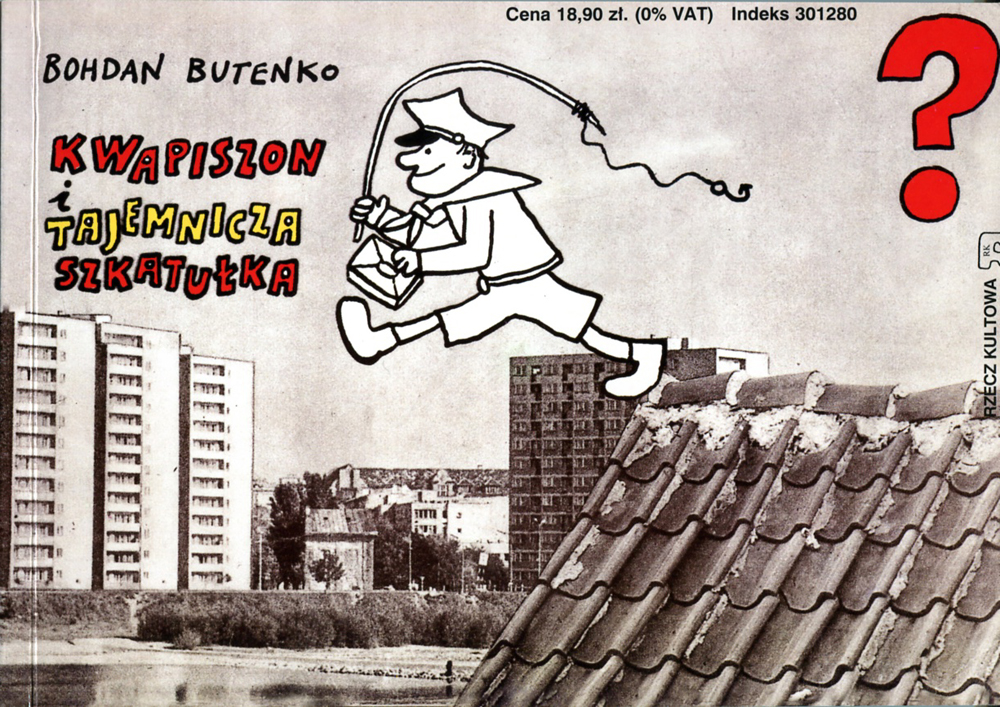
Another ground-breaking idea which he put into practice was photo-comics. He glued comic book characters onto photographs. Back then, the process took about one and a half months as opposed to three days with today's computer technology.
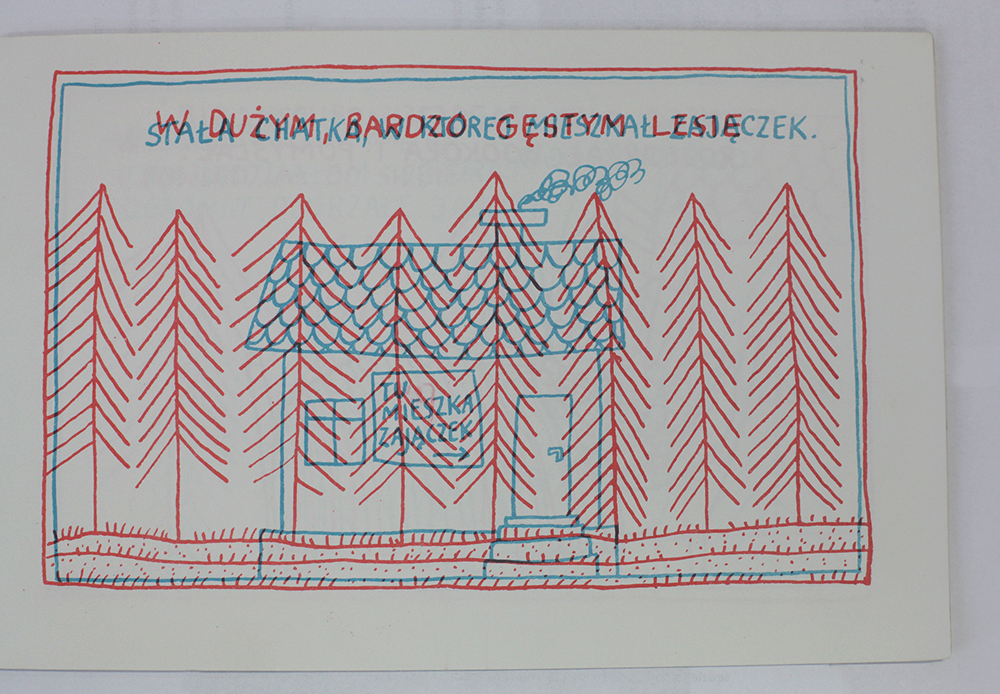
With overlapping colours and sentences and an unusual idea of time, he attempted 3D in 1975. Przygoda zajączka / Bunny's Adventures was even sold with a special set of glasses.