Bigos & Bison: 11 Symbols of Poland
There are places, people and artefacts that symbolise Poland better than anything else. Here's our subjective list of Polish symbols.
The Battle of Grunwald
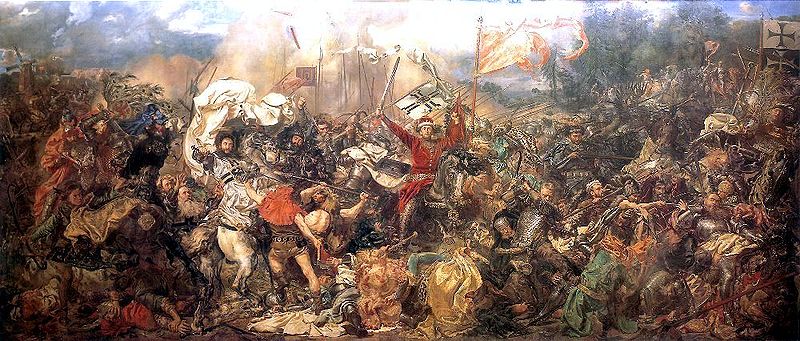
Jan Matejko, Battle of Grunwald / Bitwa pod Grunwaldem, 1878, oil on canvas, 426 x 987 cm, From the collection of the National Museum in Warsaw (MNW), photo: courtesy of MNW
One of the largest battles of Mediaeval Europe took place on 15th July 1410 – a date known to every Polish schoolchild. On this day, a joint army made up of 20,000 Poles, 10,000 Lithuanians and Ruthenians, and about 1,000 Tatars, all under the command of King Władisław Jagiełło defeated 21,000 cavalry and 5,000 infantrymen called up by the Grand Master of the Teutonic Order, Ulrich von Jungingen. The Polish-Lithuanian victory paved the way for the rise of the Polish-Lithuanian Commonwealth, whose influence in the following centuries spread from the Baltic to the Black sea. The battle is the subject of a large scale painting by Jan Matejko.
Polish poetry
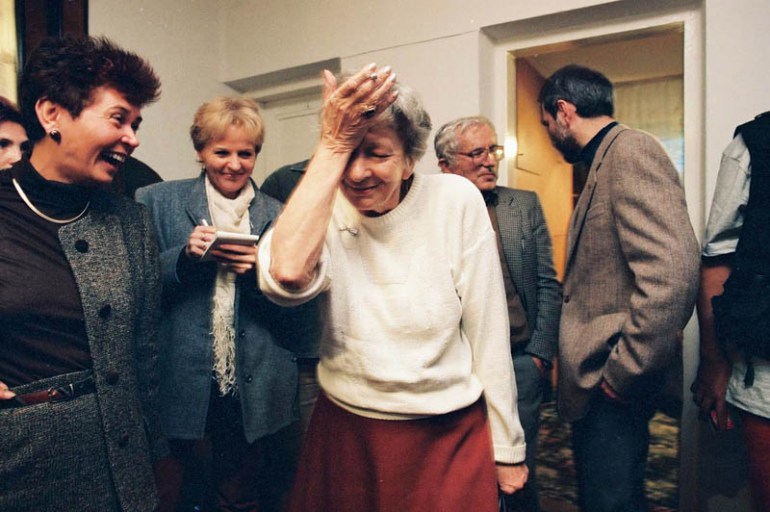
Szymborska upon hearing the news of receiving the Nobel Prize in literature, Zakopane, 1996, photo: Adam Golec / AG
Within the last 35 years, Poland has had two Nobel Prize winners in literature – and both of them poets: Czesław Miłosz (1980) and Wisława Szymborska (1996). Poland has a strong tradition of poetry , which in this country has been considered a powerful tool of national resistance and redemption, with poets like Mickiewicz and Słowacki taking the role of prophets.
The Miracle on the Vistula
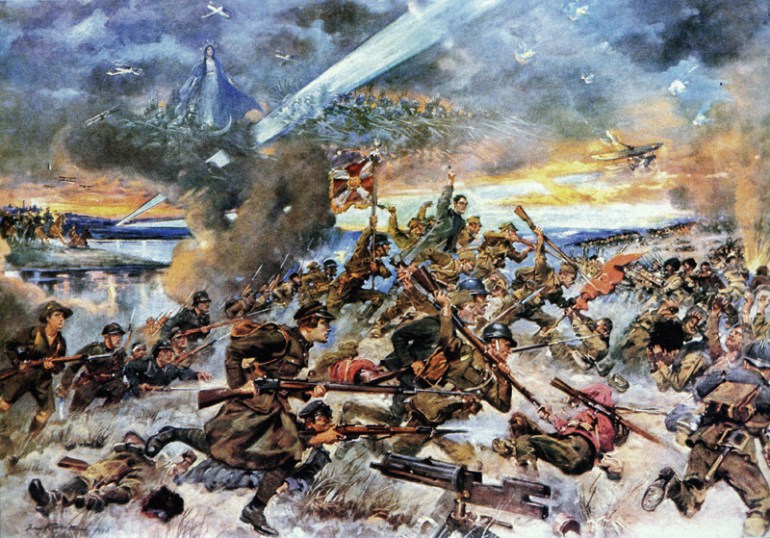 'The Miracle on the Vistula 1920' by Jerzy Kossak, photo: FoKa / Forum
The battle fought in August 1920 on the outskirts of Polish capital is often referred to as one of the most important battles in world history. It shattered Lenin's plans to spread Bolshevic Revolution into the Western Europe and helped to maintain Poland's sovereignity in the inter-war period.
Bigos & other Polish dishes
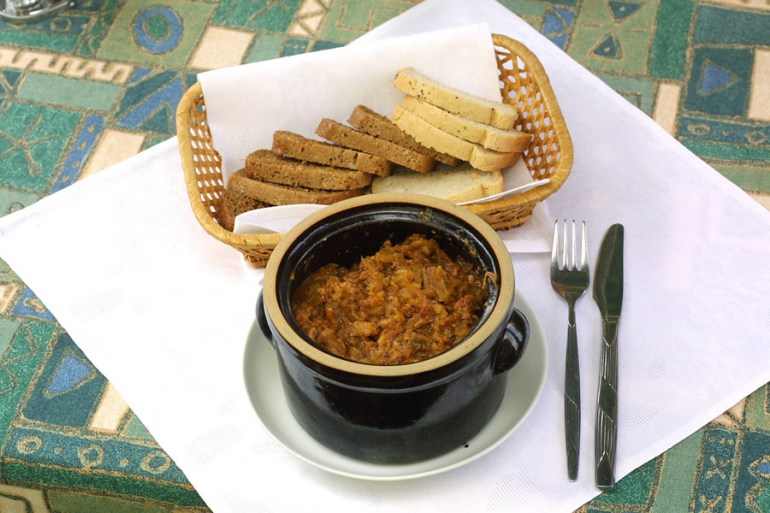 Bigos, photo: Marek Zawadka/Reporter / East News
Most foreigners associate Polish cuisine with żurek (sour barley soup with egg and kiełbasa), pierogi (dumplings), gołąbki (stuffed cabbage rolls), and of course bigos. Bigos stew is a one-pot, stick-to-your-ribs dish made of pickled cabbage, sausage, and bits of pork stewed with mushrooms, onions, dried prunes and spices. It tastes best after slowly cooking for three days.
Solidarność
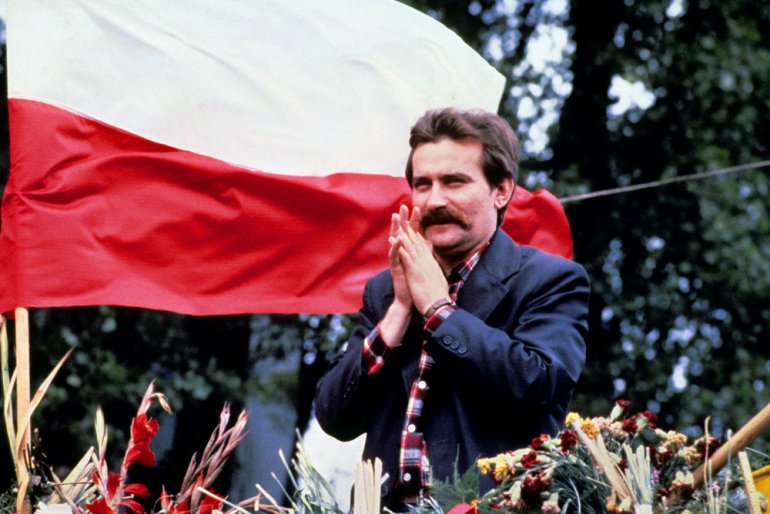 Lech Wałęsa, Polish workers' union activist and leader, as well as Poland's future first democratic President, during a speech to the strikers of the Lenin Shipyard in Gdansk. August 31st, 1980 , photo: © Rue des Archives / AGIP / Forum
Created on 17th September 1980, the Self-governing Trade Union 'Solidarity' was the result of a series of strikes and crises which shook the country that year. Very soon, Solidarność, which at its peak counted 10 million people among its members, became a serious threat to the regime. The 'Carnival of Freedom' ended fifteen months later when the Polish authorities, under pressure from the Kremlin, introduced Martial Law. All independent organisations were made illegal and their leaders interned, among them Lech Wałęsa.
But the social resistance triggered by Solidarity could not have been suppressed. In 1989, when the negotiations between the authorities and opposition began, the activists of Solidarność – which all this time has been operating underground – played an important role. That same year on 4th June the Solidarity-backed candidates emerged victorious in the first partially free parliamentary elections. The next year, Wałęsa was elected president of the Republic of Poland.
Białowieża's unspoiled nature
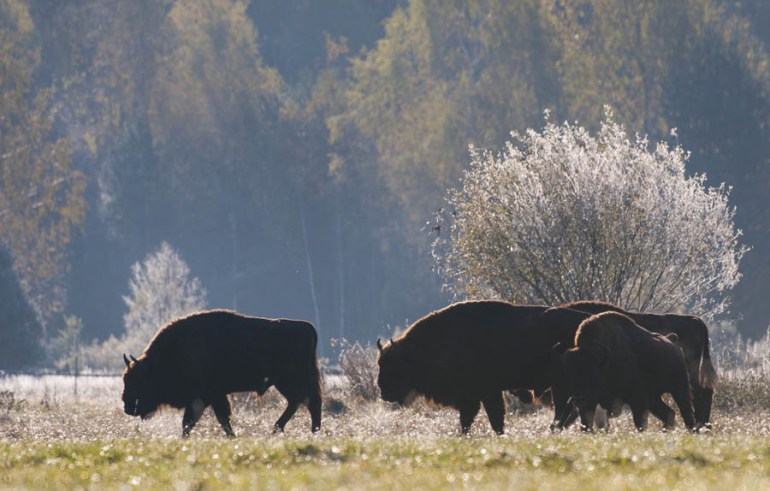 Białowieża National Park, photo: Marek Kosinski / Forum
Poland has an extremely diverse landscape – and the usual definition 'Mountains in the south, sea in the north' just doesn't cover the beauty and complexity of Polish geography. Poland has 14 UNESCO Biosphere Reserves, defined as exceptionally precious natural areas that represent exemplary harmony between man and nature. One of them is Białowieża National Park, considered the last primeval forest in Europe, and home to the world's largest population of European bison (Polish: żubr).
Other UNESCO reserves include areas in Karkonosze and the Tatra Mountains, Łukajno Lake (home to the largest population of mute swans in Europe), Słowiński National Park (famous for its shifting sand dunes) and the West Polesie Reserve – a land of peat bogs, quagmires, and karst lakes.
The article incorporates material from the book Symbols of Poland published in 2015 (Bookmark SA), which includes 120 symbolic people, places and things; https://book-mark.pl